A reflective exploration of how faith-grounded leadership develops through quiet persistence, community, and staying faithful to meaningful work even when progress feels invisible and recognition is uncertain.
Her Story
About Angela
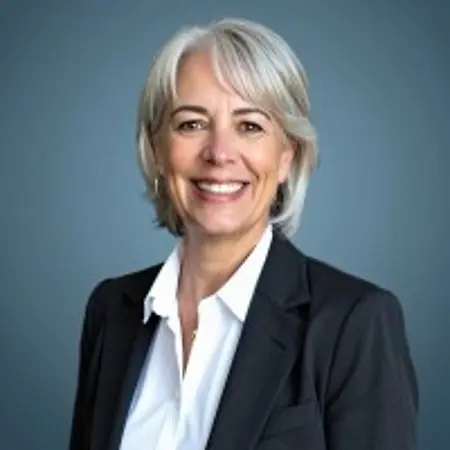
Dr. Angela (Angie) McDaniel is a lifelong educator, leader, and creative at heart. With more than 30 years in education, she has spent her career designing learning experiences that connect people to place, purpose, and possibility—but her leadership is shaped just as much by who she is outside of work as within it.
Angie is married and the proud parent of four children, a role she credits with grounding her perspective and sharpening her belief in education as a human endeavor before it is a professional one. She finds balance and inspiration outdoors—hiking trails, exploring natural landscapes, and noticing the quiet systems at work in the world around her. These moments often fuel her professional thinking, where place-based learning and real-world context are central themes.
A passionate reader, writer, and visual artist, Angie approaches leadership with the mindset of a maker. She draws, paints, and sketches ideas long before they become formal plans, believing creativity is not separate from rigor, but essential to it. This creative lens carries into her work as Director of Curriculum and Professional Development with the West Virginia University STEAM Technical Assistance Center, where she leads curriculum and professional learning efforts that value curiosity, reflection, and collaboration.
Above all, Angie believes strong leadership begins with listening, grows through trust, and lasts when people feel seen and supported. Whether mentoring educators, designing learning systems, or spending time outdoors with her family, she is guided by a commitment to growth—both personal and collective—and to building work that is meaningful, sustainable, and deeply human.
Her Interview
Ten minutes with Angela
01What do you attribute your success to?
Angie attributes her success to a foundation built by others and sustained through purpose. She credits mentors who saw potential early, offered honest guidance, and modeled leadership grounded in service rather than recognition. Their example shaped her belief that influence carries responsibility, and that leadership is strongest when it lifts others.
West Virginia has also played a defining role in her journey. Working in rural and semi-rural communities taught her to lead with resourcefulness, humility, and resolve. Here, relationships matter, trust is earned, and progress is built through consistency and care. These lessons continue to guide how she approaches curriculum, professional learning, and leadership.
At the core of her work is a quiet faith in calling—that doing good work, with integrity and intention, matters. She believes success grows through stewardship: of people, of opportunities, and of the communities entrusted to her care.
02What’s the best career advice you’ve ever received?
Angie was once reminded that meaningful work rarely unfolds in straight lines. Progress often comes through persistence—showing up, adjusting, and continuing even when outcomes aren’t immediate. That advice has shaped how she leads: with patience, resilience, and a long view of impact.
03What advice would you give to young women entering your industry?
Stay rooted in your purpose, especially during seasons when the work feels heavy or unseen. Education is built on relationships and long timelines, and impact is often quiet before it is visible.
Seek out mentors who will tell you the truth and stand beside you, not just cheer from a distance. Learn from them, but don’t shrink your voice to fit someone else’s path. Your perspective matters.
Be patient with yourself as you grow. You don’t have to have everything figured out early, and you don’t need permission to keep learning. Keep moving forward, even in small steps.
And remember this: leadership doesn’t require becoming someone else. It asks you to become more fully yourself—grounded, prepared, and willing to serve.
04What are the biggest challenges or opportunities in your field right now?
One of the greatest challenges in education is sustaining meaningful work in a system that often prioritizes urgency over coherence. Educators are navigating constant change—new initiatives, shifting expectations, and evolving student needs—while still being asked to deliver depth, rigor, and care.
Another challenge is cognitive overload, for both students and teachers. When everything is labeled as a priority, it becomes difficult to protect the time and focus needed for deep learning, reflection, and growth. Without strong instructional systems, well-intended efforts can fragment rather than strengthen practice.
Finally, there is the challenge of equity in action, not just intention. Creating access to high-quality learning—especially in rural and under-resourced communities—requires sustained investment, trust in educators, and leadership that understands local context. Progress depends on building structures that support people long after individual programs or funding cycles end
05What values are most important to you in your work and personal life?
Integrity, purpose, and care for others guide both Angie’s professional and personal life. She believes trust is built through consistency—doing what you say you will do, even when it is difficult or goes unseen.
She values relationships deeply, knowing that meaningful work is always carried out with and through people. Listening, humility, and respect shape how she leads and how she shows up for family, colleagues, and communities.
Finally, she believes in stewardship—of opportunities, of time, and of responsibility. Whether in leadership or at home, she strives to use her gifts well, to grow continuously, and to leave people and places stronger than she found them.
Her Content Hub
Articles by Angela
Staying With It
Leadership is built through faithful presence and quiet persistence, not sudden clarity.

For a long time, I believed leadership arrived all at once.
With a title.
With clarity.
With that internal click that says, Now. Now you know what you’re doing.
It turns out that moment is mostly a myth.
What actually shapes a leader is quieter than that. Slower. Less cinematic.
It’s the decision to stay.
To stay when the work is complicated.
To stay when progress is incremental and invisible.
To stay when the middle stretches longer than you expected.
For me, staying has never been about sheer grit.
It has always been grounded in faith.
Not the kind that makes everything easy—but the kind that steadies you when it isn’t.
The Kind of Leadership That Doesn’t Announce Itself
Early in my career, I thought strong leaders were decisive and certain. I assumed they moved quickly, spoke confidently, and always knew what came next.
Some do.
But the leaders who shaped me most—and the leadership I’ve grown into—look different.
It asks better questions instead of offering fast answers.
It listens longer than is comfortable.
It pays attention to people as much as outcomes.
Faith has shaped that posture in me.
It has taught me patience when I want resolution.
Humility when I want control.
And the discipline to act with integrity, even when recognition is unlikely.
I’ve learned that leadership doesn’t need to be loud to be effective.
It needs to be anchored.
The Long Middle No One Prepares You For
There is a stretch in every career that doesn’t get named often enough.
You’re no longer new.
You’re not at the beginning.
But you’re also not finished becoming who you’re meant to be.
You’re capable—but still stretching.
Confident—but still questioning.
Accomplished—but not always affirmed.
This is where many women pause. Or quietly step back. Or wonder if they misread the calling altogether.
This is also where faith matters most.
Because when external markers thin out, faith becomes the reminder that purpose doesn’t disappear just because progress feels slow.
The most important advice I ever received during one of these seasons was simple:
Stay with it. Keep moving forward.
Not because the path is clear.
Not because the work is easy.
But because faithfulness often matters more than visibility.
Influence Is Rarely a Solo Act
I’ve never grown alone.
Every meaningful step in my career traces back to people—mentors who challenged me, colleagues who trusted me, leaders who created space rather than guarding it.
And beneath all of that, a faith that reminded me I was never carrying the work by myself.
Leadership, I’ve learned, isn’t self-made.
It’s community-shaped and spiritually sustained.
Faith doesn’t remove responsibility. It deepens it.
It calls you to lead with courage and compassion.
To hold standards without hardening.
To make room for others rather than competing for position.
That kind of leadership takes time.
And it takes trust.
Rethinking What Counts as Impact
We are surrounded by metrics now. Numbers. Reach. Speed. Visibility.
Those things matter.
But they don’t tell the whole story.
Some of the most meaningful impact I’ve witnessed has been quiet:
A teacher rediscovering confidence.
A team learning to trust one another.
A system improving because someone finally asked, Why do we do it this way?
Faith has helped me redefine success.
Not as constant acceleration—but as alignment.
Not as recognition—but as stewardship.
Leadership is less about producing outcomes and more about shaping environments where people can grow, think, and thrive.
Even when no one is applauding.
What I’d Tell Women Building Their Way Forward
You don’t need a fully formed plan to move.
Clarity often follows obedience.
Confidence follows experience.
And purpose sharpens through use.
Stay with the work that feels meaningful, even when it’s inconvenient.
Seek mentors—and become one when you’re able.
Resist the temptation to measure your progress against someone else’s timeline.
And when things feel uncertain—when the work feels heavy or the path unclear—remember this:
Uncertainty doesn’t mean you’re off course.
Often, it means you’re being shaped.
The Quiet Strength of Staying
Leadership isn’t always momentum. Sometimes it’s endurance.
It’s practiced in small, daily choices—how you listen, how you respond, how you lead when no one is watching.
I’ve learned that influence doesn’t require perfection.
It requires presence.
It doesn’t demand certainty.
It asks for faithfulness.
So if you’re in a season where staying feels harder than starting—stay anyway.
Stay grounded.
Stay open.
Stay with it.
The work you’re doing may feel quiet. But over time, it becomes steady. And that steadiness shapes far more than you realize.
Join Influential Women and start making an impact. Register now.