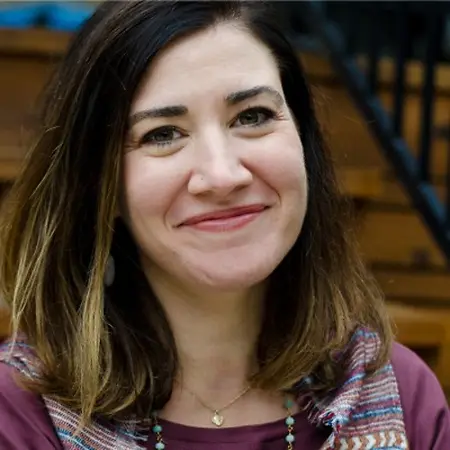
Her Story
About Angie
I've been in the trade show and events industry for 20 years, and I've been with Abbott (formerly St. Jude Medical) since 2011, with almost 4 years in my current role as Senior Manager of Global Congress Strategy. Throughout my career at Abbott, I've always been part of the trade show and event program within the Med Device Division. I've led teams of multiple trade show and event planners to manage calendars of up to 50 trade shows a year across various geographies, and I've managed over $2 million in trade show program planning. Now I focus more specifically on strategy rather than execution, ensuring that from a full trade show marketing perspective, we come to these events with a full presence and full omni-channel engagement. My typical day involves sitting on multiple core team calls for different conferences where we are exhibitors at industry physician conferences. I lead strategy, help make decisions on direction, provide updates from leadership to ensure we keep a certain level of expectation and consistency across all our shows, and I involve key stakeholders from various functional groups across the company to ensure we're meeting all of our objectives and goals. One of my most notable achievements is leading the Heart Rhythm Society show, where we go bigger and elevate our presence. This past year, we had a full omni-channel presence starting about 4 months in advance, a 1,000-person customer event, and we engaged with about 30% of the 7,400 professional attendees through our multiple engagements including our large 80 by 90 booth. I lead the strategy and overall execution to make all that happen with the team.
Her Interview
Ten minutes with Angie
01What do you attribute your success to?
I think the most important things are finding the career that you want to have, finding the right people to help guide you and mentor you, and then also having your own initiative to continue to build your strengths and your skill set. I think it's important to have some fellow colleagues in the space that you can turn to and have support from, and then also utilizing your industry resources when you need to, to help hone in, or build, or elevate what you might be working on, or how you want to improve things in the future. Specifically for trade show and event folks that are in-house or internal, unless you're at an agency, if you're in a corporate office, you tend to be the minority by a lot. A lot of times, you are an island within an industry, within a business. When you need support, it's not like the sales staff. My division, for example, has 800 sales staff, so if a salesperson struggles with something, they can go to another sales member, another colleague. I don't necessarily have that all the time. I have a few people within our division, but nothing like that. So utilizing your resources within the industry, staying up to date, understanding the state of the industry, where things are going, so that you can stay informed and then help elevate what the projects you're working on and bring that forward to leadership is really key in being the best employee to your company, but also just growing your own skill set and your development.
02What advice would you give to young women entering your industry?
I would say look for those mentors, look for those fellow peers that can support you, and you can support them. And then be a lifelong learner. Just like in any job, nothing stays the same, so you have to be able to flex and be able to move and learn new things. And as long as you can do that, I think you can work hard, and be willing to roll up your sleeves, and whether that means you're sitting in a meeting and you're taking notes, or you're the person leading the meeting, or you're on the show floor and you're making sure that you're telling people where they need to be and what they need to be doing, or maybe you're just answering questions behind a desk. Whatever role you get put in to start, use that opportunity to learn and engage, and understand more about the full picture of what you can offer as a trade show and event planner. I would also say, just, you know, this role, these types of roles are really good for people who like to problem solve. So if you are somebody who likes to receive a challenge and try to come up with solutions, then it's a good role for that. If you're not, then it's tough, because there's always something, there's always a question coming to you, there's always a new problem to be faced. I like that aspect, it keeps things interesting and fresh. And so for that, I would just say be open to utilizing your resources when it comes to those things when you need to, or just be open to providing solutions. It may not be the one they go with, but provide options, and eventually, you're going to be the one people are going to come to to say, hey, what do I do in this situation?
03What are the biggest challenges or opportunities in your field right now?
I think what everybody else is challenged with: costs. Inflation is hard. You're asked to create the same program, or an even better version of it, but keep the same cost, or even lower sometimes. So you have to be mindful of where your budget is going and how you can get the most impact. I would say we have made modifications year over year based on what are we truly trying to achieve this year, and then how can we best meet that, and what makes the most impact? Because we won't be able to do everything we want to do with the budget we have, and so we try to make sure that we are being as intentional and thoughtful as we can. On the opportunities side, in the field of corporate trade shows and events, I think there's always opportunity for face-to-face. Everybody's talking about AI right now. In my space, I appreciate it. I look for ways to make my administrative tasks more efficient, whether that's maybe an email that needs to go out, or an e-blast that needs to go out, if there are ways for me to utilize AI tools and resources, or project management tools to make that time more efficient and gain some of that time back so I can focus on the bigger picture items. I think that's really a neat opportunity for us as trade show planners, because you're still gonna need this role. People want to be face-to-face, they still want to have social interaction, and you want to make it the most engaging and experiential program you can. And so for that, you need us. You need trade show planners for that, especially strategic ones. But if there are ways to help lessen what I call the burden of administrative that comes with it, I'm all for AI's avenues to be able to help me do that.
04What values are most important to you in your work and personal life?
I value trust. I will give you trust, but if you lose it, it's hard to earn it back. So that's important to me. And then I would say, as event planners, we tend to be people that, the ones that I see that are successful, they're the ones that can problem-solve in the moment, but then also strategize when they need to, roll up their sleeves when they need to, so I like working with people that can wear many hats, and I appreciate the people that are the ones that kind of see the bigger picture, but then can be the doers. And so, to me, those are the people I like working with the most. And even in a personal aspect, right? Like, the way you think about teaching your family your values, and what you stand for, and what's important to you, and part of that to me is teaching my kids to do those things, like, be thankful for what we have, and then let's appreciate and respect what we have, and how can we help each other as a family support each other. Whether that's something that it's, hey, we're all going to go attend this kid's event because it's important to them, or hey, we're all going to help take a second and clean the house together because we want to respect our home and where we live together. So I try to share that value with them personally, but then I think I also bring that value to how I work professionally.
Join Influential Women and start making an impact. Register now.