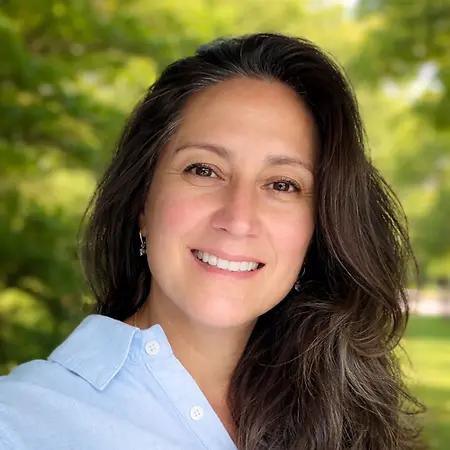
Influential Woman · Non-profit
Angie Slagle
Founder of Young Able Adults Group, Surgical Assistant, and Author of The Boy That Could, Founder, Young Abled Adults Group (YAAG)
Fort Worth, TX 76109
When a plan fell apart, it humbled me. That experience taught me to lead with more grace, patience, and tenderness toward myself and others.
Angie Slagle · In Her Own Words
Her Story
About Angie
Angie Slagle, CRNFA, is a seasoned surgical professional and author based in Fort Worth, Texas. She began her medical career in 1990 as a surgical technologist and earned her BSN from Texas Christian University in 1995. After achieving her CNOR certification in 2003, Angie pursued her RNFA credential and became a Certified Registered Nurse First Assistant in 2021. With over three decades of experience in the operating room, she has specialized in general, orthopedic, obstetrics, gynecology, and gynecological oncology procedures, providing expert patient care and first-assisting surgeons with precision and compassion. In addition to her medical career, Angie is the author of The Boy That Could, an inspirational children’s book that chronicles her son’s journey and her unwavering commitment to never giving up. Through her writing, podcast interviews, and media appearances, she shares her personal story of perseverance and advocacy for children with Intellectual & Developmental Disabilities, offering hope and encouragement to families navigating similar challenges. Her volunteer work history extends globally with Operation Smile and locally with Special Olympics, Make-A-Wish Foundation and Taste Project, reflecting her deep commitment to service and community impact. Angie is also the founder of the Young Abled Adults Group, a nonprofit dedicated to providing social and recreational opportunities for young adults with special needs in Fort Worth. Inspired by her own son, the organization has quickly grown to serve over 40 families, partnering with Texas Christian University students, YMCA, HEB, and local businesses to provide programs such as cooking classes and social events. Balancing her medical career, authorship, and nonprofit leadership, Angie continues to inspire through her dedication to patient care, advocacy, and empowering others to overcome challenges.
Her Interview
Ten minutes with Angie
01What do you attribute your success to?
My success comes from the support of my colleagues, the love of my family, and the purpose I found in advocating for neurodiverse young adults.
02What’s the best career advice you’ve ever received?
The best career advice I’ve ever received was to step out of my comfort zone and trust the gifts God placed in me. My mom once told me, “You’re capable of more than you’re giving yourself credit for — don’t be afraid to grow.” That encouragement changed the entire direction of my career.
It pushed me to become an independent contractor, to write an inspirational book, and eventually to start a nonprofit that now serves dozens of families. That advice taught me that the biggest opportunities often come when you’re willing to take a brave step forward.
03What advice would you give to young women entering your industry?
Protect your work–life balance, set healthy boundaries, and remember that success isn’t just measured by what you accomplish professionally, but by the life you build outside the hospital. When your priorities stay grounded, your career becomes something that supports your life — not something that consumes it.
04What are the biggest challenges or opportunities in your field right now?
In the surgical world, one major challenge is the increasing demand for experienced perioperative professionals. As many seasoned nurses and surgical assistants retire, there’s a real opportunity to mentor and train the next generation. Technology is also evolving quickly — from robotics to AI — which can feel overwhelming, but it also creates opportunities to improve safety, efficiency, and patient outcomes.
In the nonprofit space, especially serving neurodiverse young adults, the challenge is the gap in services once individuals age out of school‑based programs. Families are often left without support, structure, or community. But that challenge is also the greatest opportunity: to build programs that offer connection, life skills, social engagement, and hope. There is a growing awareness and acceptance of neurodiversity, which opens doors for advocacy, partnerships, and long‑term impact.
Across both fields, the opportunity lies in creating environments where people feel seen, supported, and empowered — whether that’s in the operating room or in a community program for young adults.
05What values are most important to you in your work and personal life?
In my surgical career, compassion means seeing every patient as someone’s child, parent, or loved one and treating them with dignity. Integrity shows up in the way I communicate, and support the team in the operating room. Service is at the heart of everything I do — whether I’m assisting in surgery, advocating for families, or helping someone through a difficult moment.
In my personal life, I’m guided by the belief that it’s not about me — it’s about we. I value kindness, grace, and lifting others up. As a mother and as the founder of a nonprofit for neurodiverse young adults, I believe in creating environments where people feel safe, understood, and empowered. Community matters deeply to me, and I strive to build connections that bring people together, strengthen families, and leave others better than I found them.
Overall, the values that matter most to me are the ones that help people feel seen, supported, and loved — whether I’m in the operating room, writing a book, or serving families in my community.
Join Influential Women and start making an impact. Register now.