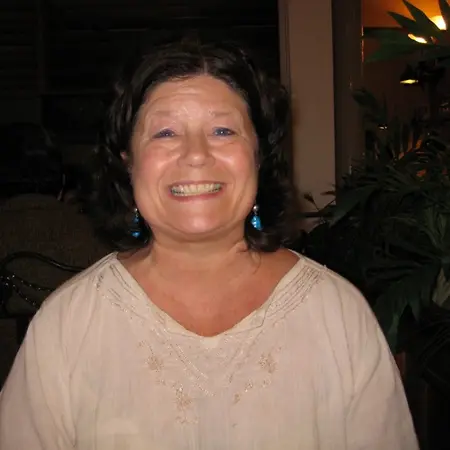
Her Story
About Anita
I knew from the age of 4 or 5 that I wanted to be a teacher. I had a little classroom for my dolls and my brother's dolls, and I started a lending library in the neighborhood. I spent 39 years as a teacher, with half that time in middle school and the other half in high school. I have a master's in counseling psychology, which I feel really supported me in my teaching career. I went into schools after disasters and other disaster situations, including after the bombing happened. Over my career, I saw many changes, mostly technological, and I saw more women starting to be represented in leadership roles as principals and superintendents, and a lot more professors at the university level. After retiring from teaching, I've been with Walmart for 15 years now, where I work as a greeter helping all the customers.
Her Interview
Ten minutes with Anita
01What do you attribute your success to?
I think the more you can understand what motivation is and how to meet people where they're at and then how to lift up our people, that's really important. I do think that my background in counseling psychology supported me in understanding motivation, which is really a key part to connecting with students. I also believe that the more you give, the more you get, and you really have to trust yourself and really trust other people. If we could get that trust going, I think that would help a lot. Having that human understanding as a grounding foundation is critical to deal with everything, whether it's new technology or the challenges we face.
02What advice would you give to young women entering your industry?
I think the more you can understand what motivation is and how to meet people where they're at and then how to lift up our people, that's really important. You need to know who you are to be yourself, and a lot of people think they're themselves, but I don't know if they've done the work, the hard work it takes to really find your grounding, to find your strengths, and how you can be your best and step forward. That self-examination is critical. People are still not sure of where they can turn to, instead of looking within and figuring out what works best for them. I also think the more you can use your brain and communicate in different ways, whether it's computer language or other forms, the further you'll be able to see and the more bridges you can build.
03What are the biggest challenges or opportunities in your field right now?
I think kids haven't changed so much as their situations have changed. People say kids are changed, but I think they're still human beings. I think people need to become more aware that the more you give, the more you get, and you really have to trust yourself and really trust other people. If we could get that trust going, I think that would help a lot. I still see a lot of fear going on, and I would like to see people understand that that actually demotivates and causes more problems than it solves. You become part of the problem rather than the solution. People get in their own way a lot of times and don't realize they are, and a lot of it does stem from fears and irrational thinking. With technology and AI, the younger students are getting very good at spotting AI pictures and AI sentences, and these are things that are going to be very important in the future. The teacher may be a robot in the future, it may be a hologram in the future, so the more information you have, the better equipped you'll be to deal with all these new conversations and the way the world will be put together.
04What values are most important to you in your work and personal life?
I really value critical thinking and how to challenge people to solve problems in a more effective way. Learning to communicate in different languages, whether it's computer language or other forms, so people can make more connections is very important to me. I believe in empathy and compassion, and that ever-learning mindset of always being a student of learning. The more you give, the more you get, and you really have to trust yourself and really trust other people. If we could get that trust going, I think that would help a lot. I also think we need to have that human understanding as a grounding foundation to deal with all the changes in the world, including technology and AI. We will need to be stewards of our plants, our animals, our water, and our resources.
Join Influential Women and start making an impact. Register now.