An inspiring narrative about overcoming adversity through education, redefining academic leadership, and empowering students from underrepresented backgrounds to embrace authenticity and resilience in their journeys.
Influential Woman · Education
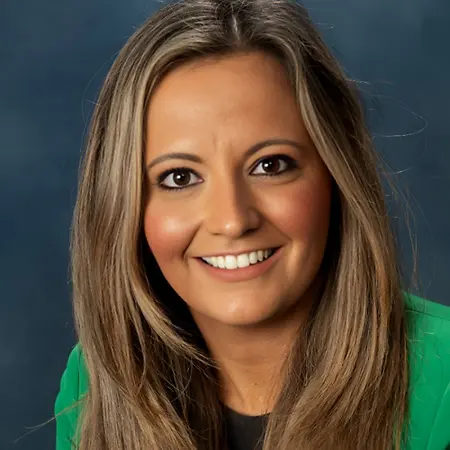
Dr. Anna Marie Buck
English & ESL Program Coordinator | Assistant Professor, Luzerne County Community College
Nanticoke, PA 18634
1Article published
3Awards received
“
The bravest decision is returning to work that reminds you who you are. Success is defined by purpose, impact, and the lives we help shape.
Dr. Anna Marie Buck · In Her Own Words
Her Story
About Dr. Anna
My career in education was not a planned path—it was a calling I didn’t expect. Originally, I set my sights on healthcare. While I was pursuing my graduate studies at King’s College, Dr. Fevzi Akinci recognized my natural aptitude for working with non-English speakers. He encouraged me to pursue an ESL certification, noting that the college was partnering with the UCEDA language program and that my involvement would be advantageous. That suggestion shifted my entire trajectory, leading me to where I am today.
In 2018, I met Irena Mira, who had founded the ESL program at Luzerne County Community College. I have now been with LCCC for eight years, a role I deeply cherish. My professional passion is rooted in my personal history. Raised in a household of four children with very limited resources, I forged my own path through persistence and hard work. Because of this, I am a fierce advocate for our students from low socioeconomic backgrounds. I believe that every student deserves support and understanding; I challenge those around me to look past surface and realize that everyone has a story worth hearing.
Her Interview
Ten minutes with Dr. Anna
01What do you attribute your success to?
People often ask what drives me and what I attribute to my success, and the answer is simple: perseverance.
Coming from a low-income familial background where I had very limited resources, I spent years wrestling with a choice: would I let my reality define me, or would I turn it into the catalyst for my future? I chose to be a product of my future. My path was never easy, but those hard-won lessons gave me the strength to keep pushing when others would have quit. Now, when I look at my students, I don’t just see students—I see myself. I look them in the eye and tell them the truth: your circumstances are not your finish line. You have the power to be an overcomer. The journey ahead might be difficult, but you have the strength to navigate it, and I am here to help you get there
02What’s the best career advice you’ve ever received?
The best career advice I have ever received is a profound reminder of our own potential: If God places a dream on your heart, it is there for a reason.
I was once told that if you have a calling, it is because you have already been equipped with the talents necessary to fulfill it. That hit me hard. It means that success isn't about getting something you don't have—it’s about realizing that the talent, the drive, and the capacity were already placed within you at the start.
For me, this transformed how I see my work and my students. It shifted the question from 'Can I do this?' to 'Do I have the courage to acknowledge what I’m capable of?' It’s a message I pass on every day: you don’t need to go searching for your potential—you just need to stop doubting that it’s already there.
03What advice would you give to young women entering your industry?
If I could offer one piece of advice to young women starting out, it would be this: discipline will carry you, but authenticity will define you. Do not let the fear of failure stop you from starting. We aren't meant to be perfect; we are meant to be courageous. Too often, we hold ourselves back, waiting for permission or perfection, when we should be embracing the messiness of growth. Never change who you are to fit into a space that wasn't built for your voice. When you lead with your authentic truth, you stop following the crowd and start creating your own path. That is true leadership.
04What are the biggest challenges or opportunities in your field right now?
We are currently facing a significant divide in student access, ranging from basic needs like transportation to the deeper, more complex issues of digital equity and academic belonging. Too many students from low-socioeconomic backgrounds feel they don't 'fit' in the college environment. That is exactly where our work becomes vital. This is an opportunity to change the narrative. By showing up with authenticity and validating their experiences, we can prove to these students that their potential is not defined by their starting point. We aren’t just teaching a curriculum; we are cultivating the resilience and character they need to thrive long after they leave our classrooms.
05What values are most important to you in your work and personal life?
I define my leadership by two core values: Loyalty and Humility.
Loyalty is about relationship and integrity. It means honoring the mentors who open doors for you and prioritizing those connections over ego or titles.
Humility is about the courage to be a lifelong learner. I don't pretend to have all the answers. I believe that 'honoring failure' is the key to both leadership and teaching. If I expect my students to take risks, I have to be willing to show them my own failures. I believe we aren't here to be perfect; we are here to be authentic, to learn, inspire, and to help one another grow.
Her Content Hub
Articles by Dr. Anna
From Humble Beginnings to Higher Education: Why We Need More ‘Overcomers’ in Leadership
From Grit to Guidance: How Authenticity Transforms Educational Leadership

I didn’t choose education. In many ways, it found me.
My path to becoming a doctor in curriculum and instruction was not a straight line drawn on a career map. It was a winding, often difficult journey that began in a household where resources were scarce and the future was never guaranteed. I grew up with limited resources and support, which meant I was faced with a fundamental choice early in life: I could either be a victim of my circumstances, or I could be the architect of my future.
I chose the latter.
I originally set my sights on healthcare, believing it was the only way to make a tangible difference in the world. But while pursuing my graduate studies, a mentor recognized something in me that I hadn’t yet acknowledged: a natural capacity to reach students who felt invisible. When I was encouraged to pivot into ESL education, it felt like a detour. Today, I know it was my destination.
Now, with over a decade of experience in higher education, I’ve realized that my most important credential isn’t my PhD from Liberty University or my M.S. from King’s College. My most important credential is my grit.
Redefining the Academic Archetype
In academia, we are often pressured to project an image of perfection—the "infallible" expert who has never stumbled. But this is the exact opposite of what our students need.
The greatest challenge in our field today isn’t just a lack of access to digital tools or transportation; it’s a crisis of belonging. We see students from low socioeconomic backgrounds arrive at our doors feeling like they don’t "fit." They look at the Ivory Tower and feel alienated.
This is where leadership requires a shift in philosophy. As leaders, we must move from "gatekeepers" to "guides." I tell my students—and the young women entering this industry—that we are not meant to start off perfect. We are meant to start off real. When we stop trying to blend in to fit a mold that wasn’t built for us, we stop being followers and start leading.
Leading with Authenticity and Humility
Leadership is not about having all the answers; it is about having the courage to say, "I don’t know this yet, but I can figure it out."
I believe in the power of "honoring failure." In my classroom and in my department, I am transparent about my own struggles. If we tell our students that we have never failed, what does that teach them about resilience? Perfection is the enemy of growth. By modeling vulnerability, we show our students that failure is not the end of their story; it is merely proof that they had the courage to try.
My research in educational leadership and experiential learning is driven by a singular goal: to build a bridge for "overcomers." Whether I am designing a new curriculum for a working adult or mentoring a first-generation student, I am working to ensure that their potential is not tethered to their starting point.
A Call to Action for Emerging Leaders
To the women entering this industry—or any industry where you feel like an outsider—stay disciplined and work hard, but never let your path be defined by the doubt of others. Your greatest competitive advantage is your authenticity.
When you live in your own truth, you create space for others to live in theirs. That is how we change the culture of education, and how we turn our personal history into a roadmap for others to follow.
We aren’t just here to teach curriculum. We are here to build character. We are here to ensure that every student who enters our world leaves knowing that they, too, are an overcomer.
Join Influential Women and start making an impact. Register now.