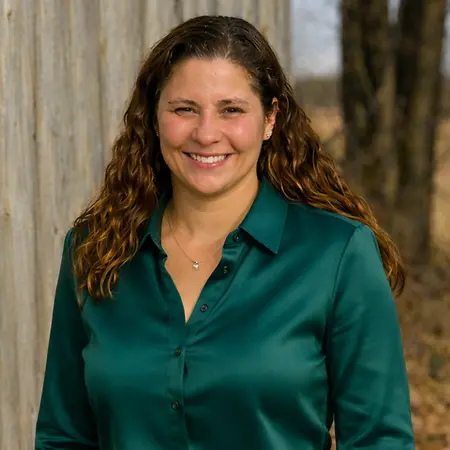
Influential Woman · Human Resources case management
Anna R Mancheski
IRIS Consultant case manager, TMG Molina Healthcare
Forestville, WI
Her Story
About Anna
I've been working in human services for about 5 years now, after making a major career transition from being a federal firefighter. In 2015, I was injured on a fire in Alaska, and it took me 3 years to walk again. During that recovery, I went back to University of Wisconsin-Stevens Point and earned my bachelor's degree in 2020. I knew I needed a better career fit for my family - I had just had my first child, and a few weeks later I flew to Alaska for a forest fire, got injured, and when I came back and my child ran to me, I just knew that wasn't right. I started as a case manager, then became a crisis counselor for a year, but I wanted to do more. As a crisis counselor, you're only able to help people in that moment, but I wanted to think long-term. So I came back to case management about 2 years ago because I love advocating for people and people's rights - it just fits me well. My current job is helping individuals who are adults with disabilities, youth transitioning from youth services, or people who are autistic. I'm trying to put their long-term plan together, think of their goals and resources, and my big thing is I want them to be independent. I'm really trying to finish my master's that I've put off so I can get my own license and open up my own practice. That's my long-term goal - to use the case management skills I'm obtaining right now to eventually have my own practice.
Her Interview
Ten minutes with Anna
01What do you attribute your success to?
I really enjoy helping others. Instead of looking at things in life, I try to figure out how you piece them and make them more positive to kind of move forward. Everyone comes from somewhere, everyone has something, but moving forward, looking into the future - I really like working with people and just kind of helping them find their own path. Pretty much what I'm doing as a case manager is trying to put their problems together, a plan. My big thing is I want them to be independent. I feel like anything where I can self-advocate for anyone, or the community, or go and help, or educate - that really makes, that is my passion, not just in my career, that's just what I like to do. I like teaching people how to be resilient. That's what I would say - resilience.
02What’s the best career advice you’ve ever received?
Don't hold yourself back in the past. Move forward. The past can't hurt you. I had one of my very first bosses say that to me, and that's why it stuck with me. He was my first big boss out of college when I was getting my first degree in 2013, and he just always checked in, he was always great. Whenever I needed something, or a reference, or going to school, he'd always message on Facebook, just a good check-in, a good coach. That's how a coach should be - not just getting onto your personal level, but staying and checking in on your professional level. That really sets you apart from a boss to a supervisor to a mentor. A mentor is someone that's always constantly looking out for your best interests, even if it's 10 years down the road, and it's the same treatment since you worked for them.
03What advice would you give to young women entering your industry?
Don't give up. You're gonna have doors closed. When doors are closing, a new one's gonna open, even if it doesn't lead to the successful path you had planned. At least you tried and can look back at all the paths you tried. Gaining those skills will actually make you much better, much more well-rounded for the next step in your life. It can help you with anything - can help you with a divorce, can help you with loss of family, grief, mental health. Just knowing that you did something, versus sat in fear, not trying. That's what I would like to teach someone that's just starting out.
04What are the biggest challenges or opportunities in your field right now?
The need for workers in social work, counseling, and mental health is an extreme need, but there's also a very high turnover rate. There are financial constraints - the government's cutting agencies. Wisconsin has been pretty protected right now, but I pay attention to that because I know I work as a case manager for Medicaid, and anytime those funds can go away. As much as I might be secured, it's really not. In the mental health world, they're cutting helplines for suicide and all those right now. A lot of nonprofits are really taking a hit because they're not going to be getting the money this next year. I know a lot of my coworkers in treatment facilities - all of it - the funds are not going to be there. So I think the need for social work is huge, but a big challenge for me is I financially can't go back to finish to get my license. I have more than enough hours and experience to be a licensed social worker or go as a counselor, but I physically can't go back to school to get $60,000, $100,000 more debt on my plate with a family. So I'm kind of stuck.
05What values are most important to you in your work and personal life?
Setting healthy boundaries where I'm still able to have fun. That would be like setting aside time, maybe scheduling - like this past weekend, I scheduled a family night on Saturday night, made all of my kids included. We went to a coffee shop, and we just played board games for a couple hours. Just setting fun things that maybe aren't expensive, because right now it's really hard for even a family to go out to eat something cheap, it's expensive. But just trying to - I really look forward to just spending time with people. People are important. I value that time. I'm new to this balance, because before, being a firefighter and just in the emergency service world, you always had to put everybody's needs first. When I became a crisis counselor, that really taught me, because setting boundaries is a coping skill that we forget about. That's what makes all of us go off wires, not giving ourselves our own breaks. So that really helped me reset becoming a case manager.
Join Influential Women and start making an impact. Register now.