Her Story
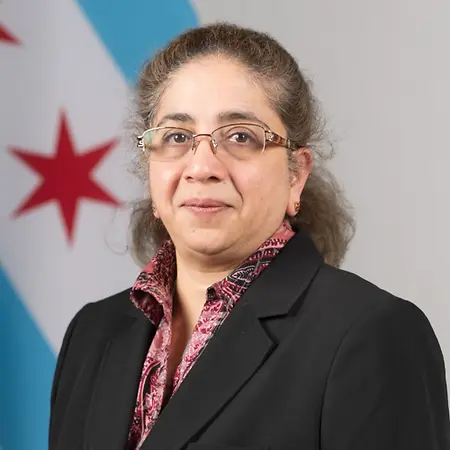
About Aparna
Aparna R. Priyadarshi, MHA, PMP is a distinguished Health Informatics and Digital Transformation executive with over 20 years of experience leading large‑scale healthcare modernization across public health, payer, provider, pharmaceutical, and life sciences organizations. Her career reflects a rare blend of deep healthcare domain expertise, technology leadership, and pragmatic transformation execution across global environments.
Aparna began her professional journey in the finance sector while completing her undergraduate studies, developing a strong foundation in analytical thinking and business operations. She went on to earn a Master’s in Healthcare Administration from the Tata Institute of Social Sciences (TISS) in Mumbai, India, where she cultivated a passion for information management and the transformative power of data in improving healthcare delivery and outcomes.
Since entering the healthcare IT field in 1996, Aparna has played a pivotal role in advancing healthcare interoperability and standards adoption. Her work spans early HIPAA 4010 implementations through the continued evolution of HIPAA and HL7 standards (2.x and 3.x), alongside the design of enterprise‑scale data models that enable interoperable, analytics‑driven healthcare ecosystems. She has consistently operated at the intersection of policy, technology, and operations—translating regulatory and business needs into scalable, sustainable solutions.
Throughout her career, Aparna has led complex, mission‑critical transformation initiatives across the United States, Canada, Singapore, and India. Her leadership has supported national and regional interoperability frameworks, centralized health information platforms, and integrated solutions serving providers, payers, commercial entities, and life sciences organizations. Notably, she has contributed to major public sector programs, including Affordable Care Act implementations in Washington, D.C., helping modernize systems that directly impact population‑level health access and equity.
Aparna’s leadership philosophy is grounded in solving real business and public health challenges through thoughtful, context‑aware use of technology. She leverages modern capabilities such as cloud computing, artificial intelligence, and machine learning while ensuring solutions align with an organization’s operational maturity and readiness. Known for her pragmatic, “meet‑organizations‑where‑they‑are” approach, she guides strategic modernization with a sharp focus on usability, regulatory compliance, and measurable outcomes.
Since 2023, Aparna has served as Chief Informatics Officer and Deputy Commissioner at the Chicago Department of Public Health, where she leads data architecture, informatics strategy, information systems operations, and population health epidemiology initiatives. Her work has strengthened public health outcomes through advanced analytics, interoperable data platforms, and public‑private partnerships, including critical outbreak response and rapid‑response analytics capabilities.
Aparna attributes her success to her deep understanding of the healthcare ecosystem, her commitment to continuous learning and innovation, and her ability to translate complex technology into meaningful clinical, operational, and public health value. Outside of her professional work, she values time with her family, which remains a central source of balance, inspiration, and personal fulfillment.
Her Interview
Ten minutes with Aparna
01What do you attribute your success to?
I attribute my success to a deep, end‑to‑end understanding of the healthcare ecosystem and a sustained commitment to continuous learning, innovation, and pragmatic problem solving. Throughout my career, I have remained focused on ensuring that technology and data serve as true enablers of business, clinical, and public health outcomes—not solutions in search of a problem. I believe lasting impact is created by bridging business, clinical, and technical perspectives while meeting organizations where they are in their transformation journey. By balancing strategic vision with disciplined operational execution, adapting to evolving capabilities such as cloud, AI, and advanced analytics, and maintaining a relentless focus on regulatory integrity and patient‑centered outcomes, I have driven meaningful, scalable, and sustainable change across the healthcare ecosystem.
02What’s the best career advice you’ve ever received?
Early in my career, I was advised to remember that technology is only valuable when it enables better decisions and outcomes. That advice has stayed with me throughout my career. It has shaped my focus on practical problem‑solving, continuous learning, and adapting approaches across private‑sector and public‑sector contexts to ensure technology serves people, not the other way around.
03What advice would you give to young women entering your industry?
I prioritize practical problem‑solving anchored in continuous learning, recognizing that meaningful progress requires both adaptability and the willingness to unlearn. Moving between private‑sector technology environments and government and public‑health realities has reinforced the importance of recalibrating expectations, pace, and solutions to fit context rather than forcing one model to fit all. I believe sustained success comes from balancing ambition with perspective driving results while honoring personal priorities and from remaining disciplined, flexible, and purpose‑driven in service of outcomes that truly matter.
04What are the biggest challenges or opportunities in your field right now?
Public health transformation is challenged by uneven technology maturity across jurisdictions, complex bureaucratic processes, and persistent funding constraints. At the same time, significant opportunity exists to accelerate impact through disciplined adoption of interoperable standards, targeted data‑management solutions, and strong public–private partnerships. When aligned effectively, these capabilities enable faster outbreak response, scalable population‑health analytics, and more resilient public health systems that can adapt to emerging threats and community needs.
05What values are most important to you in your work and personal life?
I value disciplined problem‑solving, lifelong learning, and collaboration as essential to effective public service, while recognizing that sustained impact is only possible when professional purpose is balanced with family and personal commitments.
Join Influential Women and start making an impact. Register now.