Discover 10 evidence-based habits that support your nervous system during graduate school in education. From substitute teaching to budgeting wisely, learn psychological strategies for sustainable success without self-sacrifice.
Her Story
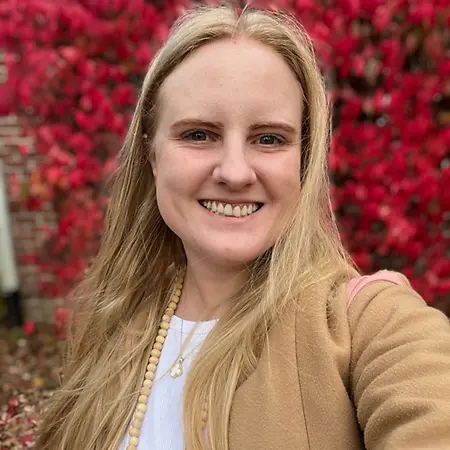
About April
April Federico is a dedicated Urban Elementary Educator with Providence Public Schools, passionately committed to equitable education and empowering diverse learners. With a focus on Special Education for K–2 students, she brings compassion, structure, and high expectations into her classroom, creating inclusive and high-impact learning environments where every student is seen, supported, and inspired to reach their full potential. April’s teaching philosophy blends creativity with rigor, emphasizing mentorship, personal growth, and the development of self-advocacy and confidence in all learners. Her journey in education is complemented by her broader expertise in holistic wellness and creative expression. As the founder and CEO of In The Pink, Inc., April helps women transform physical, mental, emotional, and spiritual wellness into empowering experiences through intuitive guidance, practical strategies, Pilates instruction, and lifestyle coaching. She also shares her gift for Tarot reading, blending intuition and community engagement to inspire reflection and personal growth, while maintaining a strong presence on Instagram through her brand INTHEPINKBYAPRIL. April’s success is deeply influenced by her family and mentors, including her late cousin Michelle Pothier, a devoted educator whose legacy inspired April to establish the Michelle Pothier Memorial Scholarship Fund, providing financial support and mentorship to aspiring teachers from under-resourced communities. Currently pursuing her Master’s of Arts in Teaching at Rhode Island College, April continues to expand her impact as an educator, advocate, and lifelong learner, demonstrating that dedication, compassion, and purpose-driven work can truly transform lives.
Her Interview
Ten minutes with April
01What do you attribute your success to?
I attribute my success to discovering my gift for Tarot Reading at the age of 14, which sparked a lifelong love of helping and guiding others. Over the years, my journey through creative writing and life experiences has led me to my current role as a Special Education teacher, where I am deeply passionate about empowering students to achieve their goals and live their lives to the fullest. I also owe a great deal of my inspiration to my cousin, Michelle Pothier, a devoted teacher at Medford High School who passed away from breast cancer. In her honor, I established the Michelle Pothier Memorial Scholarship Fund on Instagram, which allows me to continue her legacy of mentorship and support for the next generation of educators and learners.
02What’s the best career advice you’ve ever received?
The best career advice I’ve ever received is this: “Only people who think they’re the worst are actually the best.”
At first, it sounds counterintuitive, but I’ve found it to be deeply true. When you doubt yourself, it usually means you care — about doing right by others, about growing, about getting better. That kind of self-questioning isn’t weakness; it’s awareness.
In my experience, the people who assume they already have all the answers stop listening. The ones who reflect, question themselves, and stay curious are the ones who evolve. I’ve learned to see doubt not as a sign I’m failing, but as proof that I’m invested in the work and committed to doing it well.
Caring deeply is what makes you effective, not flawless.
03What advice would you give to young women entering your industry?
My advice to young women entering the education and wellness fields is to embrace what makes you distinct. Your passions — whether that’s building a personal brand through social media, blending interests like fashion and Pilates, or finding creative ways to connect with and inspire others — are not distractions from your work; they’re part of your power. Stay curious and trust your voice. Confidence isn’t about having all the answers; it’s about being willing to learn, evolve, and take on new challenges. Every experience, even the uncomfortable ones, is an opportunity for growth. Prioritize meaningful relationships and seek out mentors who challenge you while also uplifting and supporting you. Advocate for yourself and for others, especially in spaces where voices are often overlooked. When you combine professionalism with authenticity, you don’t just build a career — you create impact, influence, and longevity while staying true to who you are.
04What are the biggest challenges or opportunities in your field right now?
One of the most significant challenges in special education today is equity of access. Too often, students with disabilities — especially those from underserved communities — are not identified early enough, not provided with truly individualized support, or are siloed into environments that don’t recognize their full potential. This reflects broader systemic issues in our schools around funding, staffing, and cultural competence.
Closely tied to access is the challenge of inclusive practice. Inclusion isn’t just about placing a student in a general education classroom; it’s about creating learning environments where every learner feels valued, understood, and supported. That requires ongoing professional development, strong collaboration between general and special educators, and school cultures that prioritize differentiated instruction as a strength rather than an afterthought.
Another pressing issue is workforce sustainability. Special education demands deep expertise, emotional intelligence, and adaptability, yet educators in this field often face high caseloads, burnout, and limited institutional support. Addressing this challenge means rethinking pathways into the profession, improving retention, and valuing special educators as both skilled practitioners and advocates.
Despite these challenges, there are powerful opportunities emerging.
Schools are beginning to reimagine what meaningful inclusion looks like by shifting away from deficit-based models and toward strength-based, student-centered approaches. When instruction is designed with flexibility, multimodal learning, and accessibility at the core, all students benefit — not just those with IEPs.
There is also growing opportunity in collaboration. When families, educators, clinicians, and community partners work together, Individualized Education Programs become living documents rather than static requirements. This kind of collaboration allows supports to be responsive, personalized, and rooted in real student needs.
Technology, when used thoughtfully, offers another avenue for growth. Assistive tools and adaptive learning platforms have the potential to personalize instruction, increase independence, and amplify student voice — provided access and equity remain central to implementation.
Perhaps most importantly, there is an opportunity to change the narrative around special education itself. Moving away from language rooted in limitation and toward language that centers dignity, identity, and capability is not just a pedagogical shift — it’s a cultural one.
The challenges in special education are real and complex, but the opportunity to create more inclusive, humane, and empowering systems has never been greater.
05What values are most important to you in your work and personal life?
At the core of everything I do is authenticity. I believe the most powerful work happens when people stop performing and start telling the truth. I value showing up as myself — imperfect, evolving, and honest — and creating spaces where others feel safe to do the same.
Integrity is equally important to me. I’m deeply committed to aligning my actions with my values, even when it’s uncomfortable. Whether in my professional life or personal relationships, trust is built through consistency and accountability.
I’m guided by compassion and a belief that everyone deserves to feel seen and supported. Much of my work centers on empowering people who have been underestimated or overlooked, helping them reconnect with their confidence and inner resilience.
I also value growth and lifelong learning. I don’t believe in staying static — I believe in reflection, curiosity, and allowing yourself to evolve as you gain new insight and experience.
Finally, I prioritize balance, creativity, and purpose-driven impact. I’ve learned that sustainable success requires boundaries, rest, and joy. My goal isn’t just to achieve — it’s to create meaningful work that blends intellect, intuition, and creativity while genuinely improving people’s lives.
At the heart of it all is a simple philosophy: confidence and intelligence build emotional resilience — and resilience changes everything.
Her Content Hub
Articles by April
Steal My Graduate School Hacks as an Education Student
(And the Psychology Behind Why They Actually Work)
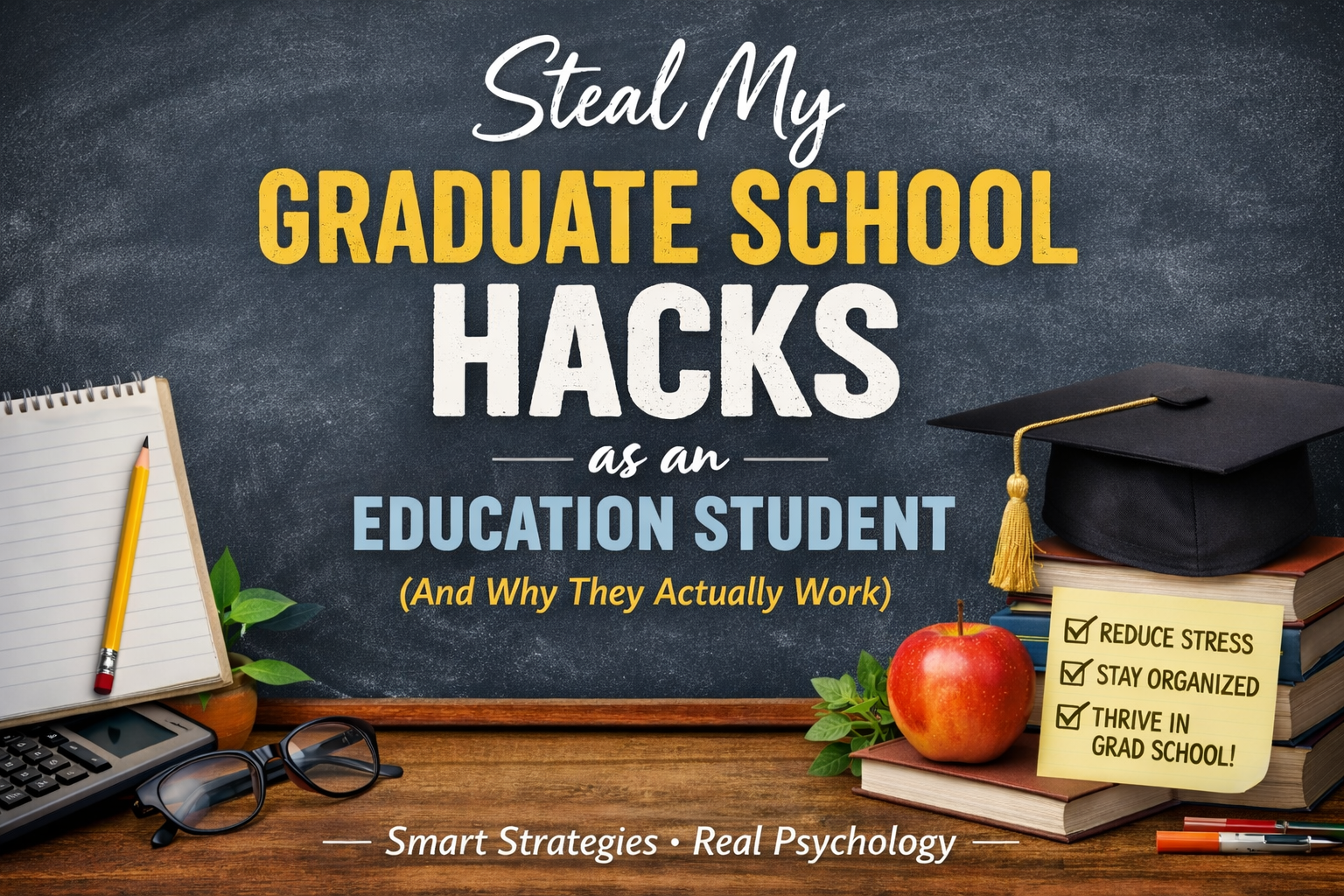
Graduate school in education isn’t just academically demanding—it’s psychologically demanding.
You’re juggling:
- Cognitive overload
- Emotional labor
- Financial stress
- Identity formation (“Who am I becoming as an educator?”)
What most people call “time management problems” are actually nervous system problems.
Here’s a deeper look at the graduate school habits that helped me stay regulated, focused, and human—and why they work from a psychological perspective.
1. Substitute Teaching on Your Free Days
Why it works psychologically: Self-efficacy & relevance
Subbing isn’t just income—it’s mastery experiences, which Albert Bandura identified as the strongest source of self-efficacy.
When you:
- Walk into real classrooms
- Manage behavior
- Apply theory in real time
Your brain stops asking, “Can I do this?” and starts saying, “I am doing this.”
That confidence transfers directly into:
- Better academic performance
- Lower impostor syndrome
- Stronger professional identity
Relevance reduces burnout. When your work aligns with your future self, motivation becomes intrinsic.
2. Do Assignments the Day They’re Assigned (or on Deep Work Days)
Why it works psychologically: Cognitive load & anxiety reduction
Unfinished tasks sit in your brain as open loops (the Zeigarnik Effect).
Your mind keeps rehearsing them—quietly draining attention and energy.
Completing assignments early:
- Frees working memory
- Lowers background anxiety
- Improves sleep quality
Deep work days (Friday–Sunday) leverage context-dependent productivity: your brain learns when it’s allowed to focus deeply, making it easier to drop in.
Less procrastination doesn’t mean more discipline—it means less mental noise.
3. Budget Your Money Wisely
Why it works psychologically: Financial stress & executive function
Chronic financial stress hijacks the prefrontal cortex—the part of the brain responsible for:
- Planning
- Decision-making
- Emotional regulation
When money feels unpredictable, everything feels harder.
Budgeting:
- Restores a sense of control
- Reduces cognitive scarcity
- Improves long-term thinking
This isn’t about restriction—it’s about psychological safety.
A regulated nervous system learns better.
4. Have ONE Set Day for Laundry & Chores
Why it works psychologically: Decision fatigue
Every decision costs mental energy.
When chores float around your week, your brain keeps renegotiating:
- “Should I do laundry now?”
- “I’ll do it later… maybe.”
A fixed chore day removes choice.
This:
- Preserves executive function
- Reduces resentment toward tasks
- Creates predictability (which the nervous system loves)
Structure isn’t rigid—it’s freeing.
5. Use an Hourly and Daily Planner
Why it works psychologically: Time perception & realism
Most burnout comes from time distortion—we underestimate how long things take.
An hourly planner:
- Grounds you in reality
- Prevents overbooking
- Encourages transitions and rest
A daily planner:
- Clarifies priorities
- Reduces overwhelm
- Helps you finish the day feeling “complete”
Together, they support self-trust.
You stop gaslighting yourself about time.
6. Pick Up a Hobby at School
Why it works psychologically: Belonging & stress regulation
Humans are wired for connection and movement.
School-based hobbies:
- Increase social integration
- Improve mood through physical activity
- Create identity outside academics
When your entire identity becomes “student,” setbacks feel catastrophic.
Hobbies diversify your sense of self—protecting mental health.
You are more than your GPA.
7. Make Time for Social Events
Why it works psychologically: Social buffering
Social connection is a proven buffer against:
- Stress
- Depression
- Burnout
Especially in helping professions, co-regulation matters.
Laughing with friends literally lowers cortisol.
Isolation feels productive—but it’s neurologically expensive.
Community sustains longevity.
8. Live on Campus If You Can
Why it works psychologically: Autonomy & identity formation
Living on campus can:
- Increase independence
- Reduce commuting fatigue
- Strengthen program engagement
Psychologically, this supports emerging adulthood—the developmental phase where autonomy and identity solidify.
Your environment shapes your habits.
Proximity increases participation.
9. Apply for Scholarships
Why it works psychologically: Agency & future orientation
Scholarships aren’t just financial relief—they reinforce future-oriented thinking.
Applying:
- Builds advocacy skills
- Reinforces worthiness
- Shifts mindset from scarcity to opportunity
Even rejection builds resilience.
Each application strengthens your professional narrative.
10. Don’t See a Graduate Organization? Start One.
Why it works psychologically: Leadership identity & empowerment
Creating something that doesn’t exist:
- Builds an internal locus of control
- Strengthens leadership confidence
- Transforms frustration into agency
Instead of asking, “Why isn’t this here?”
You become the answer.
This is how educators become changemakers.
Final Reflection
Graduate school doesn’t require self-sacrifice.
It requires systems that support your nervous system.
When you reduce cognitive load, increase relevance, and build community, learning becomes sustainable.
And that’s the kind of educator our schools actually need.
If this resonated, I’d love to hear:
👉 Which habit changed things most for you—or which one are you trying next?
More reflections on education, psychology, and becoming a resilient educator coming soon. 💛
A heartfelt guide revealing 15 essential truths about teaching that go beyond the classroom. Discover the emotional intelligence, relationship-building, and personal growth that define a teacher's real journey.
15 Little‑Known Facts About Becoming a Teacher (That No One Told Me When I First Started)
15 Honest Truths About Teaching That No One Warns You About

When I decided to become a teacher, I thought I knew what I was signing up for: lesson plans, bulletin boards, helping kids learn, summers off (lol). What no one really prepared me for were the quiet, complicated, beautiful truths that shape your day-to-day life in the classroom.
Here are 15 things I wish someone had told me before I stepped into teaching—especially for anyone considering education, student teaching, or their first year in the classroom.
1. You’ll Use Far More Emotional Intelligence Than Content Knowledge
Yes, you need to know your subject. But what you’ll rely on most is your ability to read a room, de-escalate emotions, and respond to students as humans first. Teaching is as much about relationships as it is about academics.
2. Classroom Management Is About Connection, Not Control
No strategy works without trust. Students behave better when they feel seen, respected, and safe. The best “management tool” is a strong relationship.
3. You’ll Think About Your Students Long After the Bell Rings
Their stories follow you home. You’ll wonder if they ate dinner, if they’re okay, and if what you said landed the right way. Teaching doesn’t really shut off at 3 PM.
4. You Will Constantly Adapt—And That’s the Job
The lesson you planned might flop. The tech might fail. A student might need something completely different that day. Flexibility isn’t a bonus skill—it’s the job description.
5. You’ll Become a Translator Between Systems and Kids
You’re constantly interpreting: curriculum into kid-friendly language, policies into real-life expectations, and students’ needs back to administrators and families.
6. Small Wins Matter More Than Big Moments
A student finally raising their hand. Turning in work for the first time. Smiling when they usually don’t. These moments don’t show up on evaluations—but they’re everything.
7. You’ll Spend Your Own Money (Even If You Say You Won’t)
You’ll swear you won’t do it. Then you’ll see something that could help a student—and suddenly it’s in your Amazon cart. It’s not right, but it’s real.
8. Teaching Will Test Your Boundaries
You can’t pour from an empty cup, but the job often encourages you to try. Learning when to say no is a survival skill, not a weakness.
9. You’ll Be More Than a Teacher—Whether You Want To or Not
Mentor. Advocate. Listener. Safe adult. Role model. For many students, you are the most consistent presence in their lives.
10. Some Days You’ll Feel Like You’re Failing—Even When You’re Not
There will be days when nothing goes right. That doesn’t mean you’re a bad teacher. It means you’re human in a very demanding profession.
11. You’ll Learn Just as Much From Students as They Learn From You
They’ll teach you patience, empathy, creativity, and how to see the world differently. If you’re open, the learning goes both ways.
12. Paperwork Is the Invisible Curriculum
Documentation, data tracking, emails, meetings—none of this is highlighted in teacher prep programs, yet it takes up a huge portion of your time.
13. Your Identity Will Shift
Teaching changes how you see yourself. Your confidence grows, your voice sharpens, and your sense of purpose deepens—even when you’re exhausted.
14. You’ll Question Whether You’re “Doing Enough” Constantly
The answer is usually yes—but the system often makes it feel like it’s never enough. Learning to trust your impact takes time.
15. Despite Everything, You’ll Know Why You Stay
There will be moments—quiet ones—when a student looks at you with trust, pride, or relief. And in that moment, everything makes sense.
Final Thoughts
Teaching isn’t what people think it is from the outside. It’s harder, heavier, and far more meaningful than I ever imagined. If you’re considering this path, know this: you don’t need to be perfect. You just need to care, reflect, and keep showing up. And that, quietly, is what makes a great teacher.
Join Influential Women and start making an impact. Register now.