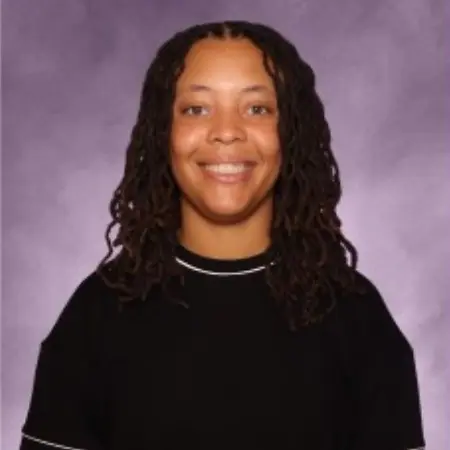
Her Story
About Ariel
Ariel Dunn is a RevOps and CRM Strategy leader specializing in building scalable revenue operating systems that align marketing, sales, and customer success teams. In her current role as Strategic Account Manager at Pyxis Growth Partners, she partners with executive stakeholders to drive revenue growth, improve operational visibility, and strengthen CRM architecture across complex organizations. With deep expertise in the HubSpot ecosystem, she focuses on translating business strategy into structured, usable systems that support automation, analytics, and long-term growth.
Throughout her career, Ariel has led large-scale CRM transformations, including migrations from legacy systems, lifecycle redesigns, workflow automation, and cross-functional integration projects across industries such as healthcare, education, nonprofit, digital payments, and B2B services. She has supported initiatives ranging from pipeline visibility and executive reporting to adoption strategy and platform enablement. Her work is closely connected to the broader HubSpot community, including participation in major industry events such as INBOUND and UNBOUND, where she contributes as both a practitioner and community voice within the RevOps space.
Ariel earned her Bachelor of Science in Marketing from Southern University and A&M College- Baton Rouge and later completed a Data Analytics and Visualization certification through Johns Hopkins University, strengthening her technical foundation in data, analytics, and systems thinking. She is known for a teaching-oriented approach to leadership—prioritizing clarity, adoption, and user confidence over complexity. Outside of her professional work, she is actively engaged in mentorship, community initiatives, and continuous learning, often leveraging AI tools to enhance efficiency while keeping human judgment and strategy at the center of her work.
Her Interview
Ten minutes with Ariel
01What do you attribute your success to?
I believe confidence is extremely important to my success. You have to see the work that you're doing and know the value that you bring every day, and you have to be confident in that. I tell women, especially Black and Brown women, not to participate in self-deprecation because what you speak is going to eventually be your reality, and that's extremely important to me. I'm not afraid to ask for a promotion or a raise. I see the work I'm doing, I know the value I bring, and I speak life over myself. Always believe in yourself, speak life over yourself, and do not be afraid to ask for a raise or a promotion. That's what has made me successful.
02What’s the best career advice you’ve ever received?
The best career advice I ever received was: don't stop asking questions. This is extremely important to me. If you can't ask questions anymore, you're not learning, and then you're stuck. Continue to ask questions, continue to show that you're present and interested. It's always good to be interested. I do not have a job where I'm never bored - I am constantly moving, constantly doing, constantly learning, and I think it's a beautiful thing when you basically get paid to learn. Before getting into these technical roles, I wanted to be a teacher, and I believe that in order to show you've effectively learned what you needed to, you have to be able to teach it to others. That's also another big part of me - mentorship and being able to teach the skills I've learned to my coworkers so I can help them be on this path of greatness. This advice came from a former CEO of mine, and I think about it all the time.
03What advice would you give to young women entering your industry?
My advice is: don't be quiet. If you know that you have something to add, if you know a way that may help someone else, definitely don't be afraid to do that. I think what we see is men are definitely not afraid to share their opinions, right or wrong. A lot of times, we women have researched, looked at it from every angle, and sometimes we'll still sit in a place where it's like, 'well, I don't want to say anything because it might not be wrong.' No - say it. You know it's not wrong. Be confident in yourself and speak up. Once we do that, it encourages the women under us to do the exact same thing. In a role where I am, it makes the difference between a manager and a facilitator. Managers are looking at you and telling you what to do, but a facilitator, which a lot of women naturally are, is someone who researched it, might have failed at it, might have done it the wrong way, but looked at it, learned from failures, and that helps me to be a better facilitator. So speak up and be confident in who you are.
04What are the biggest challenges or opportunities in your field right now?
The biggest challenge I see is the lack of seeing Black and Brown people in technical roles and leadership positions. I've been in this industry for 4 or 5 years, and I can count on two hands the number of Black and Brown people I've encountered, even though I've met a couple hundred people and deal with so many on a daily basis. My clients are often people in technical roles, chief officers, or VPs, and it is very interesting to me that I still do not see a lot of Black and Brown people in these technical roles, especially now where you don't even need a college degree - a lot of these white men do not have a college degree. When you're going into these rooms, they don't see a lot of people that look like you, so I think you have to prove yourself a little bit more. That's where my integrity and my work means a lot to me. The work that I do, the work that I present to clients means a lot to me, because I know that there are people behind me that I want to see in roles like this one day. I might be the first Black and Brown face that they see who is someone who built an entire foundation for them, and that is influential. I would say that is the biggest challenge, and I think there's a lot of work that needs to be done.
05What values are most important to you in your work and personal life?
Number one is integrity. When you are in consulting roles and technical roles, it would be easy to just say you did things without actually bringing value. But that's extremely important to me - that I'm always bringing value. I'm not just saying, 'oh, I did this.' I ask myself: what was the reason that you did this? How is this going to help the client? Will they get better reporting? Will they have a better understanding of sales handoffs or handoffs between teams? How are you adding value? I think in order to do that, especially in these roles, you have to have integrity. And then, of course, in my personal life, I think about showing up when you say you will. You might have been the only person that accepted the invite, so if you just don't show up, don't call, don't do anything - that lacks integrity. I like to have that in my personal life, and it makes it easy to reflect that and for that to flow into my professional life.
Join Influential Women and start making an impact. Register now.