Arlene Atherton
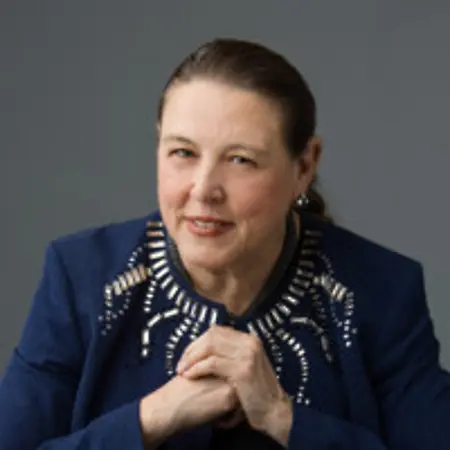
Arlene Atherton is a cultural anthropologist, technology strategist, and United Nations leader whose work sits at the intersection of innovation, diplomacy, and human impact. Raised in Silicon Valley by a father who contributed to the Mercury, Gemini, and Apollo space programs, she developed an early fascination with technology and its potential to solve complex global challenges. Today, she leads initiatives in AI and diplomacy within the United Nations’ sustainable development efforts, applying her expertise in cultural analysis and emerging technologies to bridge gaps between nations, systems, and people. Her academic work at Columbia University, where she developed the theory of “visual linguistics” across 91 countries, continues to inform her approach to global communication and strategy.
Alongside her international work, Arlene is the founder of the Traumatic Brain Injury Recovery Association (TBIRA), a mission-driven initiative born from her own experience with traumatic brain injury. Recognizing the profound gaps in long-term care, she is leading a national movement to transform how TBI recovery is understood and supported. Through research, including one of the first nationwide TBI care surveys, and the development of new service-based models, she is building infrastructure to guide patients from emergency care through full reintegration into society—a process that can take years. Her work highlights critical systemic challenges, from limited access to teaching hospitals to the lack of coordinated care, while creating solutions that prioritize dignity, community, and long-term healing.
A lifelong problem solver, Arlene approaches every challenge with a combination of intellectual curiosity, resilience, and action-oriented thinking. Her career spans global consulting, documentary photography, humanitarian work, and firsthand experience as a 9/11 responder—each shaping her commitment to meaningful, human-centered impact. Whether advancing AI in diplomacy or advocating for underserved medical communities, she is driven by a singular mission: to build systems that work better for people. Through her leadership, she continues to challenge conventional pathways, demonstrating that innovation, empathy, and persistence can create lasting change on both a global and deeply personal scale.
• Columbia University
BA Art History
• New York City: International Center for Photography
• IAU Institute for American Universities
French Studies, Art Studies, Visual Representation in Ancient Culture
• MIT Sloan School of Management
• Washington International Diplomatic Academy
Cultural & Economic Diplomacy, TECH Diplomacy
What do you attribute your success to?
I attribute my success to immense curiosity. I’ve always been fascinated by how things work and why people do what they do. Those questions stick with me and lead me either to dig deeper into something I want to understand or to reinterpret it in a new way. That’s exactly what I do at the United Nations—I draw on my training in cultural anthropology to profile countries in ways that resonate with the public, not just the political players.
I’m also fortunate to have had firsthand experiences that shaped my perspective. I traveled to Russia three times when it first opened to the West, riding the Trans-Siberian Railroad from Vladivostok to Moscow. I’ve been to China early on as well, witnessing the incredible changes they achieved in just a few decades—from an isolated nation to one on the path to prosperity. Seeing these transformations up close gave me insights I can’t get from books alone and informs the work I do today.
What advice would you give to young women entering your industry?
I would encourage young women to aim high and be intentional about investing in themselves. Build strong, tangible skills and complete meaningful projects that demonstrate your capabilities. Seek out mentors and align yourself with leaders who are doing impactful work. Networking—especially in person—is critical, as is following up and building real relationships. Most importantly, don’t rely solely on social media to represent your expertise; show your value through action, results, and consistent engagement.
What are the biggest challenges or opportunities in your field right now?
There are several significant challenges, including ongoing gender disparities in technology, limited infrastructure and support systems for traumatic brain injury recovery, and a concerning decline in curiosity and critical thinking among younger generations. Additionally, there are very few specialized centers in the U.S. equipped to handle comprehensive TBI care. At the same time, there are powerful opportunities—particularly in applying anthropological insights to improve communication, advancing the role of AI in diplomacy, and developing national initiatives that support TBI reintegration through neuroplasticity and employment-focused programs.
What values are most important to you in your work and personal life?
The values that guide me are excellence, curiosity, continuous self-investment, and a strong commitment to service. I believe in constantly growing, maintaining high standards in everything I do, and using my skills and experiences to contribute meaningfully to others and to society as a whole.
Locations
International Sustainable Development - Resource Centre, Geneva
Arlington, VA 22204