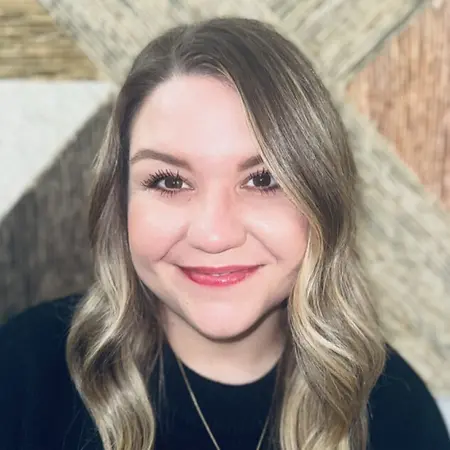
Her Story
About Ashley
I've been training for about 12 years, though I started training before I even knew I was training. It's just something I've always gravitated towards and found myself doing everywhere I've worked. My first professional training experience was writing a curriculum for a program in a county jail to mitigate recidivism during an internship. I spent the first 10 years of my career in the child welfare space before making a significant gear shift into manufacturing. Transitioning out of that space was scary, jumping into a world I hadn't been in before, but I was successful really quickly when I broke into the manufacturing world. I just started a new position in February of this year at Bright Machines, a tech startup company, where I'm building the manufacturing training program. Bright Machines is unique because it's a manufacturing company that is tech first, not manufacturing first, and I'm part of their first actual manufacturing line. One of my primary responsibilities in any training role is helping to build, shape, and inform the culture of the company and the environment. All of the training we're building includes an emotional intelligence and psychological safety component, which is not always found in the manufacturing environment, and something we're really proud of. I've also developed professional development opportunities for factory line employees, like teaching them how to write a resume or what to wear to an interview, skills they might not receive otherwise. Bridging that gap is really important to me.
Her Interview
Ten minutes with Ashley
01What do you attribute your success to?
I went to school to be a therapist, so something that I bring uniquely to the position is just an understanding of people. I approach everything that I do from a very people-first standpoint. I want to convey the processes and the safety and the quality training that we need to be deploying, but I'm always thinking about how it's going to be received, and who our specific audience is. I'm thinking about whether people's basic needs are being met, can they pay attention, do I need to throw a little sugar at them, or do we need to take a little break. I'm always thinking about the learner as a human being, and not just somebody filling a seat.
02What’s the best career advice you’ve ever received?
The best advice I got when transitioning out of the child welfare space was to really just bet on myself, and to not underestimate the level of success that I could have in a different industry. It was a pretty significant gear shift that I was making, and it was time. I was feeling burnt out and just needed to do something different. But it was also really scary to jump into something that I hadn't been in before, into a world I hadn't been in before. So, just to bet on myself. And then when I was successful really quickly when I broke into the manufacturing world, some additional advice I got was to own that, and to trust that, and to quiet that imposter syndrome.
03What advice would you give to young women entering your industry?
I think be creatively confident, to be willing to think about things in a different way, particularly in the manufacturing industry. There's a lot of old-school thinking, there's a lot of 'this is the way we've always done it,' and I'm seeing that shift, but I think it can be really intimidating to come into a space with new ideas or fresh ideas, and I would encourage women to do that, to be creative in that way, and to do so confidently.
04What are the biggest challenges or opportunities in your field right now?
I think it is making space for training in an environment that is very fast-paced. Not just making space, but figuring out how to make good, engaging training that people retain, but that we can deploy and execute quickly to keep up with production and manufacturing goals from an output standpoint.
05What values are most important to you in your work and personal life?
I value authenticity really highly. I think that we do our best work when we can really be ourselves, and so that's something that's really important to me. And just doing the right thing. One of the things that was challenging for me stepping out of the child welfare space was feeling like I was selling my soul a little bit. Helping people is really important to me, and I've found that there are plenty of people that need help and support, really in every industry that you go to. Something that I'm really passionate about is professional development for our factory line employees. I've developed a couple of different opportunities for people to learn things like how to write a resume, or what to wear to an interview, skills that they might not receive otherwise. Bridging that gap is really important to me.
Join Influential Women and start making an impact. Register now.