Influential Woman · Sports Psychology/Mental Performance
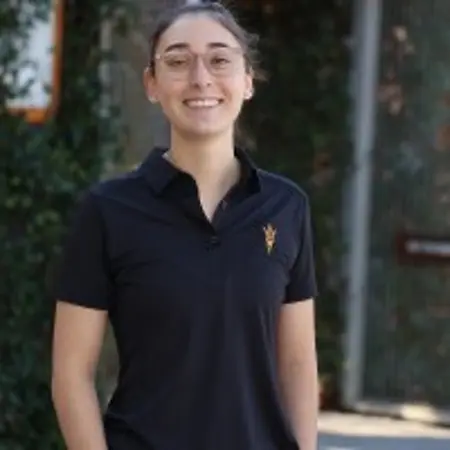
Ashley Rodarte
Mental Performance Coach, Ashley Rodarte Mental Performance
Gilbert, AZ 85296
Her Story
About Ashley
Ashley Rodarte is a dedicated sport psychology professional and graduate student at Arizona State University, where she is pursuing her Master’s degree in Sports Psychology. Based in Gilbert, Arizona, Ashley combines her academic excellence with hands-on experience, maintaining a strong focus on helping athletes develop both mentally and physically. With a background in Behavioral Health and a passion for performance optimization, she is committed to bridging the gap between theory and real-world application in athletics.
In addition to her studies, Ashley serves as the Head Varsity Badminton Coach at Perry High School, where she designs tailored training programs, mentors student-athletes, and fosters a culture of teamwork, discipline, and resilience. Her coaching philosophy emphasizes not only athletic performance but also personal growth, ensuring that each athlete feels supported both on and off the court. She collaborates closely with school staff to create an inclusive and empowering environment that allows athletes to thrive.
Ashley also works as an Executive Assistant and QLife Coach, where she plays a key role in operations, user engagement, and mental performance development. She leads workshops and one-on-one coaching sessions using evidence-based approaches such as Cognitive Behavioral Therapy (CBT) and Acceptance and Commitment Therapy (ACT) to help athletes build confidence, focus, and resilience. Passionate about the human side of performance, Ashley is driven to empower individuals to reach their full potential while recognizing their identity beyond sport.
Her Interview
Ten minutes with Ashley
01What do you attribute your success to?
I contribute a lot of my success to my faith. I'm very open about my faith, though I try not to make anyone uncomfortable or convert anyone, so I'll implicitly apply that in my sessions. We'll focus on things like gratitude work, where I'm not actually saying anything super religious, but I attribute a lot of my success to just my faith-based anchor and grounding. That's really my identity - I do consider myself in the light of being a child of God and daughter of the King. That's really my identity, and everything else implements that.
02What’s the best career advice you’ve ever received?
I would say to just go for it, and not listen to all of the no's. In this specific field, you get a lot of no's, unfortunately, and a lot of closed doors, and the best advice that I've received is to just keep knocking on the doors, and eventually, one door's gonna open.
03What advice would you give to young women entering your industry?
Just make your own path, and not compare your path to different paths that others took. Naturally, this industry is very male-heavy or dominant, and for women specifically, I would say just be your own individual. You don't have to live up to anyone else. It's your life, your career, your job, right? Be your own unique individual, don't try and be someone else.
04What are the biggest challenges or opportunities in your field right now?
The biggest challenge is trying to land that dream job with what you're given, and the requirements that are a little too high to meet. The whole job market is kind of upside down. Mental performance and sport psychology is still a growing field, and the way that jobs are listed as entry level, you still need at least two years of experience, and they're labeling that entry level. There are places that say they're looking for mental performance coaches, entry level, but then they want two years in high-performance environments, and it's really hard to get those years of experience. So there's a disconnect between what they're asking for and what we can actually help with. Even me, with only having one year of experience, I know I can still help certain athletes in certain environments, I'm just not actually given that opportunity because I only have one year under my belt, and not two.
05What values are most important to you in your work and personal life?
I think, obviously, first and foremost being empathetic. I care about my athletes as performers and athletes, but also as human beings. I'm there to increase your performance, but I'm also there as a resource, just to make sure you're firing on all cylinders - you're still a student, you're still a son, a daughter, a friend, all that. I really value empathy. And with that comes the perception or worldview that I take, which is the human comes first. I'll tell my athletes you were a human before you were ever an athlete, so I'm gonna treat you like that. Especially when you work with athletes who were raised in certain types of environments, whether that's from old school coaches or parents, where they were taught like your worth is contingent upon the wins or the losses, and with me, that's not it. I'm here to impact your performance for the better, but I also care about you as a human being.
Join Influential Women and start making an impact. Register now.