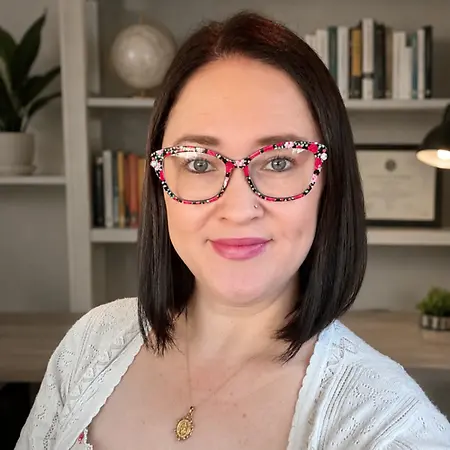
Influential Woman · Healthcare
Ashley Zapata, MA, LVN, CDP, CAS
Founder of My Brain Explained | Nurse | Author, My Brain Explained
Stockton, CA 95204
Her Story
About Ashley
Ashley Zapata is a Clinical Rehab Admissions Liaison Nurse with more than a decade of experience across skilled nursing, hospice, home health, and inpatient acute rehabilitation. Inspired by her Nana, who worked as a nurse for nearly 40 years, Ashley built her career around compassionate, patient-centered care. In her current role at Adventist Health, she supports the admissions process for inpatient rehabilitation, coordinating referrals, insurance authorizations, and care transitions for patients recovering from conditions including stroke, spinal cord injuries, and traumatic brain injuries. Alongside her healthcare career, Ashley is an author, Certified Dementia Practitioner, and Certified Autism Specialist and the founder of My Brain Explained, an educational platform focused on making complex information about autism, ADHD, dementia, executive functioning, and caregiving more accessible. Her work was inspired in part by her own family’s experiences with neurodivergence and by recognizing the need for clearer guidance after individuals and families receive a diagnosis. Through educational resources, books, and consultations, Ashley aims to help families, caregivers, educators, and professionals better understand neurological conditions and navigate what comes next. Ashley’s commitment to continued learning has led her to pursue advanced education at the University of the Pacific. She earned her bachelor’s degree in healthcare administration and leadership, completed a Master of Arts in Counseling Psychology, and is pursuing a PsyD in Clinical Psychology with an anticipated graduation in 2028. She hopes to build on her clinical and educational experience by eventually opening a private practice specializing in neurodivergence. Through both her professional work and My Brain Explained, Ashley seeks to promote understanding, advocacy, and practical education while encouraging others to define success on their own terms.
Her Interview
Ten minutes with Ashley
01What do you attribute your success to?
I would probably attribute a lot of my success to persistence. I do not think my path has necessarily been traditional or easy, but I have always been willing to keep learning and keep moving forward. I have gone from nursing into psychology, continued my education, written books, and started building educational resources for families. I think I have learned that you do not have to have everything figured out before you start. Sometimes you just have to be willing to take the next step and learn along the way.
02What’s the best career advice you’ve ever received?
The best career advice I ever received was actually very simple: just try. I used to have a real fear of failure, and I think that held me back from opportunities because I would sometimes decide I was not capable before I even gave myself a chance. I had a supervisor encourage me to apply to the University of the Pacific, and my immediate response was, “They are never going to accept me.” She looked at me and said, “How do you know unless you try?” That really stuck with me. I applied, I got in, and that decision completely changed the direction of my life. It ultimately put me on the path I am on now toward becoming a psychologist. So now I try to remind myself that rejection is possible, but so is success — and you will never know which one is waiting for you unless you try.
03What advice would you give to young women entering your industry?
I would encourage young women to redefine what “normal” has to look like for them. Times are changing. You can have a meaningful career and also have a family — it does not necessarily have to be one or the other. It takes determination, support, and sometimes a lot of balancing, but you do not have to give up one dream in order to pursue another. I would tell them to follow their goals, take the leap, and not let other people decide what they should or should not be doing. And when you enter spaces where women have historically been underrepresented, do not let that intimidate you. Be part of changing what that field looks like for the women who come after you.
04What are the biggest challenges or opportunities in your field right now?
One of the biggest challenges I see in both healthcare and psychology is the education gap. We may do a good job identifying or diagnosing something, but then families are often left asking, “Okay…now what?” For example, a child may go through an autism evaluation, receive a diagnosis, and then the family suddenly has this new information without necessarily understanding what it means, what to expect, or how to navigate it. I see similar gaps in healthcare as well. We give people diagnoses, treatment plans, or recommendations, but sometimes we forget that education is what helps people actually understand and use that information. That gap is one of the reasons I created My Brain Explained. I wanted to create an educational resource where people can better understand autism, ADHD, dementia, and what those diagnoses may mean in everyday life. I think the opportunity in both nursing and psychology is to bridge that gap between receiving information and actually understanding it.
05What values are most important to you in your work and personal life?
Compassion is probably one of the biggest values for me, both personally and professionally. I also really value authenticity and education. I want people to feel comfortable asking questions and admitting when they do not understand something without feeling judged. And personally, family is incredibly important to me. A lot of what motivates me professionally is wanting to build something meaningful while also being present for the people who matter to me.
Join Influential Women and start making an impact. Register now.