
I learned that timing isn't about being early or late. It's about being ready. Trusting my timing meant honoring growth and understanding that reinvention is wisdom.
How She Learned to Trust Her Timing
Explore moreNot every partnership is meant to last forever. You can be grateful for what someone helped you build while having the courage to keep moving forward.
Ashley Rose Caldwell · In Her Own Words
I learned that timing isn't about being early or late. It's about being ready. Trusting my timing meant honoring growth and understanding that reinvention is wisdom.
How She Learned to Trust Her Timing
Explore moreHer Story
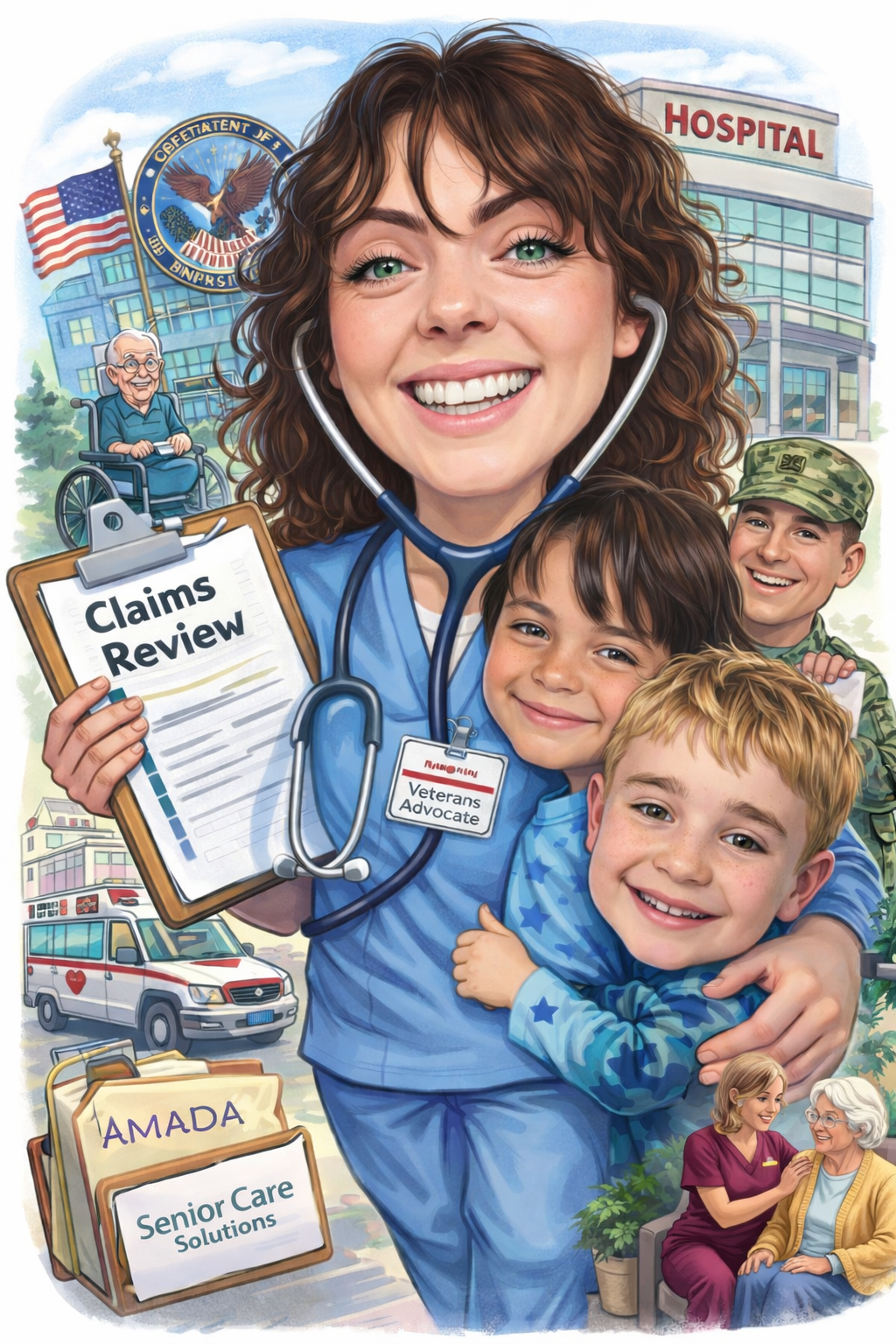
Ashley Caldwell (She/Her) is a Long-Term Care Insurance and VA Advocate at Amada Senior Care Modesto, where she leads business development, marketing, and client placements for in-home care. She also works extensively in care coordination and claims advocacy, helping families navigate long-term care insurance and VA benefits. Serving the Stanislaus and San Joaquin counties, Ashley is dedicated to ensuring seniors can age safely and with dignity, while providing families with compassionate guidance and practical support during vulnerable times.
Ashley centers empathy and clear communication in all aspects of her work, embracing the philosophy that failure is simply a step toward progress. Her approach emphasizes dignity, compassion, and practical assistance for families, creating meaningful experiences for seniors and their loved ones. Mentored and guided by Heidi and Jamie, leadership at Amada Senior Care, Ashley successfully transitioned into home-care business development and continues to draw on their support and expertise in her leadership and advocacy work.
Ashley began her career as a special education behavioral analyst for a school district, managing IEPs, 504 plans, evaluations, trainings, and district meetings. Seeking a broader impact, she transitioned into senior care, starting in caregiving and moving into roles focused on home-care business development, care coordination, and claims advocacy. Her journey reflects a commitment to advocacy, integrity, and respect, combining her educational background with her passion for supporting seniors and families in the community.
Her Interview
01What do you attribute your success to?
I attribute my success to the value of being a caregiver—being able to walk into someone’s home and provide respect, dignity, and compassionate support makes all the difference.
02What’s the best career advice you’ve ever received?
The best career advice I’ve ever received is to keep going, no matter the challenges, and always remember your ‘why’ the purpose that drives you.
03What advice would you give to young women entering your industry?
Failure does not mean you failed completely; it means you are one step closer to understanding the path that's good for you.
04What are the biggest challenges or opportunities in your field right now?
As someone deeply embedded in senior care and supporting families through some of life’s most emotional and complex transitions, the landscape right now is rich with both challenges and opportunities—if we’re willing to meet them head on.
Biggest Challenges in Senior Care Today
1. Rising Demand Meets Workforce Shortages
One of the most significant challenges we face is the growing need for quality care paired with a shortage of trained caregivers. More seniors are aging in place, and families want personalized support—but there simply aren’t enough qualified caregivers to meet that demand efficiently. Recruiting, training, and retaining skilled care professionals remains a top priority.
2. Complex Care Needs Require Higher Skill Sets
Today’s seniors often have more intricate health and behavioral support needs than in past generations. Whether it’s dementia care, mobility assistance, or supporting someone with multiple chronic conditions, families need care providers who are not just compassionate, but highly competent—and that means ongoing education and skill development.
3. Financial Barriers and Navigation Stress
Costs of care are rising, and navigating insurance, long-term care policies, VA benefits, Medi-Cal, and private pay options can be overwhelming for families. There’s an emotional and logistical burden in trying to understand what’s covered, when, and by whom. Helping families navigate these systems without adding stress is a daily reality.
4. Emotional Toll on Families and Caregivers
Caring for a loved one is intensely personal. Adult children are often balancing careers, children, and caregiving responsibilities—while caregivers themselves carry emotional labor alongside real physical demands. Preventing burnout and supporting resilience in families and staff alike is critical.
Biggest Opportunities in Senior Care Right Now
1. Person-Centered Care as the Standard
We’re shifting away from a one-size-fits-all model into truly individualized care. This means understanding each person’s routines, preferences, and personality—not just their physical needs. When care is personalized, outcomes improve and families feel deeply supported.
2. Leveraging Technology for Better Outcomes
From care coordination platforms and medication reminders to telehealth and digital communication with families, technology can enhance quality and transparency. Used thoughtfully, technology helps caregivers work smarter and keeps families informed and connected.
3. Preventative and Holistic Wellness Focus
There’s a powerful opportunity to reframe senior care as not just assistance but wellness support. Programs that integrate mobility maintenance, cognitive engagement, nutrition, and mental health check-ins are transforming how families experience aging.
4. Advocacy and Education
Families are hungry for guidance. There’s an opportunity—and a need—for senior care professionals to act as educators and advocates. Helping families understand options, anticipate changes, and make confident decisions empowers them at every step.
5. Community Partnerships that Elevate Support Systems
We have incredible potential to build stronger bridges between healthcare providers, hospitals, insurance partners, and community organizations. When we collaborate more effectively, families benefit from a seamless continuum of care.
The Heart of It All
Senior care isn’t just about care plans—it’s about trust, dignity, and human connection. The challenges push us to innovate, learn, and adapt. The opportunities remind us why we entered this field in the first place: to make someone’s life better, kinder, and more supported when they need it most.
Every day, we get to turn compassion into action—and that’s an opportunity we simply can’t take for granted.
05What values are most important to you in your work and personal life?
The values most important to me in both my work and personal life are empathy and caring. I strive to understand others’ perspectives, offer support when needed, and create positive, compassionate connections in every interaction.
Her Content Hub
A professional's journey from behavioral analysis in special education to senior care advocacy, discovering how timeless principles of empathy and communication transcend age groups and reshape leadership.
By Ashley Caldwell Business Development & Marketing Manager Amada Senior Care Modesto
I didn’t plan to work in senior care.
My early career was rooted in behavioral analysis within special education. I worked with children navigating developmental delays, emotional regulation challenges, and learning differences. My days were built around behavior plans, data tracking, family meetings, and celebrating small but meaningful milestones.
I was trained to look beyond behavior and ask:
What is this person trying to communicate?
What support does this family truly need?
How do we build structure that creates safety and growth?
What I didn’t realize at the time was that those same questions would follow me into an entirely different chapter of life — senior care.
Today, I serve families through Amada Senior Care Modesto, where we provide non-medical in-home care, long-term care insurance advocacy, and guidance through some of life’s most vulnerable transitions. Instead of advocating for children, I now advocate for aging parents, spouses, and families navigating dementia, hospital discharges, long-term care insurance policies, and end-of-life planning.
The population changed.
The mission did not.
Behavioral analysis taught me something that shapes every interaction I have today: behavior is communication.
When a child melts down, there is a need beneath it.
When a senior with dementia becomes resistant or agitated, there is also a need beneath it.
It might be fear.
It might be loss of control.
It might be confusion or pain.
The principles are the same. The application is simply more layered.
In senior care, we often enter families’ lives during moments of crisis — after a stroke, a fall, an Alzheimer’s diagnosis, or the realization that Mom can no longer safely live alone. Emotions run high. Roles shift. Adult children become caregivers. Spouses become decision-makers in ways they never imagined.
My behavioral background allows me to step into those rooms calmly and observe patterns — not only medical patterns, but relational ones. Who is overwhelmed? Who is avoiding the conversation? Who needs reassurance? Who needs clear structure?
Support is not just about tasks like bathing, dressing, or meal preparation. It is about stabilizing the emotional ecosystem of a family.
In special education, I sat in countless IEP meetings advocating for children’s accommodations and long-term success.
Now, I sit in living rooms helping families answer questions like:
How do we activate long-term care insurance?
What does 24-hour care truly cost?
How do we prevent hospital readmissions?
When is it time to consider placement?
How do we preserve dignity while accepting help?
The complexity is different — but the heart is the same.
At Amada Senior Care, our work extends beyond providing caregivers. We help families navigate funding solutions, particularly long-term care insurance claims, so they can afford quality support. We bridge gaps between hospital discharge and home stability. We focus on keeping seniors safe while honoring their independence.
The analytical mindset I developed in behavioral work allows me to break overwhelming situations into actionable steps. Families do not need more chaos. They need clarity.
And clarity is leadership.
Becoming a mother while building a career in senior care has reshaped me in ways I never expected.
Working with seniors reminds you daily that time is finite. You witness the full arc of life — childhood stories, midlife achievements, and the fragility of aging bodies. You see the consequences of unresolved family dynamics. You see what regret looks like. You also see what intentional love looks like.
It changes how you parent.
I am more patient because I understand developmental stages more deeply — both at the beginning and the end of life. I am more aware of how independence is built slowly and how quickly it can be lost. I am more intentional about modeling resilience, communication, and responsibility for my children.
Watching adult children struggle to navigate aging parents has made me fiercely committed to raising children who understand both compassion and accountability.
And watching seniors fight to maintain dignity has made me more protective of my own.
One of the greatest lessons I have learned is that success does not operate on a rigid timeline.
I left a stable career path in behavioral analysis to step into something unfamiliar — business development and marketing in senior care. From the outside, it may have looked like a pivot. For me, it was an expansion.
My advocacy skills did not disappear. They matured.
My leadership did not shrink. It sharpened.
Today, I am deeply embedded in community partnerships across Stanislaus and San Joaquin counties, working with hospitals, financial advisors, home health agencies, and families to reduce gaps in care. I help families understand funding options. I support caregivers who often become extended family members. I build systems that bring structure to emotionally complex seasons.
And I do it with the same foundation I started with: behavior, empathy, and accountability.
If there is one message I would leave with other women navigating career transitions, it is this:
Your past experience is not wasted. It is layered.
The skills you build in one season will resurface in another — often in ways you never anticipated. Leadership is not about titles. It is about impact. It is about stepping into rooms where people feel overwhelmed and becoming a stabilizing force.
I once advocated for children who could not yet speak for themselves.
Now, I advocate for seniors whose voices are sometimes fading.
Both deserve protection.
Both deserve dignity.
Both deserve structure and compassion.
And in serving both ends of life, I have grown not only as a professional — but as a mother, a leader, and a woman who understands that purpose evolves.
There is no expiration date on meaningful work.
Only new chapters.
Join Influential Women and start making an impact. Register now.