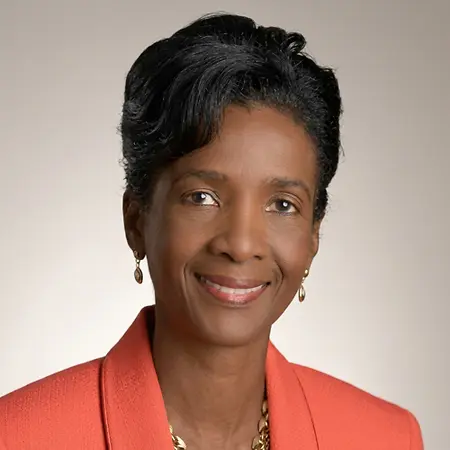
Her Story
About Audrey
Dr. Audrey Douglas‑Cooke is a healthcare strategist, educator, author, and former hospital executive whose life’s work has been shaped by service, compassion, and an unwavering belief in the power of people. Based in Virginia Beach, Virginia, Audrey’s journey began with a childhood dream of becoming a teacher. Encouraged by her sister, she pursued nursing at Georgetown University, an unexpected path that quickly revealed itself as a calling. What started as a practical decision blossomed into a profound passion for caring, educating, and empowering others.
Over the next 25 years, Audrey rose through the leadership ranks at Sentara Healthcare, ultimately serving as Vice President of Sentara Heart Hospital, the region’s only comprehensive cardiac and transplant hospital. She became known for her strategic clarity, her commitment to patient‑centered care, and her ability to guide high‑performing teams through some of healthcare’s most complex challenges. Though she never imagined she would one day lead a nationally ranked hospital, Audrey credits her success to persistence, humility, a remarkable team, and the courage to embrace setbacks as part of growth.
In 2019, she stepped away from hospital leadership to complete her PhD and return to her first love which is teaching. She joined Norfolk State University in 2022 as an Assistant Professor, where she now shapes the next generation of healthcare leaders. Her colleagues recently elected her President of the Faculty Senate, a role that reflects the trust she has earned through her integrity, transparency, and authentic leadership. Audrey’s commitment to community extends far beyond the classroom. She serves as Chairman of the Board of Directors for a $5.6B credit union, where she champions financial empowerment and organizational stewardship. Her passion for addressing homelessness led to her appointment by the Virginia Beach City Council to the Board of VBCDC. She continues to serve in this volunteer role as Vice President of the Virginia Beach Community Development Corporation. She also serves on the Board of Directors for the Virginia Center for Inclusive Communities, advancing dialogue, understanding, and equity across the Commonwealth.
As an author, Audrey brings her voice to the national conversation on race, empathy, and human connection. Her book, Racial Justice: Seeking First to Understand the Stories that Shape Us, explores how personal experiences and unconscious biases influence our perspectives. The book quickly reached #2 on an Amazon bestseller list, amplifying her message of courageous conversation, reflection, and healing. Across every chapter of her career, whether leading a hospital, teaching future professionals, or fostering community understanding, Audrey remains grounded in honesty, compassion, courage, and accountability. She believes that measurable results matter, but authentic relationships matter even more. Her leadership is defined not only by what she has accomplished, but by how she makes people feel seen, valued, and capable of achieving more than they imagined.
Audrey continues to lead with both heart and purpose, guided by the belief that when we uplift others, we elevate entire communities.
Her Interview
Ten minutes with Audrey
01What do you attribute your success to?
I attribute my success to a blend of perseverance, purpose, and an unwavering commitment to integrity. I never imagined that I would one day lead a nationally ranked hospital, yet that journey taught me the power of stick‑to‑itiveness. You must want the goal, be willing to put in the work, and be prepared for the moments when things don’t go your way. Not every door opens on the first knock, but if you remain committed, the people positioned to say “yes” will eventually see your value.
I have also learned that your work should speak louder than your words. We often feel compelled to list our degrees, titles, and accomplishments, but at the end of the day, it is the quality of your work that defines who you are and what you can achieve. If you say you improved outcomes such as reduced readmissions, expanded access to outpatient care, or increased transplant volumes, then let the data tell the story. It is important for women in leadership roles to consistently lean into the power of "evidence and outcomes".
Honesty and integrity have been my compass. Success requires being truthful about who you are, what you know, and where you still need to grow. It is perfectly acceptable to say, “I don’t know,” and then go find the answer. When you lead with transparency, acknowledging both your strengths and your limitations, people see your authenticity. And when people truly see you, they are far more willing to trust you, invest in you, and take a chance on you.
My journey has been shaped by faith, hard work, humility, and the belief that every gift we are given is meant to be shared. Those principles continue to guide me every day. "Each one, teach one, reach one!
02What’s the best career advice you’ve ever received?
The best career advice I ever received came from my mother, who was profoundly influential in shaping my professional journey. She taught me that your attitude determines your altitude. If you believe you cannot achieve something, you have already limited your own potential. That mindset has stayed with me throughout my life. Too often, we look at certain roles such as managing a hospital, leading a major initiative, or stepping into executive leadership, and immediately think, “I can’t do that.” Many of those doubts come from the institutional and cultural messages we’ve internalized over time. But my mother’s words always brought me back to center. They reminded me to ask myself
a simple but powerful question: What do I have to lose by trying?
That philosophy has carried me through every stage of my career. The worst-case scenario is that you don’t reach a goal on the first attempt. When that happens, you reassess, realign, identify your opportunities for growth, and try again. There is no shame in recalibrating; there is only strength in persistence. I believe this is especially important for women today. We must give ourselves permission to pursue roles that historically were not designed with us in mind. We must embrace the courage to try, even when the path is unfamiliar. Because every time we step forward, despite fear or doubt, we expand what is possible for ourselves and for the women who will follow.
03What advice would you give to young women entering your industry?
To young women entering this industry, I would say this: believe, truly believe that you can do whatever you set your mind to. Mind over matter is not just a saying; it is a discipline. When you train your mind to say, “I can do this,” you open doors that once felt out of reach. Too often, we look at executive roles in the business sector perhaps geared toward writing and shaping public policy. We immediately think, “That’s not for me.” Many of those doubts come from institutional cultures and societal messages that we have internalized over time. But the question I encourage young women to ask themselves is simple: What do you have to lose by trying?
The worst-case scenario is that you don’t reach the goal on the first attempt. When that happens, you reassess, realign, identify your opportunities for growth, and try again. Progress is rarely linear, and success is almost never immediate.
As I look at the landscape of our country today, I recognize that women, especially women of color, still face barriers that can make the journey feel heavier. But that is why stick‑to‑itiveness matters. You must want the goal. You must be willing to put in the work, and you must be prepared for setbacks. Not everything will come the first time around. But if you keep showing up, keep refining your craft, and keep pushing forward, the people in positions who have the power and authority to say “yes” will eventually see your determination and your talent. Persistence, preparation, and belief in your own capacity are the building blocks and the foundations for success. Once you embrace them, there is no limit to what you can achieve.
04What are the biggest challenges or opportunities in your field right now?
One of the greatest challenges in higher education today is supporting students as they navigate an increasingly complex and demanding world. Many are balancing academic expectations alongside personal, financial, and mental health pressures. This requires institutions to lead with deeper empathy, intentionality, and a renewed commitment to holistic student well‑being. At the same time, Audrey sees tremendous opportunity for higher education to evolve into a more inclusive, innovative, and student‑centered ecosystem. We have the ability and the responsibility to create learning environments where students feel seen, heard, and genuinely supported. When we do that, Audrey believes we not only strengthen academic outcomes, but we also help students build resilience, confidence, and a sense of purpose that carries them far beyond the classroom.
Audrey is confident that the future of our field lies in evidence‑based leadership, meaningful mentorship, and authentic collaboration. These elements allow us to design programs and experiences that truly meet students where they are, and prepare them for where they aspire to go. Through compassion, preparation, and intentional leadership, higher education can continue to transform lives and strengthen communities for generations to come.
05What values are most important to you in your work and personal life?
Honesty and integrity are the values that anchor both my professional life and my personal life. To me, honesty begins with being truthful about who you are by internally understanding your strengths, your limitations, and the areas where you still need to grow. Integrity means doing the right things for the right reasons, consistently, even when no one is watching. Those principles guide every decision I make. In my role in academia, I often remind students that it is perfectly acceptable to say, “I don’t know” or “I don’t understand,” and then take the initiative to learn. When you lead with transparency, acknowledging your flaws as well as your capabilities, people see you more clearly. They see your authenticity, and they are far more willing to trust you, collaborate with you, and even choose you to lead.
I believe we must model the values we want others to emulate. Integrity is the foundation of that example, but it is strengthened by compassion, authenticity, empathy, and bravery. These qualities shape how we show up for others and how we navigate difficult moments with grace. My mother always taught me that your attitude determines your altitude, and that wisdom continues to guide me. I believe the world would be a better place if we all took the time to reflect on what we need to own within ourselves, our biases, our blind spots, our opportunities for growth, before making judgments or decisions. When we lead from that place of self-awareness and humility, we create environments where trust can flourish and people can thrive.
Join Influential Women and start making an impact. Register now.