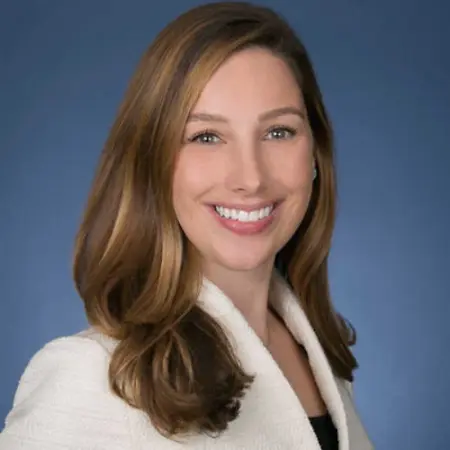
Her Story
About Aveda
I've been in my current role as Executive Director, HR Business Partner at CSG International for exactly 3 years, where I partner with our global telco business unit and lead a global HR business partnering function across all four business units representing about 6,000 employees across 40 countries. Prior to CSG, I was Vice President of Talent and Culture at EMIDS, where I supported the executive leadership team within a private equity-backed environment, handling HR business partnering, comp and benefits strategy, HR operations, and corporate communications. Before that, I was Head of People and Organization for NLX, a North American-based business group that was part of a much larger NL group based out of Italy, where I partnered with executive leadership in a high-growth, innovation-focused business focused on rapid scaling and change and transformation initiatives. Early in my career, I worked in a very progressive HR environment with a steady progression of talent leadership roles at Dell Technologies and EMC, where I supported global sales, customer operations, pre-sales, and various business units, and also supported workforce transformation and the integration during the Dell EMC merger. There's a common thread throughout my career of global talent strategies, leadership development, and change and transformation. My days vary significantly, but I focus on moving forward key initiatives like talent planning and succession planning, change and transformation in the business, and developing leaders, while also being prepared for unique employee situations or integration planning. I spend a lot of time in one-on-one sessions with senior leaders, either coaching, encouraging, or being that thought partner as we try to make decisions.
Her Interview
Ten minutes with Aveda
01What do you attribute your success to?
I attribute my success to my mindset and approach to resilience and perseverance. A lot of my leadership philosophy comes back to resilience and growth, and I deeply believe in growth mindset both for myself and for the leaders I support. I think the best leadership really happens when people are willing to evolve, take feedback, learn, unlearn, and relearn how they lead as the business changes around them. In the field that I work in, you can have deep expertise in the work, whether it's organizational design or exec coaching or workforce transformation, but I want to be someone who's known for that combination of having the strategic business partnership skill set and combining that with energy and rigor and an authentic approach. I think the combination of those things, the authentic approach, that's just me being me, and if you combine those things, that's where I've been able to contribute my part to high-performing teams. I've also been focusing a lot lately on what I call raising the floor, meaning your worst days, not your ceiling days. Even on days when you're not feeling it, if you just do something small like 5 squats, you're raising the floor on your worst days, and that keeps you consistent and raises the bar overall. When you have the mindset where you see challenges as opportunities, a lot of things open up for you, and I think your mindset impacts everything.
02What advice would you give to young women entering your industry?
I think one of the things I would tell young women entering this field would be to focus less on trying to prove yourself and more on just building real credibility over time. In HR, business, and leadership, credibility comes from consistency, good judgment, and handling complexity, but it doesn't mean always having the perfect answer to everything in the moment. I would encourage anyone to develop a growth mindset early. This work changes constantly. Businesses need to shift, leadership expectations evolve, and you have to be willing to adapt without losing your own core values. The other thing I'd say is I've learned the importance of how to influence beyond your title. Some of the most impactful moments in my own career haven't come when I had authority. I'm in a leadership position now where I have the honor of leading a team, but a lot of my career was really helping other leaders to have a broader perspective, or make decisions, or whatever it may be. So you may not have authority, and you may feel like you need to prove yourself, but you can still be influential beyond your title if you focus on consistency, good judgment, and aligning with your core values.
03What are the biggest challenges or opportunities in your field right now?
AI is definitely one of the biggest challenges and opportunities right now. There's both an enthusiasm by leaders and somewhat of a resistance from employees. It makes a lot of sense from a business perspective to be able to compete and become as efficient and effective as you can by leveraging technology, but there's also a trade-off that people want to fully understand in terms of what this means for them. People don't want to lose the authenticity, and even if it makes sense to use it, I think people are a little bit wary about the trade-off between efficiency and just total homogenization when everything kind of sounds the same. The pace of change just keeps continuing to pick up speed and become more complex, and in the backdrop of the world that we're all living in right now, there are some folks that, even if they want to feel engaged, they're feeling very disengaged. So keeping people motivated and engaged is a challenge. We've also had this more remote or hybrid workforce, but we haven't necessarily seen leaders optimize their leadership for leading, managing, and building teams in this remote or hybrid workforce. There's a lot of pressure in the system to bring folks back into the office, and there are these push and pulls that come up between employers and employees. I think we're trying to align business needs with people needs. But I kind of see these challenges as opportunities, and I think we have a lot of opportunity in terms of how we manage the remote workforce and how we engage team members to use AI and technology.
04What values are most important to you in your work and personal life?
Not to be a broken record, but I do think a lot of my philosophy comes back to resilience and perseverance, in my personal life too, for sure. When you have the mindset where you see challenges as opportunities, a lot of things open up for you, and I think your mindset impacts everything. I've been reflecting on this a lot, especially around finding motivation when there's no visible progress. It's super easy to stay consistent with something when you feel like you're getting better every day, even 1% better every day. But when you start to get better, you will eventually hit a plateau, and when you hit that plateau, you're going to really miss the immediate and those visible gains, and that's really what fuels consistency for a lot of people. So I think the mindset work is really important in professional and personal life, because 1% better every day works early on, but it gets harder to show progress the deeper you go. With the right mindset, you can tell yourself, I show up consistently, and I give what I got. And if you believe in that process that you're doing every day, you will start to see those gains again. What I've been focusing on a lot lately is raising the floor, so your worst days, your floor days, not your ceiling days. Even on your worst days, you're still doing something to raise the floor, and that keeps you consistent and raises the bar overall.
Join Influential Women and start making an impact. Register now.