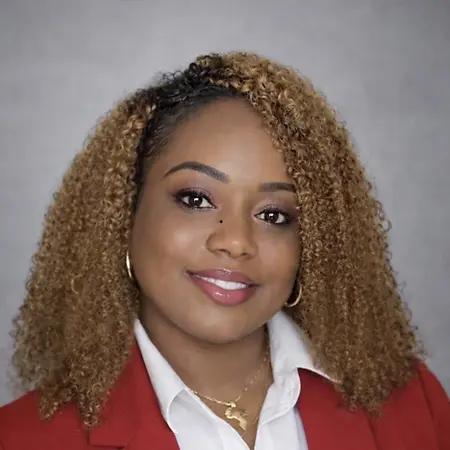
Influential Woman · Consulting & Non-Profit
Ayesha Williams
Chief Executive Officer, AB Consulting LLC & Legacy of Change Inc.
Miramar, FL 33023
Starting over taught me that my lived experience is my greatest professional asset, bridging the gap between my mission and the structure to make it sustainable.
Ayesha Williams · In Her Own Words
Her Story
About Ayesha
Ayesha Williams is a trauma-informed leader, advocate, and social-impact entrepreneur with over 15 years of experience serving individuals and families impacted by sexual abuse, domestic violence, human trafficking, and involvement in the child welfare system. Her work is grounded in compassion, collaboration, and a deep commitment to healing-centered, community-driven solutions.
Ayesha founded AB Consulting LLC from lived experience and professional purpose. Before becoming a consultant, therapist, and community leader, she is an overcomer of rape, domestic violence, and profound loss. Rebuilding her life cultivated resilience, deep empathy, and an unwavering belief in the importance of accessible, culturally competent support. These lessons now shape how she serves grassroots, women-led, and minority organizations.
As an immigrant who grew up navigating instability and limited resources, Ayesha learned early how difficult it is to build a dream without a roadmap. Those lived challenges, combined with more than a decade of frontline service to survivors, foster youth, individuals with special needs, and families in crisis, prepared her for this calling. She holds a Master’s degree in Social Work and a certificate in Organizational Leadership, which she leverages to guide both individuals and organizations toward sustainable growth and transformation from Barry University and Nova Southeastern University.
In 2019, Ayesha founded Legacy of Change Inc., where she serves as Founder and Executive Director. The organization provides trauma-informed healing for survivors of sexual abuse, domestic violence, and human trafficking, with a focus on youth and young adults ages 10 to 30. Through support groups, advocacy initiatives, and educational outreach, Legacy of Change creates safe spaces for healing, fosters resilience, and promotes prevention and awareness. Her leadership has helped countless survivors rebuild their lives with confidence, dignity, and purpose. Trauma informed educational workshops on all three topics.
Through this work, Ayesha also saw a persistent gap. Many mission-driven organizations serving vulnerable populations lacked the structure, funding knowledge, and strategic guidance needed to sustain and scale their impact. To bridge that gap, she launched AB Consulting LLC in 2024. As CEO, Ayesha provides grant writing, organizational development, strategic planning, and professional coaching to help nonprofits, grassroots organizations, and minority-led businesses build strong infrastructure, secure funding, and operate with clarity and confidence.
Her lived experience gives her empathy.
Her professional experience gives her credibility.
Her resilience fuels her mission.
Across all her work, Ayesha bridges lived experience with professional expertise to create meaningful, lasting change. AB Consulting is more than a consulting firm. It is a bridge for grassroots women founders and mission-driven leaders who deserve access, opportunity, and the tools to build sustainable, impactful organizations.
Her Interview
Ten minutes with Ayesha
01What do you attribute your success to?
I attribute my success to a combination of faith, resilience, discipline, and relationships grounded in purpose and driven by God.
First, faith. Faith has kept me anchored when the work was heavy and the path wasn’t clear. It reminds me that my life and my work are bigger than any single obstacle and that purpose is often revealed through perseverance.
Second, resilience built through lived experience. Surviving trauma, loss, and instability forced me to learn how to adapt, rebuild, and keep going when quitting would have been easier. That resilience shaped my leadership style. I don’t panic in chaos. I build in it.
Third, a deep commitment to service with boundaries. I care deeply, but I’ve learned to pair compassion with structure, accountability, and healthy limits. That balance is what allows my work to be sustainable and impactful instead of reactive or draining.
Fourth, education and continuous learning. My formal training in psychology, organizational leadership, and social work gave me the language, frameworks, and ethics to turn passion into systems that work. I stay curious, coachable, and open to growth.
Finally, community and collaboration. Mentors, partners, and the people I serve have all shaped my journey. I listen. I learn. I collaborate. Success has never been a solo effort.
02What’s the best career advice you’ve ever received?
“Don’t build your career around titles. Build it around impact and integrity, and the titles will come.”
That advice changed how I move. It taught me to stop chasing validation and start building value. When I focused on doing the work with excellence, staying grounded in my purpose, and protecting my integrity, doors opened that I didn’t have to force.
It also taught me something just as important: know when to say no. Not every opportunity is aligned, even if it looks good on paper. Protecting your values, your energy, and your boundaries is part of long-term success.
That mindset is why I prioritize purpose over pressure, systems over chaos, and sustainability over burnout. Careers are built over time. Impact lasts longer than any title.
03What advice would you give to young women entering your industry?
I would advise young women entering my industry to prioritize self‑care and establish clear boundaries. Learning to say no and to delegate effectively is essential, and I encourage focusing on work that aligns with your passion and purpose, rather than taking on projects solely for income.
04What are the biggest challenges or opportunities in your field right now?
The biggest challenge is that demand has outpaced infrastructure. Communities are facing rising rates of trauma, mental health needs, housing instability, and system involvement, yet many grassroots organizations and service providers are underfunded, understaffed, and expected to operate at a professional level without the resources to do so. Burnout is real. Compliance requirements are heavier. Funding is more competitive. Too many mission-driven leaders are carrying the weight of entire systems on their backs.
At the same time, the biggest opportunity is that the landscape is finally shifting. Funders, governments, and institutions are prioritizing equity, trauma-informed care, and community-based solutions in ways we haven’t seen before. There is growing recognition that lived experience matters, that prevention and healing-centered approaches work, and that one-size-fits-all models fail vulnerable populations.
Another major opportunity is integration. The future of this field is not siloed services but wraparound, coordinated care. When behavioral health, primary care, housing, education, and workforce support are connected, outcomes improve and costs decrease. Organizations that can build collaborative, data-informed, and client-centered models will lead the next phase of impact.
Finally, technology presents both a challenge and an opportunity. Digital tools can expand access, streamline operations, and increase sustainability, but only if organizations are supported in using them effectively. Those who invest in systems, data, and capacity-building now will be positioned to scale responsibly.
05What values are most important to you in your work and personal life?
I believe in doing the right thing even when it’s hard, leading with empathy without losing boundaries, taking responsibility for my impact, and staying aligned with work that truly matters. These values guide how I lead, serve, and live every day. The values most important to me in both my work and personal life are balance, curiosity, and well-being. I prioritize self-care, enjoy traveling, and love exploring new foods, as these activities help me recharge and stay inspired.
Join Influential Women and start making an impact. Register now.