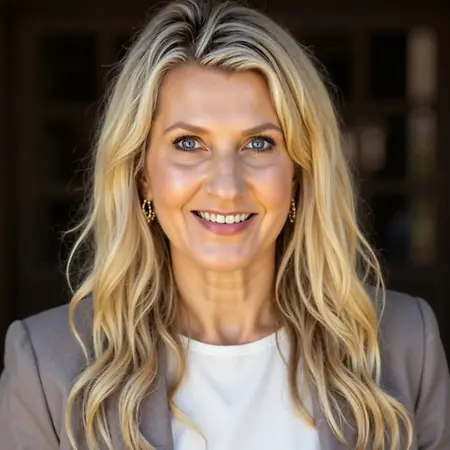
Her Story
About Barb
I've spent 11 years in human resources, and my career path has been anything but linear. I've been sober for 26 and a half years, and my higher educational trajectory wasn't a clear path - it took me a lot longer than most. I earned my bachelor's degree in technical writing from Metro State University in Minneapolis, and just this past May 2025, I finished grad school and got my Master's in Human Resources Management from St. Mary's University of Minnesota. For about 6 years, I worked as an HR generalist and HR operations team lead for a company that manufactured audio-visual equipment. In that role, every day was different - I was the first point of contact for employees with questions related to benefits, performance issues, or employee relations complaints. One of my biggest professional accomplishments was transitioning from working primarily in benefits to taking on a broader HR role, stepping outside my comfort zone to grow my career. My previous role ended in December, and around the end of March, I founded Parent Down, a resource for adult children navigating a parent's medical crisis. This came directly from my own experience as an only child caring for my mother before she passed away. I remember reflecting and thinking, how does anybody know how to do this? How do you file your parents' taxes after they pass away, or sell a car that's not yours? These are things you don't learn about. Now I'm focused on building Parent Down and providing resources for HR professionals, employees, and individuals going through similar experiences.
Her Interview
Ten minutes with Barb
01What do you attribute your success to?
I attribute my success to taking risks and going outside of my comfort zone. It just comes from life experience, but I think putting myself in situations that challenge me and seeing the outcome of doing that has really contributed to my success. When you step out of your comfort zone, you can really achieve things that might have seemed out of reach. If you just can walk through that fear of making a career transition or taking a leap, you realize it's attainable. That willingness to embrace discomfort and push through uncertainty has been key to my professional growth.
02What’s the best career advice you’ve ever received?
The best career advice I ever received came from a woman who was a mentor to me in my previous organization. She taught me the value in having a conversation with a co-worker, especially when there's conflict. She showed me that just having a conversation with somebody, letting them know how what they did made me feel, or addressing the issue head on, is a completely appropriate thing to do. A lot of people let things fester instead of dealing with them directly. She taught me well to not let things fester and to really address issues directly rather than avoiding them.
03What advice would you give to young women entering your industry?
I would say to embrace AI. I think that's kind of taking over, and a lot of work that individuals who are early in careers do is being affected by it, so it's important to get comfortable with that technology. I would also say to be confident in your role. In HR, you have to do a lot of pushing back, and especially with males who are in leadership roles. I think just staying true to themselves and staying strong and confident is really important. Women in HR need to stand firm in their expertise and not be afraid to advocate for what's right, even when it means challenging authority.
04What are the biggest challenges or opportunities in your field right now?
I think the biggest challenge right now is that HR professionals are going to need to embrace AI, because that's where we're at and where we're going. Resisting AI would be a mistake because it's fundamentally changing our field. I also think AI is going to change the landscape of recruiting significantly. The technology is transforming how we find candidates, screen applications, and manage the hiring process. HR professionals who don't adapt to these changes are going to find themselves left behind, so embracing this technology is both a challenge and an opportunity.
05What values are most important to you in your work and personal life?
The values most important to me are equality and honesty. I also think remaining neutral is really important in my work, especially in HR where you might form relationships with managers but then get a complaint about that same manager. Staying neutral is a real challenge, but it's essential. Being a trusted partner with the business while maintaining that neutrality and treating everyone fairly is something I work hard to uphold. These values guide how I approach both my professional responsibilities and my personal relationships.
Join Influential Women and start making an impact. Register now.