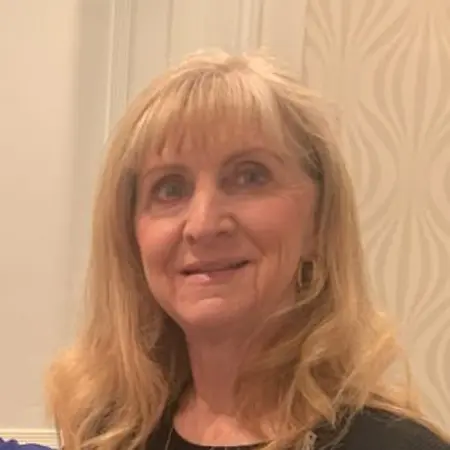
Her Story
About Barbara
Barbara Shaw, CPC, CPCO, CDEO, CPMA, CRC, CEDC, is a healthcare professional with more than 30 years of experience in the industry. She began her career with aspirations of working in nursing before transitioning into medical coding and clinical review. Today, she serves as a Clinical Review Specialist with Mass General Brigham in Newport News, Virginia, where she focuses on auditing medical records. Her professional expertise encompasses medical coding, medical auditing, clinical review, risk adjustment coding, and obstetrics and gynecology coding, supported by extensive experience in OBGYN practices.
Throughout her career, Barbara has developed a strong commitment to healthcare compliance, education, and professional development. She holds multiple AAPC credentials, including CPC, CPCO, CDEO, CPMA, CRC, and CEDC, and maintains an active connection with the American Academy of Professional Coders. In her current role, she audits records for Harvard-affiliated physicians and helps colleagues and newer professionals understand complex regulatory and coding changes, including updates from the Centers for Medicare and Medicaid Services. She also regularly participates in and presents at national conferences, state meetings, chapter meetings, and educational events.
Barbara is equally passionate about helping the next generation of medical coding professionals build successful careers. She encourages emerging coders to stay current with guidelines, pursue ongoing education, take advantage of available resources, attend professional meetings, and develop relationships with experienced professionals and mentors. Through mentoring, resource sharing, networking, and advocacy for apprenticeship opportunities, she contributes to the continued development of the coding profession. Her career reflects a strong dedication to lifelong learning, collaboration, knowledge-sharing, and helping others navigate the evolving healthcare compliance and coding landscape.
Her Interview
Ten minutes with Barbara
01What do you attribute your success to?
I attribute my success to curiosity, continuous learning, adaptability, and taking responsibility for my own professional development. Healthcare changes constantly, so I have never believed that the education I received when I entered the field would be enough for an entire career. I make a conscious effort to stay current with coding guidelines, healthcare regulations, Medicare policies, reimbursement structures, and other industry developments.
I also credit the relationships I have built throughout my career. Networking with experienced professionals has provided me with perspective, opportunities, and mentorship that cannot be found in a textbook. I have benefited tremendously from people who were willing to teach and mentor me, and I believe strongly in paying that investment forward by sharing knowledge and helping others grow. For me, success is not simply about what I accomplish individually, but also about how I can contribute to strengthening the profession and creating opportunities for others.
02What’s the best career advice you’ve ever received?
The most important career advice I would give—and the lesson I have carried throughout my own career—is to stay current and take responsibility for your own professional development. Healthcare evolves too quickly for professionals to depend solely on the education they received when they entered the field. I encourage professionals to attend meetings, earn continuing education credits, listen to different presenters, explore available resources, and remain curious about what is happening throughout the industry.
I also believe strongly in the power of relationships. Networking with experienced professionals can open doors, provide valuable perspective, and lead to mentorship opportunities that cannot be found in a textbook. For someone entering medical coding or clinical review, I would encourage them to start wherever there is an opportunity to learn. Even an entry-level position can become the foundation for a meaningful and rewarding career.
Most importantly, I believe knowledge should be shared. The people who taught and mentored me played an important role in my development, and I now try to pay that investment forward by helping newer professionals find their footing. To me, professional success is not about keeping knowledge to yourself—it is about helping create a stronger profession by helping others rise.
03What advice would you give to young women entering your industry?
My advice to the next generation is to take ownership of your education and never stop learning. Stay current with guidelines and coding updates, attend professional meetings and educational sessions, listen to different presenters, and make use of the resources available to you. Do not be afraid to ask questions or admit when there is something you do not know. Curiosity is an important part of professional growth.
I would also encourage young women to build relationships with experienced professionals and actively seek mentorship. Networking can provide opportunities, knowledge, and perspectives that may not otherwise be available. Start wherever you have an opportunity to learn, remain open to new experiences, and understand that an entry-level position can be the beginning of a long and meaningful career.
Finally, share what you learn. Helping others understand complex information strengthens not only the people you mentor but the profession as a whole.
04What are the biggest challenges or opportunities in your field right now?
I see the rapid transformation of healthcare as both a significant challenge and an extraordinary opportunity. Medicare, reimbursement structures, risk adjustment, regulations, and coding systems continue to evolve, and major changes in coding structures and approaches to Medicare management will require professionals to remain informed rather than relying on outdated knowledge.
At the same time, these changes create tremendous opportunities for clinical reviewers, coders, auditors, and educators who can help organizations understand not only what is changing, but why it matters. I believe education is one of the most powerful tools for navigating this transformation. Professionals who can take complicated regulations, coding changes, Medicare policies, and clinical concepts and translate them into practical, understandable information will continue to provide tremendous value.
The future belongs to professionals who remain curious, adaptable, collaborative, and committed to lifelong learning. As healthcare becomes more complex, the ability to turn that complexity into clarity becomes increasingly important.
05What values are most important to you in your work and personal life?
The values most important to me are integrity, compassion, empathy, mentorship, service, and respect. I believe healthcare professionals have a responsibility to protect the dignity of patients while maintaining accuracy, confidentiality, accountability, and high standards of clinical and ethical practice.
I also value collaboration, equity, inclusivity, trust, transparency, and continuous improvement. Whether I am reviewing a medical record or educating a room full of professionals, I try to remember that behind every chart, code, policy, and statistic is a human being whose health and well-being matter.
Ultimately, I believe in using my experience to serve others. If I can take something complicated and make it understandable, help someone become more confident in their profession, or share knowledge that allows another person to succeed, then I know my work has meaningful value.
Join Influential Women and start making an impact. Register now.