Her Story
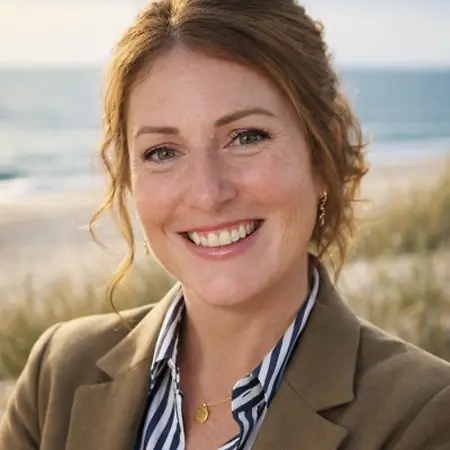
About Becky
I've been in the talent acquisition and recruiting space for about 15 years, working at both staffing companies and in corporate talent acquisition settings. I've typically been a very strong individual contributor, but in the last 5 to 10 years, I've moved up into more of a leadership role. In my current position, I directly support the CEO and president of a niche healthcare IT staffing firm and help manage a team of 4 recruiters. I'm super ingrained in the operations of this smaller outfit with about 15 internal employees.
I've been exposed to multiple industries throughout my career - I've recruited in healthcare, finance, IT, logistics and transportation, and now healthcare IT. I'm more married to the profession versus the industry. What makes me a great recruiter is that I'm a naturally curious person, so I want to get to know the person behind the resume. I want to know their career story, their passion projects, and what lights them up. I have a tremendous LinkedIn network, and I'm very blessed to know a lot of people. I help people get jobs even when I'm not working with them directly, making virtual introductions and connecting people. I've served on the board of local networking groups and volunteered with a nonprofit as a subject matter expert in the talent acquisition space with resume review and interviewing tips. I really enjoy what I do - not only do I get paid for it, but it genuinely fills my cup.
Her Interview
Ten minutes with Becky
01What do you attribute your success to?
I attribute my success to sports. I'm competitive, I have an incredible work ethic, and I don't shy away from competing against the boys. I feel like I deserve a seat at the table, just like anybody else. Playing sports growing up and all through college conditioned me to hone my craft and seek continuous self-improvement. It pushes you to do hard things, and then once you're tired and exhausted, you still have 10% more that you can give. I know the statistics are out there - 93% of C-suite or leadership women played sports at some point. For anybody that has a daughter, there's a certain amount of resilience that playing sports can teach you, and that's probably why, even at my age, I still consider myself an athlete.
02What’s the best career advice you’ve ever received?
The best career advice I was ever given was: if you don't know what to do, wait, because everything comes out in the wash. Early on in my career, because I was an athlete and I work in a fast-paced industry, I just wanted to go fast, fast, fast, fast. But I learned that if you're unsure about something, if you don't know what to do, it's okay to PAUSE. It's okay to go home and sleep on it, and let the dust settle, and give it 2 or 3 days. Not everything needs something thrown at it right away. If I'm ever not convicted about what I'm supposed to do, I'm gonna wait until I feel convicted, and then I'll run at it full speed.
03What advice would you give to young women entering your industry?
The advice I would give is to try to remove your emotions, because there's a lot of highs and there are some lows in staffing. It's very fast-paced and can be very stressful. Just realize that there's a solution to every problem, we do this every day, we're gonna get through it. Remove the emotion, the big reactions to things, and getting all worked up - it's just work. Emotions are meant to be felt, they're not meant to make decisions with. When they come, you feel them, you acknowledge them, you let them go, but when it comes to work, be clear about identifying what the problem is, be curious about seeking a solution, and then quickly solve the problem and move on to the next one. Time will do the rest.
04What are the biggest challenges or opportunities in your field right now?
We recruit medical coders for big hospital systems and insurance companies, particularly for risk adjustment work where they code charts for Medicare and Medicaid patients. The biggest challenges we face are working within a heavily regulated, compliance-driven industry that has government influence. We have to hire people with specific credentials that expire annually, and they must take certain amounts of classes to re-credential each year. We recruit a lot of remote contractors, so we have to offer a virtual desktop environment because of HIPAA compliance and PHI (personal health information). We're dealing with people's medical charts, dates of birth, Social Security numbers, diagnoses, and dates of service - all very sensitive things. On a daily basis, we're finding the right people with the right credentials and the right background, deploying them to our client's projects, ensuring they can deliver from a production standpoint, and that they're compliant so we can make an impact for our clients using our contract workforce. On the opportunity side, AI is helping 1000%. Some of our clients have created their own software platforms integrating AI to quickly scan through pages of medical charts, pull out diagnoses, and suggest numerical codes based on keywords. AI has greatly improved the efficiency, speed, and accuracy at which a medical coder can get through a chart.
05What values are most important to you in your work and personal life?
I think a superpower of being a woman is that we tend to be a little bit more compassionate and empathetic. When delivering feedback of any sort, it's important to do it with kindness, because when it comes to people's work, there's no way to say it's not personal, it's just business. No, it is personal, because this is what they show up to do every day, and they're trying their best. Remembering that there's a human on the other end of things is important. I believe in allowing the numbers to show trends and using those numbers to make decisions, but the everyday person that shows up in the seat and the behaviors they display - remembering that they're a person and figuring out how to motivate them, how to hold them accountable, how to follow up with them in a way that they're gonna respond to. People are how business happens. Business can very easily translate to numbers, trends, revenue, and profit and loss, but the people, the feelings, the emotions - that's how it gets done on a day-to-day basis. I have respect for both of those things and keep both in mind: yes, the numbers matter, and at the end of the quarter, either we met our goal or we didn't. But the people is day in, day out, how we get the work done.
Join Influential Women and start making an impact. Register now.