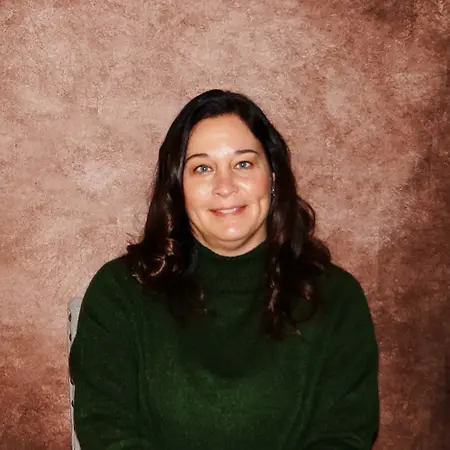
Her Story
About Belinda
Belinda Huesman is a Customer Experience and Process Director at Tipmont, a member-owned electric and fiber cooperative based in Indiana. She is passionate about creating meaningful member experiences while driving operational excellence through people-centered leadership.
With a diverse background spanning education, workforce development, and operations, Belinda brings a unique perspective to her role. She began her career as a special education teacher before moving into higher education leadership, where she served as Director of Admissions, Director of Career Services, and Campus President. These experiences shaped her approach to communication, leadership, and individualized support.
At Tipmont, Belinda focuses on enhancing member services and building processes that empower both employees and the communities they serve. As a Associate Certified Coach (ACC) and Energy Leadership™ Index Master Practitioner (ELI-MP), she integrates coaching principles into her leadership—developing teams, fostering accountability, and creating a culture rooted in trust, collaboration, and growth.
Belinda is driven by a simple goal: to leave people, teams, and systems better than she found them.
Her Interview
Ten minutes with Belinda
01What do you attribute your success to?
I attribute my success to two things: leaning into my strengths and learning how to adapt my communication to the people around me.
The turning point for me was going through my coaching journey, which made me much more self-aware as a leader. I realized that if I truly wanted to build a strong, empowered team, I couldn’t approach everyone the same way or feel the need to have all the answers.
Instead, I focused on understanding each individual—their experiences, strengths, and confidence levels—and adjusting how I showed up for them. That allowed me to support them in a way that still gave them ownership of their ideas and decisions.
What really transformed my leadership was learning to trust that process. I’m not just delegating—I’m guiding. I’m asking the right questions, creating space for people to think, and empowering them to arrive at their own solutions.
That balance of trust and guidance has been the biggest driver of my success. It’s not only helped me grow as a leader, but it’s also built a team that is more confident, capable, and proactive in how they approach their work.
02What’s the best career advice you’ve ever received?
The best career advice I ever received was to stop being the person who solves every problem and start developing others to solve problems on their own.
Early on, I felt like my value came from having the answers. But I learned that real leadership isn’t about being the “fixer” it’s about building the capability of the people around you.
That required me to unlearn some instincts and lean into curiosity instead. Asking better questions, giving people space to think, and trusting them to make decisions—even when it would be faster to step in.
When you empower others to think, decide, and act independently, you don’t just solve one problem, you create a team that can solve many. And that’s what truly scales your impact.
03What advice would you give to young women entering your industry?
If I could offer one piece of advice to women entering this industry, it would be this: don’t fall into the trap of proving your value by having all the answers.
Early in your career, there’s often pressure—especially as a woman in a technical or traditionally male-dominated space—to show competence by solving problems quickly and independently. While that can earn short-term credibility, it can also quietly position you as the person everyone depends on, rather than the leader who develops others.
What will set you apart long-term is your ability to empower, not just execute.
Learn to lead with curiosity instead of control. Ask thoughtful questions. Give people space to think. Resist the urge to jump in and fix everything—even when you know the answer. When you help others arrive at their own conclusions, you build confidence, capability, and trust across your team.
Also, recognize that leadership isn’t one-size-fits-all. Take the time to understand how different people think, what motivates them, and where they need support. Meeting people where they are is far more effective than expecting them to adapt to a single style.
Be patient with yourself in this process. Shifting from doing to developing others doesn’t happen overnight—it takes intentional effort and, at times, discomfort. But the payoff is worth it.
When you lead this way, you don’t just solve problems—you create teams that are proactive, collaborative, and capable of solving problems without you. And that’s where real impact—and real leadership—begins.
04What are the biggest challenges or opportunities in your field right now?
At the core, this is about partnering more intentionally with our membership by giving them practical tools and guidance that improve their day-to-day lives.
On the electric side, that means helping members better understand and manage their energy usage—introducing solutions that allow them to monitor consumption, identify inefficiencies, and ultimately reduce costs as energy demand and pricing continue to rise.
On the fiber and internet side, it’s about taking a consultative approach. As more members work from home and rely on connectivity, we can help them make informed decisions—whether that’s choosing between a mesh wireless system or hardwiring, optimizing their home network, or planning for future needs.
The bigger opportunity is positioning ourselves not just as a service provider, but as a trusted partner. By identifying and offering the right tools, applications, and expertise, we can empower our members to navigate increasing energy demands and growing connectivity needs with confidence.
Ultimately, both energy usage and reliance on high-speed internet will only continue to grow. Our role is to come alongside our members, understand their needs, and provide solutions that help them manage costs, improve performance, and enhance their overall quality of life.
05What values are most important to you in your work and personal life?
The two values that matter most to me, both in my work and personal life, are autonomy and honesty.
Autonomy is important because I believe people do their best work when they’re trusted to think for themselves and take ownership. That shows up in how I lead—I focus on empowering others to make decisions, solve problems, and have confidence in their abilities rather than relying on constant direction.
Honesty is the foundation that makes that possible. I value open, direct communication—being clear about expectations, giving candid feedback, and creating an environment where people feel safe to speak up and be real.
Together, those values create trust. When people are given autonomy and know they’re operating in an honest environment, they’re more engaged, more accountable, and more willing to grow—and that’s what drives strong teams and meaningful relationships.
Join Influential Women and start making an impact. Register now.