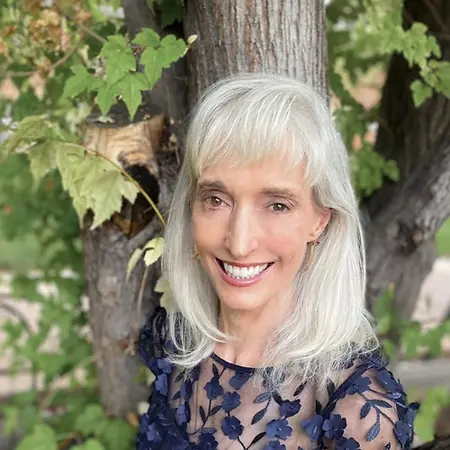
Influential Woman · Women’s Health, Medical Innovation, Education, Publishing, Fine Art, Personal Development, and Transformational Coaching
"Belle” (Martha) Christine Heppard, M.D., AOA. FACOG, Th.M.
OBGYN Physician Surgeon / Inventor / Author / Founder and Chief Executive Officer, Belle Fine Art, LLC
Colorado, USA 80840
Her Story
About "Belle” (Martha) Christine
Belle (Martha) Christine Heppard, M.D., AOA, FACOG, Th.M., is a Harvard-educated physician and former obstetrician-gynecologic surgeon whose career encompasses medical innovation, patented invention, internationally bestselling authorship, fine art, education, entrepreneurship, and keynote speaking. Across these disciplines, she has remained a steadfast advocate for women’s health, dignity, autonomy, and well-being.
At age seventeen, Dr. Heppard obtained independent status and assumed full financial responsibility for her education. While carrying a rigorous course load at Harvard and Radcliffe Colleges, she worked as many as 35 hours each week to support herself. Known then as Martha C. Stricklin, she ranked within the top one percent of her class.
Dr. Heppard graduated magna cum laude in Biology in 1982, as a member of the first graduating class of women to receive Harvard College diplomas. She also earned the exceptional distinction of teaching Harvard’s introductory biology laboratories while still an undergraduate. Her achievements included recognition as a John Harvard Scholar, Agassiz Scholar, and Radcliffe Scholar. As an early member of Harvard Women’s Varsity Basketball, she also contributed to the advancement of women’s collegiate athletics at Harvard.
Dr. Heppard earned her medical degree from the University of Southern California School of Medicine, now the Keck School of Medicine of USC. She continued supporting herself through medical school while serving as class president, yearbook editor and chief financial officer, and a member of student-alumni leadership organizations. She was selected as a National Rhodes Scholarship Finalist and received many of the institution’s highest graduating honors.
She then completed four years of intensive postdoctoral residency training in Obstetrics and Gynecology at the University of California, Irvine. She was elected to Alpha Omega Alpha, the distinguished national medical honor society recognizing excellence in scholarship, character, leadership, professionalism, and service. Upon graduation, she entered independent practice as a fully trained and licensed obstetrician-gynecologist.
Dr. Heppard subsequently completed comprehensive written examinations and rigorous individual evaluations conducted by six highly accomplished obstetrician-gynecologists. Her successful completion of this process earned her the designation of Fellow of the American College of Obstetricians and Gynecologists—FACOG—reflecting advanced professional competence, ethical standing, and sustained dedication to excellence in women’s healthcare.
She established a highly respected medical and surgical practice in metropolitan Denver and later served as an Associate Clinical Professor at the University of Colorado School of Medicine. She educated medical students and resident physicians, served on hospital ethics and research committees, and was recognized as a Colorado “Top Doctor” for nearly two decades.
Throughout her medical career, Dr. Heppard pioneered more compassionate and effective approaches to women’s healthcare. Her clinical research and product-development work encompassed menstrual health, medical devices, absorbency technology, patient dignity, and uterine preservation. Her work in endometrial cryoablation led to FDA recognition of the uterine-preserving “Heppard Technique,” offering qualifying women an effective alternative to major surgery. Her guiding question has remained constant: How can women’s healthcare become safer, more effective, and more dignified?
Dr. Heppard’s first three books—successive editions of Acute Obstetrics: A Practical Guide—became sought-after clinical references for physicians, nurses, midwives, medical students, and others caring for pregnant patients. Their international appeal led to publication in Italian, Spanish, French, and Japanese, establishing Dr. Heppard as an internationally bestselling medical author.
Her fourth book, Watercolor Batik: An Artist’s Guide to Watercolor Batik on Rice Paper, presents the original fine-art method she developed through years of experimentation, painting, and teaching. Her newly released fifth book is HAPPEE ACT: Evolve in 3 Steps! To Live a Life of Superconscious Contentment, Optimal Well-Being, and Inner Peace.
HAPPEE expresses the philosophy that Human Acceptance Permits Purpose, Exuberance, and for one to Evolve. Its three action steps—Accept, Create, and Transform—offer readers a purposeful path toward Superconscious Contentment, Optimal Well-Being, and Inner Peace. Her graduate theological studies further enriched the spiritual and philosophical dimensions of this work.
Dr. Heppard’s inventions extend beyond medicine. She originated Watercolor Batik®, a fine-art method created on Japanese rice paper, and developed the patented Artist Angle® and Artist Angle Level-3®. These precision instruments help artists and other visual professionals understand proportion, alignment, perspective, and spatial relationships within minutes rather than hours.
The most recent Artist Angle model was inspired by Dr. Heppard’s years of blindness and her continuing work to restore her sight. Along with standard American units of measurement, it incorporates Braille to make the instrument accessible to people with varied visual abilities. In her own recovery, the tool helped her perceive three-dimensional relationships again within minutes after years without depth perception.
In 2025, Dr. Heppard received a United States patent for the Malama® women’s medical examination gown. Designed to preserve warmth, modesty, mobility, and dignity, the gown also provides clinicians with appropriate access during examinations and procedures.
Dr. Heppard’s accomplishments became even more remarkable following a catastrophic rear-end collision in 2017. The accident caused cerebral injury, progressive blindness, devastating spinal damage, chronic pain, and a series of major spinal operations. Despite an exceptionally grave prognosis and years of complete blindness, she participated actively in her recovery, encouraged the regeneration of her corneal nerves, regained her sight, and rebuilt her physical and creative life.
Her recovery also brought clarity to the neurological origins of symptoms that had been assigned a psychiatric diagnosis for approximately 25 years. A more accurate understanding of those injuries enabled her to reclaim her health, identity, creative gifts, and future.
Dr. Heppard returned to painting, resumed inventing and writing, and created Evolve Coaching. She transformed the principles that supported her own reconstruction into the HAPPEE ACT philosophy so that the wisdom gained through medicine, scholarship, creativity, adversity, and renewal could serve others.
Across medicine, invention, authorship, art, theology, and coaching, the unifying purpose of Dr. Heppard’s life remains constant: to observe with precision, listen with empathy, recognize what humanity needs, and apply intellect, imagination, discipline, and love toward creating it.
Her Interview
Ten minutes with "Belle” (Martha) Christine
01What do you attribute your success to?
I attribute my success to an early understanding that I was responsible for becoming both the principal architect and financier of my own life.
At Harvard, I recognized that my future would depend upon my resourcefulness. I secured independent status, worked as many as 35 hours each week, maintained a demanding academic schedule, and financed my education. I continued working while attending medical school full-time.
Those years taught me that disappointment can become discipline, necessity can inspire invention, and independence can open the way to freedom.
I have always been drawn to questions others have ceased asking. In medicine, I studied women’s experiences and sought ways to make their care safer, more effective, more comfortable, and more dignified. In art, I created tools and methods to solve visual and technical challenges. While rebuilding my life after injury, blindness, and years of medical mischaracterization, I applied those same principles to my own recovery and transformation.
My success has grown from disciplined curiosity, exacting standards, empathy, perseverance, and the conviction that every experience offers lessons that can be transformed into meaningful service.
Yet its deepest foundation has been my nuclear family—my husband and our three sons. Their steadfast love and belief in me gave me strength when my own strength was most deeply tested. I may have been the architect of my life, but they became its foundation—and everything meaningful I have built stands stronger because of their love.
02What’s the best career advice you’ve ever received?
The most enduring career advice I received,, I simplify into these words: Prepare well, embrace opportunity—and when necessary, create it.
Recognition often follows excellence, yet purpose, integrity, and service give our work its lasting value.
I have also learned that a long-tolerated problem often presents a powerful opportunity to innovate.
03What advice would you give to young women entering your industry?
Preparation creates confidence, and courageous action creates opportunity.
Learn your discipline so thoroughly that your confidence rests upon competence. Ask questions others have stopped asking. Seek wise mentors while continuing to cultivate your own judgment. Respect tradition and contribute your intelligence toward its continued evolution.
There will be occasions when you are underestimated, interrupted, or overlooked. Meet those moments with grace, preparation, and steadfast self-respect. Allow the quality of your work to express the full measure of your ability.
Take ownership of your career. Recognize your gifts, develop them rigorously, and create opportunities that align with your purpose. Achievement reaches its greatest significance when it elevates the life of someone beyond oneself.
Build a career of consequence as well as a résumé of distinction.
04What are the biggest challenges or opportunities in your field right now?
The greatest challenge—and opportunity—in women’s healthcare is bringing women’s lived experiences into fuller partnership with science, clinical judgment, research, design, and medical leadership.
Women often perceive meaningful changes in their bodies early. When healthcare professionals listen with curiosity and respect, these observations can lead to more accurate diagnoses and more individualized care.
I understand this as a physician, researcher, inventor, and patient. Symptoms arising from an earlier neurological injury were attributed to a psychiatric cause for approximately 25 years. Discovering their neurological foundation transformed my care and helped me reclaim my health, identity, and creative future.
Women’s healthcare is entering an extraordinary era of improved diagnostics, personalized medicine, intelligent design, stronger research, and women-led innovation. Its future belongs to leaders who unite scientific rigor with attentive listening—advancing life while safeguarding dignity, autonomy, comfort, function, and quality of life.
05What values are most important to you in your work and personal life?
Both of my grandmothers impressed upon me a truth that became part of our family inheritance: “People matter more than anything we may ever possess, pursue, or achieve.”
My grandmother Christine Fleming Stricklin embodied this principle through her pioneering work with people who were deaf and blind. At the completion of her three-year professional program, her diploma was presented by First Lady Grace Coolidge. During the following decade, Christine developed remarkable advances in sign language, including individual hand motions capable of conveying complete sentences with emotional tone and meaning.
When Helen Keller learned of Christine’s work, she traveled independently across the country by train to Berkeley, California. She stayed in my grandmother’s home, attended her classes at the California School for the Deaf and Blind, and received private instruction from her. This extraordinary legacy taught me that knowledge reaches its highest purpose when it expands another person’s ability to understand, communicate, and participate fully in life.
Integrity is the foundation of everything I value. It means that one’s private standards equal—or exceed—one’s public promises.
Empathy is equally essential. Genuine empathy listens closely enough to influence what one does next. In medicine, it shapes diagnosis and treatment. In invention, it guides design. In leadership, it determines how power is exercised.
I value intellectual honesty—the willingness to question assumptions, examine evidence carefully, refine conclusions, and remain open to deeper understanding. I value excellence because the details of one person’s work may become the safety, health, dignity, or hope within another person’s life.
I also value courage: the decision to let purpose speak more powerfully than fear or pain.
In both my professional and personal life, I seek to honor my grandmothers’ enduring wisdom by leaving each person with greater dignity, clarity, possibility, and hope than they possessed before encountering my work.
Join Influential Women and start making an impact. Register now.