Influential Woman · Learning and Employment Record Ecosystem
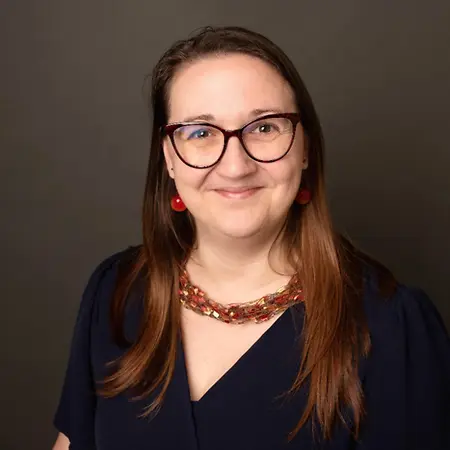
Beth Ardner
Vice President of Growth, Gobekli
Middletown, PA
Her Story
About Beth
In my role as Vice President of Growth at Gobekli, every day is different because there's such a range of things I do in a startup. I'm involved in growth planning and structuring, which includes direct sales efforts, market research, and voice of the customer work with our product team. I recently finished writing a very large RFP response for the state of California, and I'm also involved in grant writing and RFP writing. My day really involves thinking about connection and relationships, making sure those relationships are beneficial to us as a company and to the person we're relating to, whether that's a vendor partner, a client, or a funder. It's about what that relationship looks like and how we mutually benefit from it. That's my day in a nutshell, thinking about that from 20 different lenses depending on the day or the moment.
Her Interview
Ten minutes with Beth
01What’s the best career advice you’ve ever received?
When I worked at Borders early in my career, I was transitioning to take over a position working directly with publishers. On the first day I was doing that job without support, my manager left me a note that said, 'It's just books, not blood transfusions.' What he meant was, because it's not life or death, relax and do the good work, but don't take it so seriously that you don't enjoy it and you stop yourself from doing well. Don't get so worked up that you can't manage it. Things will happen. The work we all do is important, but at the end of the day, not letting it define you, not letting it consume you is really important. I have used that bit of advice, 'it's just books, not blood transfusions,' more times than I can count. That was from Jim Smith, who is a retired history teacher.
02What advice would you give to young women entering your industry?
One, know your worth. Don't let anyone tell you you're worth less than you are, because they would. That's just the reality of it, especially as women going into technology industries. Any of those spaces, they're often male-dominated. You have a right to be in the room. But also, because we tend to go into those spaces and we want to be there and sometimes we're afraid to make waves, I'd say no, show up, make waves. There will always be people who think you're too much. There are always going to be somebody like that. And my response to that is, okay, go ahead and find less than. For the women going into these fields, just go in, be you, do what you know you're good at, don't let anyone tell you that you're not worth being there, don't let anyone tell you you shouldn't be at the table. Because those spaces, as long as you occupy them, they will open up, and you'll be able to run with those opportunities. And the only other thing I would say is, if you're not passionate about it, if it's not something you care about, I mean, we all have bills to pay, so do the thing you have to do. But passion in what you're doing makes all the difference.
03What are the biggest challenges or opportunities in your field right now?
The challenges are that it's an emerging field, and so there is a kind of a slow roll of people picking it up. For example, I just finished an RFP for the state of California, and there's only a handful of states that are at that level of approaching what I do right now. However, that is also a great opportunity, because I'm in this kind of bleeding-edge industry where we're actually getting to define and think through how to do this well, how to make sure no one's left behind. We talk a lot about designing for the edge cases, because if the edge cases are cared for, the middle will be cared for. So really making sure that we can take what we're doing, which is this technology infrastructure, and actually apply it in a meaningful way. Some of that's going to require cultural change. It's a really exciting opportunity and also a really big challenge. How do we change the way culture thinks about skills? How do we change the way culture thinks about the job search and those pieces, how do we change the way people think about value? How do we get to a point where we stop using, for example, a degree as a corollary for being good at something? Yes, degrees are important. Would never, ever, ever take mine back. But at the same time, how many people do we know have degree-worthy knowledge that just doesn't have a degree attached to it?
04What values are most important to you in your work and personal life?
Community and relationship building are most important to me. Show up for the people that matter to you. When I say family, I mean whoever it is that is your closest people. Sometimes that's friends, sometimes that's neighbors, sometimes that's work people. We choose how we approach people, and if we look at people as a relationship, as a connection, as somebody that matters, that we can breathe into and they'll breathe back into us, that's valuable. When we look at people as resources or things that we can use and expend, that doesn't matter whether it's in your life or in your work, that will ultimately always end in just an ugly place, a place where you're not getting what you need, where you have not nearly enough joy, and where others around you are not having that. Truly thinking about people are important. The treat people as you want to be treated thing sounds trite, but if you really think about, genuinely take the time to think about how would I want someone to treat me, that changes it. I think sometimes we say that when we want to be annoyed at how someone treated us, as opposed to actually thinking through, what does that mean, then, in practice for me? To truly treat someone the way I would want to be treated, to give them the dignity and the appreciation and the viewpoint of they are a human being who matters. If we could all get on board with thinking that way, I think a lot of things in the world would change.
Join Influential Women and start making an impact. Register now.