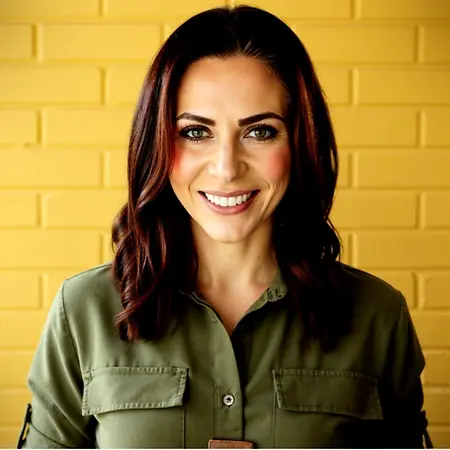
Her Story
About Bethany
Bethany Gustafson is a Global Events Leader and Experiential Marketing Strategist based in the Atlanta metropolitan area, currently serving as Director of Events at ACTIVE Network. In this role, she leads a global portfolio of approximately 70–80 trade shows, conferences, and internal events annually, overseeing strategy, contracts, sponsorships, and on-site execution. She manages a multi-million-dollar events budget while ensuring each program is aligned with revenue goals, brand storytelling, and measurable business impact.
Her career spans more than 15 years in the events industry, beginning in trade show coordination and office management at MD Publishing, where she gained hands-on experience producing conferences and managing end-to-end event logistics. She later expanded into corporate and aviation environments, supporting executive operations and event programs with airlines including ExpressJet. In 2017, she joined ACTIVE Network as an entry-level event coordinator and advanced through multiple promotions—eventually rising to Director of Events through progressive leadership roles in marketing, strategic engagement, and event management.
Bethany specializes in B2B trade shows, conference strategy, brand activations, and revenue-driven event marketing. She is known for combining creative storytelling with data-informed planning, budget discipline, and people-first leadership. Her approach emphasizes designing experiences that foster meaningful engagement, strengthen brand visibility, and deliver pipeline impact, with a strong focus on preparation, cross-functional collaboration, and turning events into strategic business growth platforms.
Her Interview
Ten minutes with Bethany
01What do you attribute your success to?
I attribute my success to determination, independence, and a willingness to take a different path from those around me. Coming from a family of educators, I recognized early on the financial limitations of that career path and made a conscious decision to pursue something different, even when it meant taking risks. I’ve never relied on being the most polished or naturally gifted, but instead on consistent hard work, ownership of my choices, and the drive to build something of my own. I believe success is shaped by how you handle the small things, and that your character is ultimately defined by what you do when no one is watching.
02What’s the best career advice you’ve ever received?
The best career advice I’ve ever received is that how you do anything is how you do everything. It reinforced for me that consistency and care in the smallest tasks ultimately shape your larger reputation and outcomes. I first truly understood this one night while closing a bar in my early twenties, exhausted and cutting lemons, when I considered stopping short—but realized that finishing well wasn’t about the lemons, it was about who I choose to be. Since then, I’ve carried that mindset into everything I do, from planning small events to large-scale productions, and from one-on-one meetings to executive priorities. I hold myself to the same standard in every situation, because I believe what you consistently put into your work is what ultimately comes back to you.
03What advice would you give to young women entering your industry?
Your voice is just as important as everyone else's, and I mean that in a full 360 sense. Your voice is no less important than any person who's in that room, or at that event, or having this conversation, whether you have come in with zero experience or 30 years of experience. But on the other hand, your voice is also not more important than anybody else's either. You have a real responsibility to listen and absorb and ask questions, and you must use that intelligently, because it can seem bright and shiny to have these lights on you and have this attention. Typically, people in events are very bubbly and extroverted, and it's easy to drink the Kool-Aid of how great you are, but you're a dime a dozen and you can be replaced, so make yourself irreplaceable. The only way you do that is by listening and then taking chances - calculated chances, don't be reckless. You have to be able to risk saying the thing, asking the question, learning something new about something you thought you already knew. I genuinely believe that curiosity is the most important skill, because I do think it's a skill, that anyone can have in events.
04What are the biggest challenges or opportunities in your field right now?
A real challenge in my field is that a lot of people tend to think of corporate events or events in general as just party planning or being a wedding planner. While wedding planners are certainly part of the event industry, that's not the only thing. I wish more of my job involved parties - that would be a lot more fun than the vast majority of the events I plan. It's really about getting credibility that this is an actual revenue lever for companies, and when you do it strategically rather than just showing up and hoping everything works out, it makes a real difference. Hope is not a strategy - it's important to have, but it's not a strategy. The opportunity is adding validity to this, particularly for such a woman-dominated industry, and not just for C-suites to know that, but also for the planners and anybody in my industry to believe that too. Sometimes I see women in my field who just show up and exhibit or slap their logo on something and call it a day, but there's a way to tell this story differently to really make this something that drives brand perception and buying strategies for your audience. Another opportunity is showing how you can use event planning skills strategically to make money for your business, and how you can take these life skills and apply them outside of work. People in events are excellent executors who learn how to negotiate, project manage, manage massive budgets, and tell the story of what you do and how that impacts the business beyond just clear ROI, which is incredibly difficult to do with events.
Join Influential Women and start making an impact. Register now.