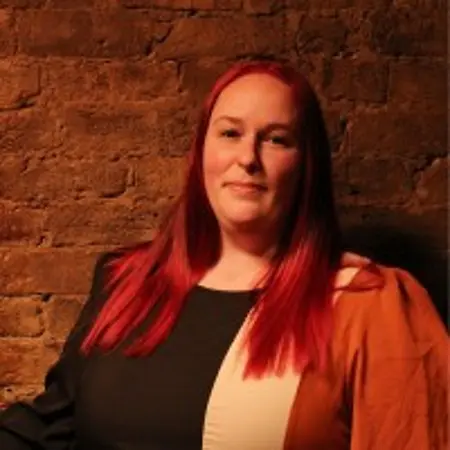
Her Story
About Bethany
Dr. Bethany Nelson, PhD, is the Executive Director of the American Foundation for Addiction Research (AFAR), where she leads all aspects of the organization, including program management, fundraising, finances, marketing, and board relations. As the sole staff member, she works closely with a dedicated board and volunteers to advance the foundation’s mission, focusing on evidence-informed approaches to sex and porn addiction as well as broader addiction treatment. Her work integrates rigorous research with practical nonprofit management to create meaningful impact in the community.
Bethany’s journey into sociology and addiction research is rooted in her early academic curiosity about the social factors shaping human behavior. After beginning her studies in psychology, she was drawn to sociology, emphasizing the external relationships and environments that influence individual choices. She earned a PhD in Sociology from the University of Tennessee, Knoxville, and holds dual master’s degrees in Public Administration and Criminal Justice from Eastern Kentucky University. This interdisciplinary background informs her approach to organizational leadership, program design, and community engagement.
Beyond her professional role, Bethany is a passionate advocate for collaborative, equity-centered nonprofit work. She serves on the boards of Spark in Knoxville and the Automotive Free Clinic in Montgomery, Alabama, and is an active member of Phi Alpha Delta Law Fraternity and the Rotary Club. Recognized as one of Knoxville’s Influential Women in 2026, she emphasizes stewardship, compassion, and resilience in both her personal and professional life, demonstrating a commitment to fostering justice, community care, and sustainable social impact.
Her Interview
Ten minutes with Bethany
01What do you attribute your success to?
I attribute my success to the people who surround and support me. Strong community has been the foundation of everything I’ve been able to build—collaborators, colleagues, and partners who share a vision and are willing to work together to move meaningful ideas forward. I’ve also been incredibly fortunate to work alongside dedicated board members whose guidance, expertise, and willingness to invest their time and insight have strengthened every initiative I’ve led. And behind it all is my family, whose encouragement, patience, and belief in me make it possible for me to show up fully in the work I care about. Any success I’ve experienced is really a reflection of the collective effort, trust, and support of these people in my life.
02What’s the best career advice you’ve ever received?
The best career advice I’ve ever received is to build with people, not just for them. Early on, someone told me that meaningful work rarely happens in isolation—it grows through relationships, shared ownership, and trust. That perspective changed how I approach leadership. Instead of focusing only on outcomes, I focus on cultivating strong teams, engaged partners, and supportive communities, because sustainable impact is always collective.
It also taught me that success isn’t about having all the answers; it’s about being willing to listen, adapt, and invite others into the process. The strongest opportunities, ideas, and breakthroughs in my career have come from collaboration, not individual effort.
03What advice would you give to young women entering your industry?
My biggest advice would be this: don’t wait until you feel completely ready to take your seat at the table. In fields like research, nonprofit leadership, and behavioral health, it’s easy to feel like you need one more credential, one more year of experience, or one more sign of validation before speaking up. The truth is, your perspective already has value. Confidence often follows action, not the other way around.
I’d also encourage young women to build strong networks early and intentionally. Find mentors, collaborators, and peers who challenge you, support you, and tell you the truth. The relationships you cultivate will matter just as much as your résumé. This work can be demanding, but it’s also deeply meaningful, and having a community around you makes it sustainable.
Finally, stay grounded in your purpose. There will be moments when systems feel slow, funding is uncertain, or progress seems incremental. When that happens, return to why you entered the field in the first place. Passion paired with persistence is incredibly powerful—and when you bring both, you don’t just join an industry, you help shape its future.
04What are the biggest challenges or opportunities in your field right now?
One of the most significant opportunities in our field right now is the growing momentum to work together in ways that simply weren’t happening a decade ago. There is more public awareness around sex and porn addiction than ever before. Conversations that once took place only in private therapy rooms are now happening in research settings, professional conferences, media discussions, and community spaces. That increased visibility creates a rare window for progress—one where clinicians, researchers, advocates, and people with lived experience can align their efforts and move the field forward collectively rather than in silos.
At the same time, one of our biggest challenges is making sure local communities stay connected to national-level research and advocacy. Many individuals and families affected by addiction or betrayal trauma still feel far removed from the scientific and policy conversations shaping treatment standards. Bridging that gap is essential. When research informs community support—and community voices inform research priorities—we get more accurate data, more compassionate care, and solutions that actually reflect real-world needs.
Another reality we’re navigating is funding uncertainty. In difficult economic climates, research and prevention work are often among the first areas to feel strain. Yet this is exactly when collaboration matters most. By pooling resources, sharing data, and coordinating initiatives across organizations, the field can remain resilient and continue advancing evidence-based understanding.
Overall, I see this moment less as a barrier and more as a turning point. The awareness is there, the expertise exists, and the willingness to collaborate is growing. If we continue building bridges between local communities, national initiatives, and research institutions, we have a genuine opportunity to accelerate progress and create lasting change.
05What values are most important to you in your work and personal life?
In my work and personal life, I’m guided by a strong sense of stewardship, integrity, and connection. Professionally, I believe deeply in responsible leadership—being thoughtful with resources, transparent in decision-making, and accountable to the communities and missions I serve. I value collaboration and shared ownership, especially with board members, partners, and volunteers, because I’ve seen firsthand that the strongest outcomes happen when people feel invested and heard. I’m also driven by purpose-centered work that translates research, advocacy, and community voices into tangible change.
Personally, staying grounded is essential to me. I prioritize creating space in my home and local community that allows me to recharge, reflect, and stay connected to what matters most. Whether that’s through simple daily rituals, time with loved ones, or caring for animals with special needs, I try to live in a way that keeps me centered, compassionate, and present. That grounding isn’t separate from my work—it’s what sustains it.
Join Influential Women and start making an impact. Register now.