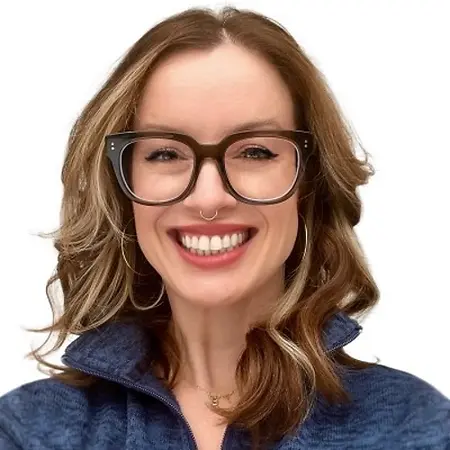
Her Story
About Betony
I started my healthcare journey growing up in a very poor rural community in Bend, Oregon, without much access to higher education. I moved up to Washington State outside of Seattle and was pulled into taking care of others, starting as a CNA in a nursing home. I loved it so much that I went to Seattle Central Community College to get my associate's degree in nursing while working as an ER tech. I received a scholarship to go to University of Washington for my bachelor's degree in nursing, which was a godsend. I didn't get my nursing license until I was in my late 20s, so I was a bit of a late bloomer because of all the struggle that life had thrown my way, but I wouldn't change a thing. I worked in the ER and landed in leadership there, getting all the certifications and licensure I could because the more knowledge you have, the more you can give back to your community. In October 2019, I made the leap from bedside nursing to healthcare tech, which was scary because my whole identity was being an ER nurse. But I felt pulled towards it to really support the teams on the ground to do work better with the right tech at the right time. I've now been at my third tech startup for about 6 years as a customer success and sales leader, working in data and process improvement, which has been seriously lacking in healthcare since the dawn of electronic charting. I'm about 40% customer-facing, going over data and process improvement cycles with hospitals, and the rest is internal project planning as we're in a hyper growth phase. Currently, I work with a mentor I'm honored to work for again, Lisa Skelton, who is a retired ER leader. I've had the opportunity to work alongside her as an ER leader, had her as a customer at my first healthcare tech startup, and now she's my current boss.
Her Interview
Ten minutes with Betony
01What do you attribute your success to?
I attribute my success to the innate drive to help others and to never stop learning and growing. I also embrace uncomfortable moments for those learning opportunities. Growing up in a very poor rural community without a whole lot of access to higher education taught me resilience through the school of hard knocks. I was pulled into taking care of other folks, starting as a CNA in a nursing home, and I loved that. Even though I didn't get my nursing license until I was in my late 20s and was a bit of a late bloomer because of all the struggle that life had thrown my way, I wouldn't change a thing. All of those experiences shaped who I am today.
02What’s the best career advice you’ve ever received?
When I was first offered a job in healthcare tech, that meant I was leaving the bedside, and my whole identity was being an ER nurse. I knew what I loved and what I had studied. I spoke to one of my husband's good friends who was in healthcare tech at the time, and he said I would regret it if I didn't take the leap because I could always go back to nursing. I was so passionate about healthcare tech and all the things I was hopping onto with the communication and time-sensitive emergencies within this tech application. That advice to pursue new opportunities boldly, that I would regret it if I didn't take the jump and that I could always go back to nursing, was the best career advice I ever received.
03What advice would you give to young women entering your industry?
This is a difficult path because women in tech in general face challenges. I would say get curious about what you want to do, learn about it, and be bold. Be honest when you seek out roles in tech in general as a female. Even stepping into healthcare tech is a typically more male-dominated industry, whereas I was in nursing, which is a female-dominated industry. Really being able to speak to your talents and your abilities and your desire to grow and learn more and to support your customers and colleagues is super important. I want people to know that sometimes it's worth it to take the risk and to do the thing you feel pulled to do. I want to inspire females, especially those interested in tech or those that are looking to midlife switch career paths, that it's okay to do that. You can do the thing.
04What are the biggest challenges or opportunities in your field right now?
AI, hands down. The fear that it could replace me, but the knowledge that it never will. What I do specifically around healthcare tech and data is so crucial to how we operate in healthcare that continuing to grow in this role and to learn and to know what's going out there in the world with AI associated with data and being one step ahead is really difficult but important. I would say learning to use the tools effectively but not to be afraid of them either. You need to know where your product is at in the marketplace and to know where healthcare is at as well as it relates to AI, because everybody can say they're AI but that's not necessarily true. You need me with clinical background and expertise and flow and data enablement and the ability to help them create process improvement cycles and change management. That's a really big deal that AI just cannot do.
05What values are most important to you in your work and personal life?
Creating a safe environment for discourse is most important to me. The ability to have open and honest conversations is crucial in both my family life and my work life. I value leaders who provide that culture that allows for crucial conversations and safe discourse, the ability to see problems as they are and to create processes around that that support people.
Join Influential Women and start making an impact. Register now.