Her Story
About Bharti
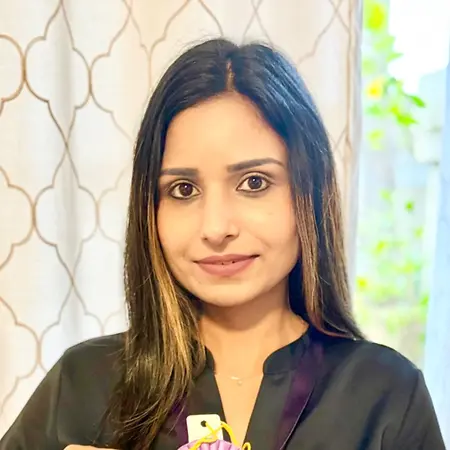
Bharti Garg, PhD, serves as a Project Scientist at the Moores Cancer Center at UC San Diego, where she has contributed to pancreatic cancer research since 2021. She earned her PhD and completed postdoctoral fellowships at the University of Minnesota and the University of Miami, developing expertise in tumor–stromal interactions and the biology of pancreatic ductal adenocarcinoma (PDAC).
Her research centers on the pancreatic tumor microenvironment, with a particular focus on cancer‑associated fibroblasts (CAFs) and their cross‑talk with cancer cells and T cells. She investigates how actin cytoskeleton dynamics, regulated by the MICAL2 gene, influence tumor progression, stromal remodeling, and sensitivity to immunotherapy. Her work aims to uncover mechanisms that can be leveraged to enhance immunotherapy efficacy in PDAC.
Dr. Garg has received numerous awards and invitations to speak at national and international scientific meetings. She maintains active memberships in the American Association for Cancer Research (AACR), American Pancreas Association (APA), APDW, and the Australian Pancreas Association, reflecting her commitment to collaborative and global scientific engagement.
Her career advice emphasizes scientific honesty, dedication, and a commitment to translational research that meaningfully benefits patients. She encourages trainees to pursue curiosity‑driven questions, cultivate resilience, and engage in multidisciplinary collaboration to accelerate progress in cancer research.
Her Interview
Ten minutes with Bharti
01What do you attribute your success to?
I attribute my success to dedication, honesty in science, and staying focused on questions that truly matter. My mentors have guided me, my teams have supported me, and my trainees continue to inspire me. Curiosity, resilience, and collaboration have shaped my journey, and keeping patients at the heart of my work motivates me every day.
02What’s the best career advice you’ve ever received?
The best career advice I’ve ever received is to be honest—with yourself, your science, and the people who depend on your work. If you choose a career in science, integrity must guide every decision. Stay motivated by solving real problems, and remember that cancer research should always be translational so it can ultimately reach and benefit patients.
03What advice would you give to young women entering your industry?
Believe in your potential, ask bold questions, and don’t be afraid of challenges—they build resilience. Find mentors who champion your growth, support other women, and stay committed to research that makes a real difference for patients.
04What are the biggest challenges or opportunities in your field right now?
The tumor microenvironment is extremely complex and heterogeneous, with diverse cell types and signaling networks that make pancreatic cancer especially difficult to treat. This complexity is exactly why understanding stromal and immune interactions is such a critical opportunity for the field.
05What values are most important to you in your work and personal life?
I value people—their ideas, their integrity, and their growth. In my work and personal life, I believe in treating others with respect, supporting their development, and creating environments where everyone feels seen and valued. Science moves forward when people feel empowered to contribute.
Join Influential Women and start making an impact. Register now.