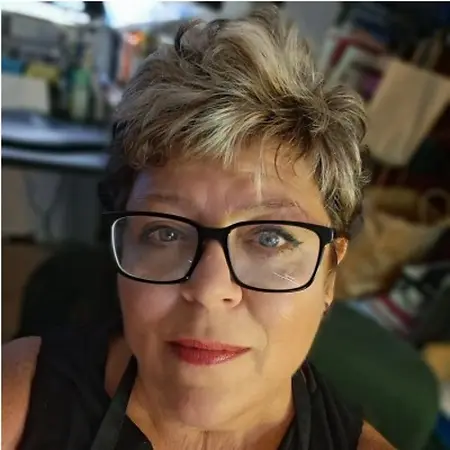
Her Story
About Brenda
I own my own wellness practice where I contract myself out as a behavior change specialist and wellness coach. I work with people who want to change their behavior and become healthier, helping them with addictions whether it's food, alcohol, drugs, or other behavioral issues. My approach starts with a comprehensive medical assessment - I usually require clients to get blood tests and always check with their doctor. As a naturopathy practitioner with 11 different licenses, I use every single one of them within the scope of my practice to help people mentally, emotionally, and spiritually manage their health better. That encompasses all parts of them, the inward and exterior. I'm licensed in meditation practices and I'm also an art therapist practitioner, so I use art, music, aromatherapy, and meditation. I work like a counselor - people come to me, we go into health, and then we find out that at the very root there are big issues. We try to tackle those issues first before we really work on the exterior part. My journey into this field started with my own struggles. I went through 6 orthopedic surgeries and was going downhill fast, dying from bad habits. I couldn't get doctors to hear me, and they were putting me on medications that were killing me, so I started doing my own research. I started as an art therapist because of anxiety and depression from my condition. When I couldn't find help, I thought the best thing to do was to educate myself, so I started working on degrees. My main goal was just trying to get well first, but once I realized these techniques really worked, I wanted desperately to help others. I'm a chronic pain sufferer - two years ago I was in a wheelchair, and I just had a total hip replacement on November 12th, my last of 6 surgeries. Now I'm walking, working out, and still going to physical therapy. I don't negate prescriptions or doctors - they're all important. What I try to do is help people find alternative ways to work with illness so they're not dependent just on medication and diet pills. I try to get educated as much as possible on the natural part to work alongside what they're doing medically.
Her Interview
Ten minutes with Brenda
01What do you attribute your success to?
I attribute my success to the transformation I see in my clients - seeing them thrive and fully thrive is my highest achievement. What's so ironic is that people who come to me get helped instantly. I get text messages saying 'I'm so much better, I'm so happy,' and that is awesome. Even though I'm still dealing with my own chronic pain and was in a wheelchair just two years ago, watching my clients transform is what drives me. My husband was like my first subject, and he's amazing - he testifies to it every day. He gave up smoking and other struggles. If I can do this, anybody can do this. The biggest success factor has been just being heard - giving clients space to be authentic, to take off that mask and recognize that there are some things that need to change. They don't feel like they have that space in their families or even their churches. They don't feel safe, but they do feel confident when they talk with me because I've been there. This is a no-judgment zone. The other successful thing is not expecting perfection, understanding it's progress, and setting boundaries - that's a huge one because we have a tendency to be people pleasers and learning to say no is so hard.
02What’s the best career advice you’ve ever received?
The best career advice I've received is to focus - get focused. If you really want to do something bad enough, you're going to do it. My personal coach told me something that really stuck with me, though I struggle to word it perfectly: your yes to something that you want to achieve has to be greater than your no to something else. For instance, if you want that chocolate cake on the counter and want that satisfaction right now, or do you want to be able to look in the mirror later and be excited that you overcame eating that cake? You want the results. But this isn't just about diet and size and shape - it's so far beyond that. It's about wanting something so much that you're willing to sacrifice a temporary satisfaction. You have to focus - even if you have to shut out the world, shut out social media, nothing and no one can distract you. If you really want to achieve something, your commitment to that goal has to be bigger than the temptation to give in to immediate gratification.
03What advice would you give to young women entering your industry?
Don't take no for an answer. Seek answers and keep going. This is a hard thing to get into, honestly, because people don't have a desire to change. It's a hard arena, it really is, because you're taking on a lot of stuff when you're dealing with clients - you're taking on everything. If you're in it for the money, you need to reconsider. You need to have a heart for people and have real empathy going into this. Change is chaotic and very hard. If someone is going to go into this field, they need to learn everything that they can about empathy first. They need to know it to the heart. You have to understand that you're not just dealing with surface issues - you're dealing with people's deepest struggles, their pain, their addictions, their trauma. It requires genuine compassion and the ability to create a safe, no-judgment zone where people can be authentic and take off their masks.
Join Influential Women and start making an impact. Register now.