Her Story
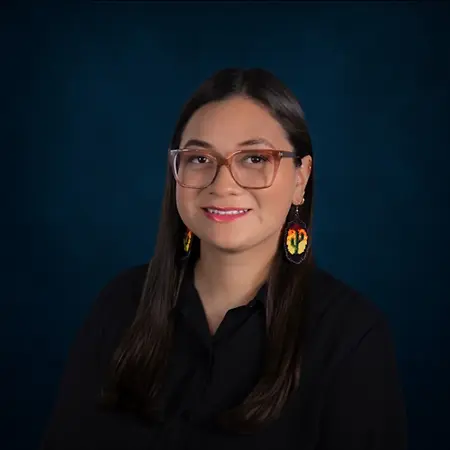
About Brenda
Brenda Sanchez is a passionate public health leader, educator, and advocate dedicated to advancing health equity in rural, border, and underserved communities across Southern Arizona. Currently serving as Executive Director of Southeast Arizona Area Health Education Center (SEAHEC), Brenda’s journey in healthcare began while she was still in high school through Pima JTED, where she earned her Certified Nursing Assistant credential as part of a career and technical education program. Originally entering the University of Arizona as a pre-physiology student with plans to become a physician, she soon discovered her true passion in public health, health promotion, and prevention. That realization led her to pursue degrees in Public Health and Spanish Translation and Interpretation, combining science, language access, and cultural understanding to better serve multilingual and binational communities along the U.S.–Mexico border.
Brenda’s professional career has been deeply rooted in community health worker initiatives and border health advocacy. She first joined SEAHEC as an intern, supporting health education and outreach programs for farmworker communities in rural southeastern Arizona. In 2019, she was hired as a Community Health Worker and went on to serve in nearly every role within the organization, including Border-Binational Program Coordinator and Program Manager overseeing statewide community health worker initiatives. During the COVID-19 pandemic, Brenda played a critical role connecting individuals and families across rural Arizona to healthcare resources, support services, and culturally responsive care. While working full time, she earned her Master of Public Health degree and, in 2024, became Executive Director of SEAHEC before the age of 30 — a milestone she considers one of her proudest professional accomplishments. Brenda is also one of Arizona’s earliest certified Community Health Workers and a Certified Health Education Specialist (CHES), with expertise in curriculum development, health education, leadership, and systems-level public health advocacy.
Today, Brenda is widely recognized for her commitment to building sustainable healthcare workforce pipelines and creating opportunities for the next generation of public health professionals. In many ways, she describes herself as the “poster child” of SEAHEC’s mission, having grown professionally through the very programs and mentorship opportunities the organization provides. In a full-circle moment, Brenda now co-instructs Arizona’s first high school Certified Community Health Worker training program developed in partnership with Pima JTED — teaching alongside the same instructor who once taught her as a student. Beyond her professional work, Brenda is passionate about travel, cultural exchange, and exploring local coffee shops, which she sees as a meaningful way to connect with communities around the world. Guided by empathy, representation, and lived experience as a first-generation Mexican-American, Brenda continues to advocate for accessible, culturally grounded public health systems that uplift and empower the communities they serve.
Her Interview
Ten minutes with Brenda
01What do you attribute your success to?
My support system has been one of the biggest influences in my journey. I would not be where I am today without the support of my family, my friends, my mentors, and what I call my 'public health family.' In public health, we become very close-knit because we all share the same passion for serving communities. The same way we support the communities we work with, we also support each other professionally and personally. That sense of connection, encouragement, and shared purpose has helped me grow throughout my career.
02What advice would you give to young women entering your industry?
It's important not to forget your 'why.' Sometimes we get so wrapped up in the deliverables and the barriers in our work that we lose sight of the reason we started in the first place. It helps to remember what motivated us to pursue this field and continue our education. Earning a degree is not easy - it involves long nights, sacrifices, and persistence. That's why I always remind my students not to forget their 'why.' It can carry them through college and later through their professional lives. There will be days in any profession that feel really hard, when you start to question, 'Why am I doing this?' or 'Is this even worth it?' But then there will also be moments that remind you exactly why you chose this path. And it's not always about the numbers or metrics, like serving 100 people. Sometimes it's about one person who was able to access healthcare services that truly saved their life. That one person can matter far more than a statistic.
03What are the biggest challenges or opportunities in your field right now?
One of the biggest challenges currently in public health is the limitation in funding. The lack of sustainable funding for programs makes it difficult to maintain long-term impact within communities. In addition, ongoing funding cuts across public systems and community resources create major barriers to care and support. As public health professionals, we are often unable to fully do our jobs because we can no longer refer community members to the services and resources they need, simply because many of those programs or organizations no longer exist. These gaps in resources not only affect individuals and families directly, but also weaken the overall health and well-being of entire communities.
04What values are most important to you in your work and personal life?
I believe in showing up for our communities in the same way I would want others to show up for my own family. In my work and personal interactions, I often ask myself: how would I want someone to treat my dad when he goes to a doctor's appointment without me there to support him? When I'm designing programs or making decisions, I try to view everything through that lens - what would best support him, or someone like him, in that moment when they're alone and navigating a system that can sometimes feel overwhelming. That perspective helps guide the way I build and approach my work in public health.
Join Influential Women and start making an impact. Register now.