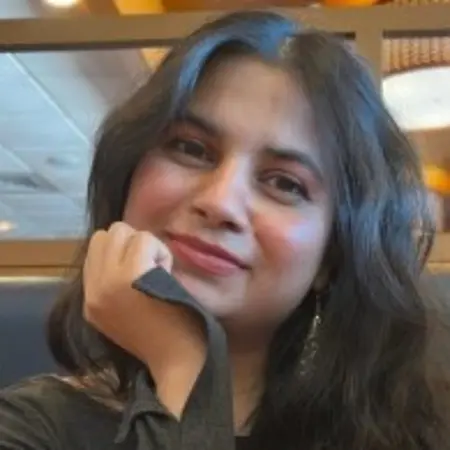
Her Story
About Briah
Every day I feel like I wear three hats - as an architect, as a student, and as a wife. I work with the university grad admissions team representing the school on different forums and allowing new admissions to happen, while also attending classes from 9am to 3pm. I have projects going on in the background in Pakistan that I work on from time to time. My journey in architecture has been shaped by living in multiple countries - I was born in Pakistan, moved to the United States at a young age, then pursued my bachelor's in Turkey at Bilkent University in Ankara. After working for two years, including on the Movenpick Islamabad hotel project where I was the only woman among 600-700 men on site, I decided to pursue my master's at SAIC in Chicago. I focus a lot on architectural storytelling that comes from having lived in different countries and learning different architectural traditions - Greek, Roman, Byzantine, Turkish, and Islamic architecture. I want to make sure I remember where I come from and what I put forth on the table, bringing a very unique perspective to represent women, specifically brown women and Muslim brown women, in architecture. I want to speak for all the women who did not get a chance to achieve things or even get education through my professional and academic career.
Her Interview
Ten minutes with Briah
01What’s the best career advice you’ve ever received?
The best career advice I ever received was don't be scared to ask. I made sure that I always, always ask - in class, that applies to asking questions and making sure you understand what tasks you're being assigned to. And then in life, it just applies to any opportunity that you have or anything that you need from somebody. Keep asking, keep connecting. Don't be afraid - everybody is a person, and everybody is here to help you. I was very scared to just reach out to people and ask for things, and I was like, what if they don't respond? But I learned to just call a firm and ask them if they're hiring. That's one thing I do even today.
02What are the biggest challenges or opportunities in your field right now?
Right now, as Vice President of NOMAS representing minority architects at SAIC, I feel like on a daily basis I have to speak for a lot of people and make sure that our voices are heard. For a very long time, Black women and brown women, or women of any color - South Asian, Asian - had to struggle to find their own voice in the American Institute of Architects. I feel like there should be more representation, and we should speak for diversity in terms of religion, which is something that's not even spoken about, diversity in terms of ethnicity and culture, and also diversity in terms of finances. A lot of times we talk about not seeing women of color or Black people in the industry, but at the same time we need to understand that the people the industry is representing come from very low-income backgrounds and very challenged areas. For us to even complete that many years of education - I would not have been able to do that if it wasn't for a 100% scholarship. I would have never been able to sit at this platform. For us to be able to come to a platform this high and be heard, to be able to sit amongst a group of white people and represent our culture and our own values, it's only possible if you have financial diversity. That's something I would like to pursue later on in the future, to fight for it to be spoken more about. That's the main thing that I feel like is missing.
03What values are most important to you in your work and personal life?
One of the most important values for me when I work is I want to make sure that I know the narrative that I'm telling, and I want to remember where I come from and what I've put forth on the table and how I add to the team. I feel like I bring a very unique perspective in terms of architectural storytelling, which comes from a place of having lived in different countries. I was born in Pakistan, came to the United States at a young age, which was very different - Pakistani women aren't really allowed to travel alone. At the time when I left my home alone without any man accompanying me to pursue my education, it was very hard for my family to decide to let a woman do that. I went to Turkey and learned their values, understanding Greek architecture, Roman architecture, Byzantine values, and how that aligns with Turkish architecture, then bringing all of that to Chicago and learning how Chicago works. I wanted to combine all of that and tell the stories that I had learned from these people, and not to forget my own story and the background I come from, and to put all of that forth to represent women, basically, in architecture - and specifically brown women and Muslim brown women, which is a very niche group. Coming from Pakistan, it's very hard for a woman to even reach this kind of position in life. I don't want to forget where I come from. I want to make sure that people see me as who I am for my brown skin, the culture I come from, and for the women I represent that did not get a chance to achieve things or maybe just even get education. I want to talk and speak for all of them with my professional academic career.
Join Influential Women and start making an impact. Register now.