A social worker's reflection on embracing professional growth through a virtual care management pilot program at AdventHealth, discovering how adaptability and innovation strengthen compassionate patient care.
“
I stopped waiting for certainty and started trusting my ability to adapt, growing in ways I never could have planned for.
Briana Haridin · In Her Own Words
Her Story
About Briana
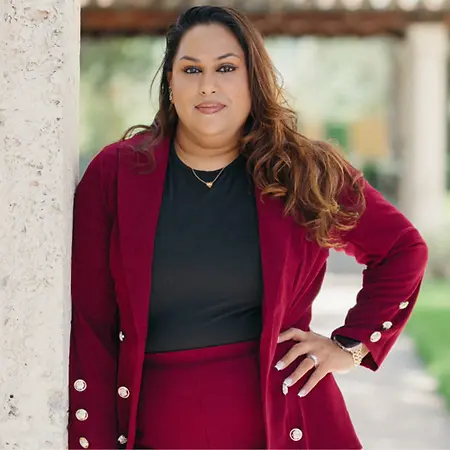
Briana Haridin, MSW, is a dedicated Social Work Care Manager at AdventHealth in Central Florida and a proud alumna of Florida State University’s College of Social Work. With nearly five years of diverse experience across the social work field, she has developed a strong clinical foundation rooted in patient advocacy, care coordination, and trauma-informed practice. Briana is passionate about supporting individuals and families through complex psychosocial and medical challenges while promoting safe, patient-centered outcomes across the healthcare continuum.
In her current role within the AdventHealth hospital system, Briana supports patients across multiple hospitals and clinical units throughout Central Florida, addressing complex psychosocial, medical, and discharge-related needs. Her work focuses on comprehensive care coordination, discharge planning, transitions of care, crisis intervention, and connecting patients to essential resources and outpatient services. She collaborates closely with interdisciplinary teams—including physicians, nurses, therapists, and care management professionals—to ensure patients experience safe, seamless transitions both during hospitalization and upon discharge. Her primary focus is promoting patient safety, continuity of care, and access to the right resources at the right time.
Briana’s professional background spans multiple areas of social work practice. She previously served as a Social Services Director in a skilled nursing and long-term care setting, where she led psychosocial services programs, conducted assessments, supported families, coordinated discharge planning, and advocated for resident rights and well-being. She also worked as a Case Manager at TrueCore Behavioral Solutions, a juvenile residential facility, acting as a liaison between the program, court systems, judges, and probation officers while supporting justice-involved youth in their rehabilitation and growth.
Earlier in her career, Briana worked as a Case Manager at Aspire Health Partners, where she provided services to adults experiencing substance use and mental health challenges. In this role, she conducted assessments, supported crisis intervention efforts, coordinated treatment services, and collaborated with clinical teams to promote stability and long-term recovery.
As a first-generation professional, Briana is deeply committed to advancing equitable, compassionate care while maintaining a strong emphasis on professional boundaries, work-life balance, and sustainable practices within the healthcare field.
Her Interview
Ten minutes with Briana
01What do you attribute your success to?
I would attribute my success to a combination of resilience, purpose, and staying grounded in my values. As a first-generation professional, I didn’t have a clear roadmap going into social work. I didn’t know anyone in the field, so I had to learn how to navigate different systems, understand the many roles within social work, and figure out what it truly takes to be effective in this profession. That experience taught me how to advocate for myself, stay consistent, and remain adaptable in environments that can be complex and demanding. My work has also shown me that success isn’t just about outcomes—it’s about how you show up for people during some of the most vulnerable moments in their lives. It’s about treating every patient and client with dignity, respect, and compassion. At the same time, I’ve learned that a big part of success in this field is knowing when to pause, set boundaries, and protect your own well-being. Maintaining a healthy work-life balance is essential—not just for yourself, but so you can continue to show up fully and sustainably for others.
02What’s the best career advice you’ve ever received?
The best career advice I’ve received is: you can care deeply, but you can’t carry everything.
In social work, it’s very easy to take on the weight of every patient, every case, and every family you encounter. Early on, I felt that responsibility very heavily. But over time, I’ve learned that setting professional boundaries doesn’t make you less compassionate—it actually makes you more effective. That advice really shifted my perspective. It helped me understand that I can still show up fully for my clients without internalizing everything they’re going through. I’ve also learned that I can’t take care of others if I’m not taking care of myself. Prioritizing my own well-being and maintaining balance allows me to be more present, consistent, and sustainable in the work that I do.
03What advice would you give to young women entering your industry?
My advice to young women entering this field is: don’t underestimate the value of your voice. Social work needs strong advocates—especially women who understand lived experiences, cultural dynamics, and the barriers many individuals face. As a first-generation professional, I’ve learned that your perspective is not a limitation—it’s a strength. It allows you to connect, advocate, and navigate systems in a more meaningful way. I would also emphasize the importance of setting boundaries and advocating for yourself just as much as you advocate for others. And most importantly, remember that you’re human too. In a field where giving is constant, it’s essential to take care of yourself so you can continue to show up fully and effectively for the people you serve.
04What are the biggest challenges or opportunities in your field right now?
One of the biggest challenges in social work is balancing the level of need with the resources available. Many patients and families are navigating complex medical, emotional, and social challenges, but the systems we rely on—whether it’s healthcare access, insurance coverage, or community resources—can be limited or difficult to navigate. Insurance, in particular, plays a major role. Without it, access to care can be extremely restricted, and even with coverage, there can still be barriers that delay or complicate treatment. As social workers, we’re often in the position of trying to provide the best possible support and outcomes for our clients while working within those limitations. That’s where advocacy, creativity, and strong care coordination become essential—finding ways to connect patients to the resources they need despite systemic challenges.
05What values are most important to you in your work and personal life?
The values that are most important to me are integrity, compassion, and balance.
Integrity means consistently doing what’s right for my clients, even when it’s challenging. Compassion allows me to build meaningful connections—because in social work, trust is essential. Being able to establish that rapport is what allows clients to feel supported and open to the care being provided. At the same time, I place a strong emphasis on balance. I recognize that while I’m a professional, I’m also a person. Maintaining healthy boundaries and prioritizing work-life balance is essential, especially in a field that can be emotionally demanding. My experiences across different settings have reinforced that these values—integrity, compassion, and balance—are what allow me to show up consistently, effectively, and sustainably for the people I serve.
Her Content Hub
Articles by Briana
Embracing Change: Growing Through New Opportunities in Health Care
Embracing Change: How Stepping Outside My Comfort Zone Transformed My Career in Healthcare.

One of the most important lessons I’ve learned throughout my career is that growth rarely happens when we stay comfortable. Health care is constantly evolving, and with that evolution comes the need to adapt, learn, and remain open to opportunities that may look different from what we originally envisioned for ourselves.
Working at AdventHealth has given me the opportunity to experience that growth firsthand. As a social worker care manager, I have always valued direct patient interaction, advocacy, and helping individuals navigate some of the most vulnerable moments of their lives. However, stepping into a pilot virtual care management role challenged me to expand my perspective on what compassionate care can look like in a modern health care environment.
Through this pilot virtual care management opportunity, I became involved in completing initial patient assessments in a virtual setting—an experience that reinforced the importance of flexibility, communication, and innovation in patient-centered care. While the format differed from traditional in-person interactions, the mission remained the same: ensuring patients felt supported, heard, and connected to the resources they needed.
This opportunity reminded me that professional growth is not always about changing careers or starting over. Sometimes, growth comes from being willing to adapt within the organization you already serve. By embracing new systems, workflows, and technologies, I was able to strengthen my confidence, broaden my skill set, and continue developing as both an AdventHealth employee and a social worker.
The experience also deepened my understanding of how social work continues to evolve alongside health care. Virtual care is creating new ways to increase accessibility, reduce barriers, and support patients beyond the walls of a hospital or clinic. As social workers, we have the ability to help bridge that transition by ensuring patients still feel connected to compassionate, whole-person care regardless of the setting.
Professionally, this season taught me the importance of remaining teachable and open to change. Every new opportunity—even one that initially feels unfamiliar—carries the potential to shape us into more versatile, knowledgeable, and resilient professionals. Personally, it reminded me that growth is not always linear. Sometimes the most meaningful progress comes from simply saying “yes” to learning something new.
As health care continues to transform, I hope to keep growing in ways that allow me to better advocate for patients, strengthen interdisciplinary collaboration, and contribute to innovative models of care. I’ve learned that adapting to change does not mean losing who you are professionally—it means allowing yourself to evolve into an even stronger version of yourself.
Join Influential Women and start making an impact. Register now.