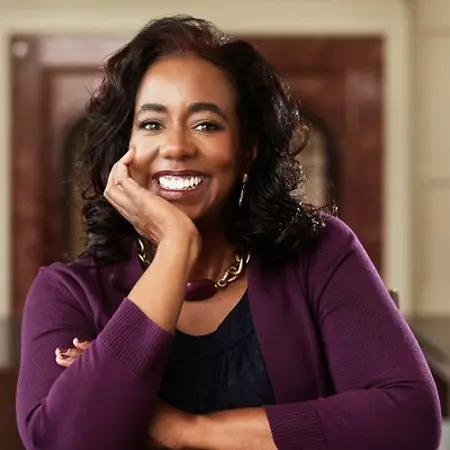
Her Story
About Bridget
Bridget T. Kelly, PhD, is a professor and scholar in higher education and student affairs at the University of Maryland, where she was promoted to full professor in June 2026. She has served as a faculty member in higher education since 2001, building an academic career that has included appointments at the University of Vermont, Seattle University, Loyola University Chicago, and the University of Maryland. She earned her PhD and master's degree from the University of Maryland and completed a pre-doctoral position at Virginia Tech, where she developed her experience teaching graduate students. Her academic work centers on the experiences of women faculty and students, gender equity, and the racial and gender transformation of colleges and universities.
Dr. Kelly is also recognized for her work in social justice education, mentoring, and student affairs. Her scholarship and professional engagement explore the ways institutions can create more equitable environments and support the success of students and faculty. She serves as a senior scholar for ACPA and is a member of the Association for the Study of Higher Education. Her professional experience has also included coordinating the higher education and student affairs program at the University of Maryland and contributing to conversations around intergroup dialogue, student affairs, creativity and innovation in higher education, and the experiences of Black women navigating doctoral education and academic careers.
Mentoring and advocacy have been central themes throughout Dr. Kelly's professional journey. She credits holistic mentoring and the community of colleagues who have advocated for her and created opportunities for her advancement as significant contributors to her success. She encourages emerging women scholars to pursue higher education because it genuinely brings them purpose and joy rather than because they are seeking external validation. Her professional philosophy emphasizes authenticity, meaningful work, advocacy, mentorship, and helping others recognize and develop their own potential. She is also involved with Jack and Jill of America and has supported the March of Dimes, reflecting her broader commitment to community engagement and service.
Her Interview
Ten minutes with Bridget
01What do you attribute your success to?
I attribute my success to mentoring, particularly holistic mentoring. Throughout my career, I have been fortunate to have people in my life who supported me not only with traditional academic activities such as writing articles, publishing, and preparing presentations, but also by advocating for me and creating opportunities for me to excel.
Some of the most meaningful support came from people who were willing to be present in rooms and spaces when I could not be there, speak on my behalf, and help connect me with opportunities. Reaching the level of full professor at a Research I institution has been made possible in large part by the community of women and men who have supported, mentored, and advocated for me throughout my career.
02What’s the best career advice you’ve ever received?
The best career advice I have received is to be the person and professional I want to be, regardless of my rank or position. That principle has anchored me through important career decisions, including considering different jobs, determining whether to move, navigating the tenure process, and most recently thinking about promotion to full professor.
Ultimately, I have learned that my professional identity and the work I am proud of should not be determined solely by whether someone chooses to tenure me or promote me. I need to remain committed to doing work that reflects who I want to be and to deciding whether an institution or environment is one where I genuinely want to continue contributing.
03What advice would you give to young women entering your industry?
My advice to young women entering higher education is to make sure you are pursuing this field because it is something you genuinely want to do, rather than because you are trying to prove something to someone else or seeking external validation. Academic careers can be isolating, particularly when much of the work involves conducting research independently, spending long periods reading and writing, or working alone.
It is important to choose work that brings you genuine joy and gives you a sense of purpose. For me, one of my missions is to help people find the light inside themselves. If the work does not spark that kind of light in you—and one that others can see—I would encourage you to consider whether another path might be more fulfilling.
04What are the biggest challenges or opportunities in your field right now?
One of the major challenges facing higher education is the economy and the availability of funding. I have seen significant declines in federal and state funding, including budget pressures in Maryland. These financial challenges have had direct consequences for universities, faculty, staff, and students.
In my area of higher education and student affairs, reduced funding has also affected graduate assistantships. Our students need opportunities to work part-time in student affairs while completing their degrees so they can apply what they learn in the classroom to professional practice. When assistantships are reduced or eliminated, it becomes more difficult for students to receive funding for their education and gain that practical experience. This is particularly challenging for programs such as ours that prepare students for careers in higher education and student affairs.
05What values are most important to you in your work and personal life?
One of the most important values to me is authenticity. I believe people should pursue work because it is meaningful to them, rather than because they are trying to prove themselves to others or obtain external validation. I want my professional work to be consistent with who I am and with the purpose I see in my life.
Joy and purpose are also deeply important to me. I believe that academic and professional work can require significant amounts of time, solitude, and perseverance, so it is important that the work brings something meaningful into your life. One of my personal missions is to help people discover the light within themselves, and I value opportunities to contribute to that kind of growth in others.
Join Influential Women and start making an impact. Register now.