Her Story
About Brittany
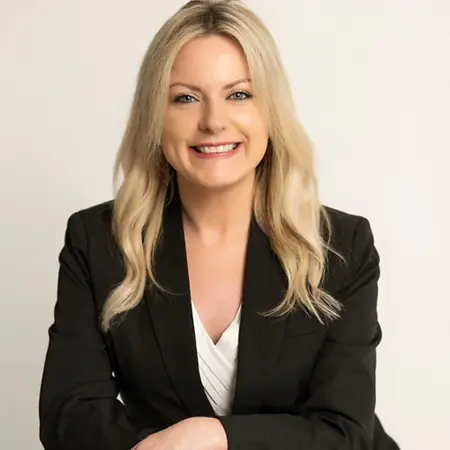
Brittany Papanikolaou, APRN, FNP-C, is a board-certified Family Nurse Practitioner specializing in functional medicine, longevity, and personalized healthcare. Her approach to medicine has been profoundly shaped by her own experience with complex chronic illness and recovery.
After years of navigating significant health challenges without clear answers, Brittany experienced firsthand how difficult it can be for patients with complex conditions to feel fully heard and understood within a conventional healthcare model. Her recovery became a defining influence on her professional path and strengthened her commitment to becoming the kind of provider she had once needed, one willing to listen, investigate more deeply, and consider the patient as a whole.
Brittany began her nursing career in hospital medicine, caring for post-surgical patients and gaining a strong foundation in conventional medical care. Her experiences across healthcare settings also sparked a growing interest in prevention and in understanding why disease develops long before it reaches the point of requiring acute intervention.
Driven to expand her clinical framework, Brittany pursued advanced postgraduate education through the Institute for Functional Medicine, completing comprehensive training in systems biology, functional medicine, and personalized approaches to complex chronic disease. Today, she integrates evidence-based conventional medicine with functional and longevity medicine principles to evaluate the interconnected influences of genetics, environment, lifestyle, nutrition, metabolic health, hormones, and the microbiome.
Her clinical interests include hormone and metabolic health, gastrointestinal and microbiome dysfunction, cardiometabolic risk reduction, cognitive health, immune dysregulation, complex chronic illness, and emerging therapeutics within personalized and longevity medicine.
Brittany currently practices as a Functional Medicine and Longevity Provider, working with individuals who want to better understand their health, identify potential risks earlier, and take a proactive approach to optimizing both healthspan and lifespan. Her work incorporates advanced biomarker testing, preventive screening, and emerging diagnostic technologies, including advanced imaging, when clinically appropriate.
Her philosophy extends beyond testing and treatment protocols. Brittany believes meaningful healthcare begins with understanding the individual behind the data. Her approach considers nutrition, movement, sleep, stress physiology, nervous system regulation, relationships, environment, and other factors that influence long-term health alongside traditional clinical assessment and targeted therapeutic interventions.
With a particular interest in the relationship between the gut, brain, immune system, and nervous system, Brittany is passionate about helping advance a model of medicine centered on prevention, personalization, clinical curiosity, and trust. Above all, she wants patients to feel heard, understood, and actively involved in their care, and to know that even when their health concerns are complex, they deserve a provider willing to look deeper.
Her Interview
Ten minutes with Brittany
01What do you attribute your success to?
My passion for medicine is deeply rooted in my own experience with significant chronic illness and navigating a healthcare system where, despite the severity of what I was experiencing, I often struggled to feel fully heard or understood.
At my sickest, my health had deteriorated to the point that I was barely functioning and facing serious medical complications. I knew something was profoundly wrong, yet finding someone willing to step back, look at the full picture, and investigate beyond the most obvious explanations was incredibly difficult. That experience showed me how vulnerable it can feel to be seriously ill while still searching for answers and appropriate support.
Ultimately, I was fortunate to make a full recovery. That journey fundamentally shaped the provider I am today. It gave me an understanding of illness from both sides of medicine, not only as a clinician, but as someone who has experienced what it is like to need someone to listen carefully, believe what you are experiencing, and be willing to look deeper.
That perspective drives the way I care for my patients. I never want someone to feel reduced to a diagnosis, a laboratory value, or another number within a healthcare system. I want them to know that their experience matters and that they have a provider who is genuinely invested in understanding what is happening.
My passion lies in helping advance a more comprehensive approach to medicine, one that combines evidence-based care with curiosity, critical thinking, and a deeper evaluation of the interconnected systems contributing to a patient's health. Rather than looking at symptoms in isolation, I want to understand the underlying physiology, identify contributing factors, and determine where meaningful intervention may be possible.
Equally important is the relationship we build with our patients. Trust begins when someone feels heard, respected, and taken seriously. Sometimes one of the most powerful things we can give a person who has been struggling for answers is the reassurance that they are not alone and that someone is willing to keep asking questions alongside them.
To have gone from being profoundly ill myself to recovering and now being in a position to help others is one of the greatest influences on the work I do. I want patients to understand that their current circumstances do not necessarily define what is possible for their future.
Ultimately, I want to be part of a future of medicine where patients do not have to fight to be heard, where we listen more carefully, investigate more thoughtfully, and create a partnership that gives people both the support and the opportunity to move toward better health.
02What’s the best career advice you’ve ever received?
The best career advice I’ve ever received is to lead with passion, purpose, and integrity. Don’t build a career around chasing money, recognition, or a title...build it around work that genuinely matters to you and the impact you can have on others.
Your character, work ethic, and the way you show up for people will ultimately define your success far more than any title ever will. Do work you believe in, stay true to why you started, and never lose sight of who you are along the way. When you genuinely love what you do and approach it for the right reasons, success has a way of following.
03What advice would you give to young women entering your industry?
I would tell young women entering healthcare to stay curious, trust their instincts, and never be afraid to pursue a path that may look different from the traditional one. Medicine is constantly evolving, and some of the greatest opportunities for change come from people who are willing to ask deeper questions and challenge themselves to think beyond what has always been done.
There will inevitably be people who question your direction or make you doubt whether your goals are possible. Listen to good counsel, remain humble enough to keep learning, but don't allow someone else's limitations to become your own.
Find great mentors, invest in your education, stay grounded in evidence, and never stop asking why.
Most importantly, don't lose the part of yourself that made you want to care for people in the first place. Your knowledge will grow throughout your career, but your integrity, compassion, curiosity, and willingness to truly listen to your patients are what will ultimately make you an exceptional provider.
04What are the biggest challenges or opportunities in your field right now?
One of the biggest opportunities I see in healthcare right now is shifting from simply treating disease to understanding why it develops in the first place, especially for women.
Women are disproportionately affected by autoimmune disease, yet there is still so much to understand about the intersection of hormones, immune function, thyroid health, the microbiome, environmental factors, and the nervous system. At the same time, many women are carrying an enormous physical and emotional load while continuing to put their own health last.
I believe the future of medicine is about connecting those dots earlier. We have an incredible opportunity to combine advancing science and diagnostics with truly personalized care, to listen more closely, identify risk before significant disease develops, and treat the whole person rather than isolated symptoms.
05What values are most important to you in your work and personal life?
The values that matter most to me, both personally and professionally, are trust, integrity, compassion, and genuine connection. I believe people need to feel seen, heard, and valued, whether that is a patient, a colleague, a friend, or a family member.
In medicine especially, trust changes everything. When a patient feels safe enough to be open and knows you are truly listening, you begin to understand the person behind the symptoms. That connection is an essential part of healing.
At the end of the day, I want people to know that I was present, that I cared, and that they mattered, not that they were simply another number in the system.
Join Influential Women and start making an impact. Register now.