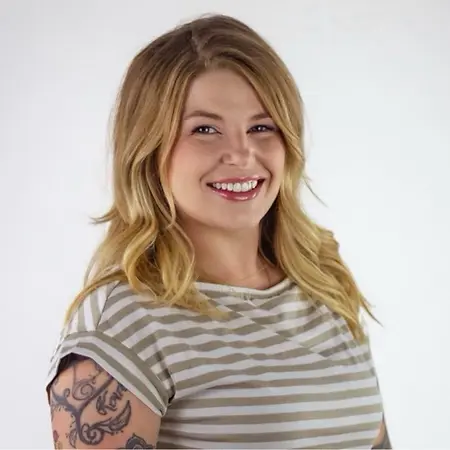
Her Story
About Brittany
I am someone who believes deeply in growth, accountability, and the power of becoming more intentional about the life you create.
My work is shaped by both lived experience and professional experience. I know what it means to navigate difficult seasons, examine patterns, break cycles, and make the decision to grow beyond what you have been through. Those experiences have influenced not only the person I am, but also the way I show up for others.
Professionally, I work in reentry, supporting individuals as they transition back into their communities and begin rebuilding different areas of their lives. I also bring experience in coaching, behavior management, education, advocacy, and community support. Across each of those spaces, one belief has remained consistent for me: people are more than their past, their circumstances, or the behaviors others may see on the surface.
I am passionate about understanding the “why” behind behavior. I believe many of the patterns people carry were developed as ways to cope, protect themselves, or survive. Understanding that creates room for compassion, but I also believe compassion and accountability belong together. Growth requires us to understand where we came from while also taking responsibility for where we go next.
I do not believe my role is to rescue or fix people. I believe in creating spaces where people can feel seen, ask difficult questions, recognize their strengths, challenge old patterns, and develop the confidence to make their own decisions. Whether I am working with someone professionally, speaking in the community, coaching, or simply having a conversation, I want people to leave with a stronger sense of their own capacity.
My interests in mental health, domestic violence prevention, suicide awareness and prevention, personal development, behavior, and community well-being are all connected by that same desire to better understand people and help create environments where meaningful change is possible.
I continue to grow as a professional and as a person through education, reflection, leadership, and service. I do not view being a cycle breaker as something I accomplished once. For me, it is an ongoing commitment to self-awareness, healthy boundaries, accountability, and making intentional choices about what I carry forward and what ends with me.
At the center of everything I do is a simple belief: our experiences can shape us without having to define the rest of our story.
Her Interview
Ten minutes with Brittany
01What do you attribute your success to?
I attribute my success to resilience, self-awareness, and a willingness to keep growing through every season of my life. My lived experiences have shaped the way I understand people, behavior, survival, and change, but I made a conscious decision not to let those experiences define the limits of who I could become.
Over the years, I have intentionally turned what I have lived through into opportunities to learn, advocate, and serve. My work in mental health advocacy, domestic violence awareness, coaching, and reentry, along with my education in psychology and behavior, has helped me better understand not only what people go through, but what it can take to rebuild.
I also attribute my success to remaining teachable. I do not believe growth ever stops. Every role, every person I work with, and every challenge has taught me something about leadership, boundaries, accountability, compassion, and myself.
More than anything, I believe my success comes from being willing to break cycles, do the internal work, and then use what I have learned to help create opportunities for others to recognize their own capacity for change.
02What’s the best career advice you’ve ever received?
The best career advice I’ve ever received was that I cannot save everyone—and over time, I learned how important that lesson really is.
Early in helping professions, it can be easy to believe that caring about people means fixing their problems or carrying responsibility for their outcomes. I have learned that real support looks different. My role is not to rescue someone; it is to create a space where they feel safe enough to be honest, understand themselves, recognize their patterns, and begin making their own choices about what comes next.
That advice also taught me to look beyond behavior. Many of the coping mechanisms or survival responses we see in people once served a purpose in their lives. Understanding that does not remove accountability, but it allows us to approach people with greater compassion, curiosity, and respect.
The most meaningful thing I can do is support someone without taking away their ownership of the process. I can offer resources, perspective, encouragement, and accountability, but lasting change has to belong to them.
03What advice would you give to young women entering your industry?
My advice to young women entering this field is to understand that your lived experience does not disqualify you from becoming a professional—it can become part of what makes you an effective one when you have done the work to understand it, grow from it, and develop the skills to serve others responsibly.
I have learned through both my personal journey and my professional work that you cannot save everyone, and you should not carry the pressure of believing that you have to. Our responsibility is to create spaces where people feel seen, heard, respected, and supported while still allowing them to take ownership of their own lives.
I would also tell young women not to underestimate their voice. You do not have to wait until you have every degree, credential, or answer before you recognize that you bring something valuable to the table. Continue learning, seek mentorship, ask questions, develop healthy boundaries, and remain teachable—but do not make yourself smaller just because you are still growing.
Most importantly, do not lose yourself while helping other people find themselves. Compassion and service are powerful, but so are boundaries, accountability, self-awareness, and knowing when your role is to support rather than rescue.
04What are the biggest challenges or opportunities in your field right now?
One of the biggest challenges in reentry is that we often ask people to make life-changing decisions while they are also trying to meet some of the most basic needs of their lives. Someone may be trying to find housing, employment, transportation, food, education, rebuild relationships, meet legal obligations, and adjust to life in the community all at the same time.
My lived experience has shaped the way I look at those situations. I understand that what may appear from the outside to be resistance, poor decision-making, or a lack of motivation can sometimes be connected to survival patterns, fear, uncertainty, or simply not knowing another way yet. That does not remove personal accountability, but it does change how we approach people.
That is also where I see one of our greatest opportunities. Reentry cannot only be about handing someone a list of resources and expecting transformation to happen. We have an opportunity to create systems that address the whole person—helping people develop stability, confidence, skills, self-awareness, and a sense of possibility while connecting them to education, employment, housing, and community support.
I believe some of the most meaningful change happens when we stop asking only, “What does this person need right now?” and also begin asking, “What will help this person build the capacity to navigate life differently six months, a year, or five years from now?”
For me, that is the difference between providing a service and helping create a pathway toward sustainable change.
05What values are most important to you in your work and personal life?
The values that guide both my work and my personal life are integrity, compassion, accountability, empathy, self-awareness, and service. Those values are not simply professional principles for me; they have been shaped by my own life experiences and by the work I have had to do within myself.
I consider myself a cycle breaker. Because of that, I have learned that growth requires more than recognizing what happened to us. At some point, we also have to decide what we are going to do with what happened to us. That understanding influences the way I work with people. I can have compassion for someone’s experiences, coping mechanisms, and survival responses while still believing in their ability to make different choices moving forward.
One of my strongest values is understanding before judgment. Behavior tells a story. Sometimes the very behaviors that create challenges in someone’s life today were once the behaviors that helped them survive yesterday. I want to understand that story without allowing it to become an excuse that keeps someone from growing.
Trust is equally important to me. I believe trust is built through consistency—doing what you say you are going to do, being honest when you do not know something, following through, and treating people with dignity regardless of their circumstances.
I also believe deeply in helping people build capacity rather than creating dependency. Whether in my professional work or my personal relationships, I do not want my role to be fixing or rescuing people. I want to help people recognize their own strengths, understand their patterns, develop confidence, and realize that they have the ability to make intentional choices about what comes next.
Those same principles apply to my own life. I continue to challenge myself to grow, establish healthy boundaries, remain accountable, and examine the patterns I want to continue and the ones I want to end. For me, breaking cycles is not one decision. It is a continuing commitment to becoming more intentional about the life you create and what you pass forward.
Ultimately, I want people to leave an interaction with me feeling seen and respected, but I also want them to leave believing a little more strongly in their own ability to change their circumstances and write a different chapter for themselves.
Join Influential Women and start making an impact. Register now.