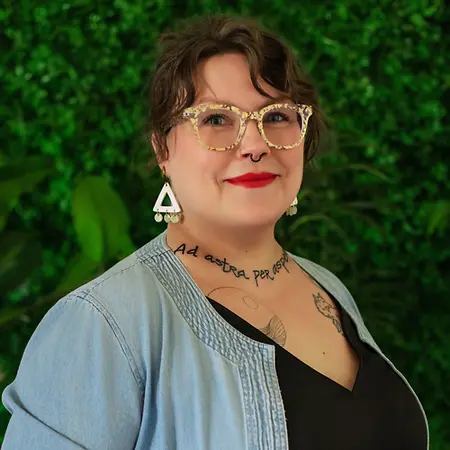
Her Story
About Brooke
Brooke Aernouts is a trauma-engaged early childhood specialist and social cartographer with over 20 years of experience in early childhood education. She is the Founder and Lead Trainer at Green Glasses Resilience Consulting LLC, where she provides training on trauma-engaged practice, resilience building, and community-centered approaches for educators, caregivers, and social service professionals. Brooke has extensive experience supporting New American and refugee communities, delivering training in up to four languages, and developing practical tools to strengthen families and communities.
Her career spans roles as an associate teacher, lead teacher, preschool director, behavior specialist, and program leader for refugee education initiatives. Brooke’s professional focus emphasizes resilience biology, vicarious resilience, and post-traumatic growth, giving educators and caregivers hope-centered, research-based strategies. She is also the creator of the Grand Rapids Area Resource Map, an interactive tool mapping critical community resources to promote equitable access and collective support.
Brooke holds degrees in Psychology, Early Childhood Education, and The Practice of Teaching, and she is certified in the Protective Factors Framework, Standards of Quality, Compassion Fatigue, Parent Cafes, and Strengths-Based Leadership. She serves on the board of Treetops Collective, is a member of the Community Relations Commission in Grand Rapids, and has been recognized as a rising influential leader in her community. Her work centers on fostering resilience, equity, and meaningful connection in both early childhood and community systems.
Her Interview
Ten minutes with Brooke
01What do you attribute your success to?
I attribute my success to my mother’s constant encouragement and unconditional support. She always told me I would do great things, and more importantly, she gave me permission to fully feel my feelings instead of pushing them aside. That foundation of confidence and emotional awareness has shaped how I lead, connect with others, and keep moving forward.
02What’s the best career advice you’ve ever received?
The best career advice I’ve ever received has come from my mom, who always reminded me that I would do great things and that the world needs who I am. She encouraged me to stay true to myself, trust my instincts, and not shrink to fit someone else’s expectations. That advice has guided both my career path and how I show up in the work I do.
03What advice would you give to young women entering your industry?
My advice to young women entering this field is to be fully yourself. When you’re authentic, the right people, opportunities, and communities will find you—and value you for exactly who you are. You don’t have to reshape yourself to belong. I’d also encourage you to center resilience and practical, research-informed knowledge in your work, especially when supporting children and families impacted by trauma. Lead with compassion, stay grounded in what truly helps people heal and grow, and trust that your genuine presence is part of the work.
04What are the biggest challenges or opportunities in your field right now?
One of the biggest challenges in this field is the deep inequity in how trauma is experienced and supported across communities. At the same time, nonprofit resources are often duplicated or fragmented, which can make it harder for families to access the help they need in a clear, coordinated way.
The opportunities lie in moving beyond simply being trauma-informed to truly trauma-engaged practice—grounded in research, resilience, and practical application. There’s also powerful potential in equipping early childhood educators with hands-on tools they can use right away, and in improving equitable access to support through shared tools like community resource maps that make services more visible and connected.
05What values are most important to you in your work and personal life?
The values that guide both my work and my personal life are resilience, equitable access to resources, trust, and compassion. I believe people and communities already carry strengths, and my role is to help create the conditions where those strengths can grow. I care deeply about ensuring that support is not just available, but truly accessible and felt—because perceived social support can be just as powerful as tangible resources. Leading with compassion and building trust are at the heart of how I show up, whether I’m working with families, educators, or community partners.
Join Influential Women and start making an impact. Register now.