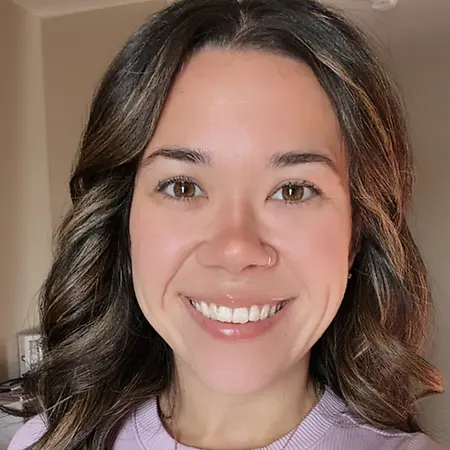
Her Story
About Brooklyn
I have been an ER and trauma nurse for about 9 years now, and honestly, I've known since I was 5 years old that I wanted to be a trauma nurse. I've never thought of doing anything else. Two and a half years ago, I transitioned from bedside nursing to become a clinical nurse educator for an emergency department, level 1 trauma, and a mobile stroke unit. In my role, I assist with onboarding and orientation of new employees, teach didactic and clinical classes, and conduct simulations at our accredited simulation center. I also work on the side as an instructor and/or course director for the American Heart Association, the Emergency Nurses Association, and the Society of Trauma Nurses. I found my passion in precepting and helping others, being the one that everybody looked to in the room that had all the answers. I loved being that person and sharing the knowledge that I took the time to invest in myself. That's how I found my passion to be an educator. I finished my master's degree in 5 months, and I want to go back and get my doctorate.
Her Interview
Ten minutes with Brooklyn
01What do you attribute your success to?
I attribute my success to my passion for trauma nursing that I've had since I was 5 years old. I've honestly never thought of doing anything else. I grew up heavily in sports with my dad always as my coach, and I'm just a competitive person at heart. I feel like anything that I do, I have to be the best at. I really found my passion as a nurse in precepting and helping, being the one that everybody looked to in the room that had all the answers. I loved being that person and sharing the knowledge that I took the time to invest in myself. That continuous learning mindset and striving for excellence is what has driven me. The things that fill my cup are, oddly enough, getting more certifications and getting more degrees. I get bored, so I'm just like, well, might as well do this certification. People tell me I need to get a new hobby, but it's what fills my cup.
02What advice would you give to young women entering your industry?
I think it's having the strength and the courage to say, 'I don't know, but let me look it up' or 'I don't know, let me use my resources.' Just not being afraid to what some people think of as looking stupid. It's not looking stupid, it's actually looking confident and saying that I want my patients to be safe. I'm not afraid to say I'm not sure. I think a lot of times, especially when going into a career where a majority of the providers, the doctors that we answer to, are male, women get that intimidation sometimes. They don't want to ask the wrong questions, they don't want to look stupid. But I don't think that people realize that you gain respect in this career by being able to catch the things and the mistakes that others are making, and being able to say, 'I want to learn more about this, I want to understand the why behind this, before I just do it.' Because we're not taskers, we're doers, but we're not just checking boxes. We want to understand what we're doing before we do it. That's ultimately what's going to keep patients safe. And don't forget that you used to be at ground zero too, so when you're training somebody, train them with the same respect that you wish you would have had when somebody was training you.
03What are the biggest challenges or opportunities in your field right now?
I think one of the biggest challenges, not even just as a nurse, but as a woman in healthcare, is that even our physicians that are women experience this. You go into a room and patients automatically assume, because we're a woman, that we don't know what we're talking about or we're a nurse or a CNA. A patient might tell me one thing or not tell me enough, and then the doctor comes in, a man, and now they tell them the whole story. I'm like, well, I just asked you all these same things. You didn't tell me all these things. I think that sometimes it's just that assumption or that bias that women don't have the education to be able to help them, or they're not on the same playing field. That's actually why I want to go back and get my doctorate, so that when patients turn to me, my credentials gain me the respect that I deserve.
04What values are most important to you in your work and personal life?
I think definitely just remembering, taking the time to remember that, especially as an ER nurse, sometimes we lose sight of what might not be an emergency to us but is an emergency to somebody else, and we need to keep that in mind. We need to constantly keep that in the forefront of our brain when we're caring for others, because just because we know everything's going to be okay doesn't mean that they understand that, and they're worried. So just trying to keep that compassion and understanding in the forefront of everything that we do. Compassion and empathy are really important to me, as well as that commitment to continuous learning and striving for excellence in everything I do.
Join Influential Women and start making an impact. Register now.