Influential Woman · Entertainment / Education / Advocacy
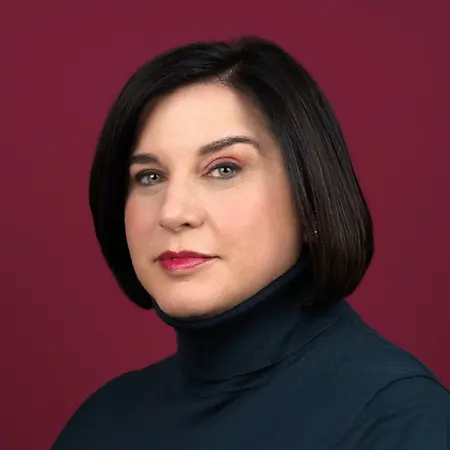
Caitlin McCarthy
Screenwriter / Educator / Activist
Worcester, MA
Her Story
About Caitlin
Caitlin McCarthy is a produced screenwriter, educator, and DES activist of documented Métis descent (Wendat-Huron, Abenaki, and French Canadian ancestry). She wrote the original screenplay and served as Associate Producer on the upcoming feature film LITTLE AUDREY (2026), directed and produced by Michael Mailer, alongside producers Jeff Thomas and John Buffalo Mailer, and starring Emily VanCamp, Jennifer Esposito, Aidan Quinn, and Josh Bowman.
An inaugural Sundance Institute Cultural Impact Fellow, Caitlin has been recognized as a Top 10 Female Writer in the Academy Nicholl Fellowship, a "Featured Script" writer on The Black List website, and a recipient of a Massachusetts Cultural Council Dramatic Writing Fellowship.
As a DES Daughter and activist, Caitlin has spent more than two decades advocating for greater awareness of diethylstilbestrol (DES) exposure. Her efforts contributed to the historic 2011 FDA acknowledgment of DES as a “tragedy” after 40 years of silence, and helped pave the way for Scotland’s historic 2023 apology to those affected by DES following her testimony before members of Scottish Parliament.
A veteran English Language Arts educator of more than twenty years, Caitlin is passionate about the power of storytelling, education, and advocacy to inform, empower, and inspire change. She holds an MFA in Creative Writing from Emerson College and is represented by Barry Krost of Barry Krost Management. Learn more at www.caitlinmccarthy.com
Her Interview
Ten minutes with Caitlin
01What do you attribute your success to?
I attribute my success to saying yes to opportunities and trusting that hard work, genuine intention, and persistence eventually open the right doors. Before becoming a produced screenwriter, I spent years writing scripts, winning competitions, and participating in fellowships and labs. Those experiences led to invaluable relationships, travel, and lessons that shaped both my craft and my career. I believe in putting yourself out there and never saying no to yourself—rejection is inevitable, but it only takes one yes to change everything. Looking back, I see my work in public relations, education, and screenwriting as interconnected, with each experience building skills that strengthen the others and create a versatile professional foundation.
02What’s the best career advice you’ve ever received?
The best career advice I ever received came from my late mother Ann McCarthy: become a teacher. At the time, I had no idea how impactful that advice would be. Teaching has not only given me a rewarding career in public education, but has also strengthened my work as a screenwriter and DES activist. Every day, it challenges me to communicate clearly, connect with people from diverse backgrounds, and make complex ideas accessible—skills that have proven invaluable in storytelling, public speaking, and advocacy. Looking back, I see teaching not as a separate path, but as one that has enriched every aspect of my professional and creative life.
03What advice would you give to young women entering your industry?
The best advice I would give young women entering the film industry is to trust your voice. As a screenwriter, you'll receive countless notes and opinions, and it can be tempting to shape your work around everyone else's expectations. I've learned to listen for the "note behind the note" while staying true to the story I want to tell. The same principle has guided me as a teacher and advocate: be open to learning, but don't lose sight of your values or perspective. Whether you're writing a screenplay, teaching a classroom, or advocating for change, your voice matters. Collaboration is essential, but authenticity is what gives your work—and your life—meaning and impact.
04What are the biggest challenges or opportunities in your field right now?
The biggest challenge in my work is cutting through the noise. Whether in screenwriting, education, or advocacy, it can be difficult to bring attention to stories, ideas, and issues that deserve a wider audience. At the same time, the internet and social media have created unprecedented opportunities to connect directly with people, share information, and build communities without relying solely on traditional gatekeepers. Writers can reach audiences, educators can extend learning beyond the classroom, and advocates can mobilize support across geographic boundaries. These tools have made it possible to amplify important voices, spark meaningful conversations, and create impact in ways that were unimaginable just a generation ago.
05What values are most important to you in your work and personal life?
I believe meaningful work comes from having the courage to stay true to your convictions, the resilience to keep moving forward despite obstacles, and the commitment to use your talents in service of something larger than yourself. I am inspired by the idea that stories can change hearts, education can open doors, and advocacy can help create a more just and compassionate world. Ultimately, I hope my work empowers others to find their own voice, recognize their own potential, and believe that one person can make a difference.
Join Influential Women and start making an impact. Register now.