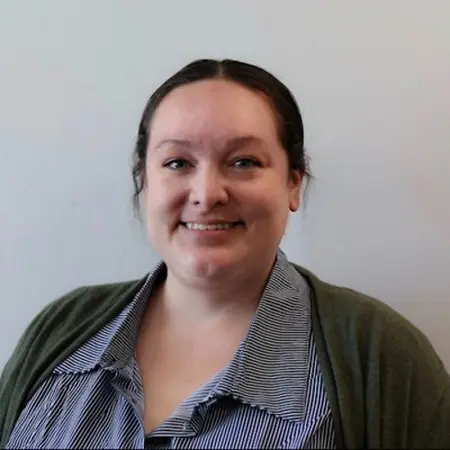
Her Story
About Caitlin
I've been in the mental health field since 2010, when I graduated from Columbia with my Master's in Social Work. It's been about 16 years that I've been a licensed social worker. The way I got into this industry was in college when I started working at an after-school program. I noticed that a lot of the kids were having academic challenges, but they weren't really related to academics - they were related to social issues. I just kind of fell in love with being involved in the community, helping connect other people, and really just responding to mental health needs. It felt serendipitous, like a confluence of things that I felt like I would be good at and things that I enjoyed doing. I got my bachelor's in social work from St. Edwards University in Austin, Texas, before going on to Columbia for my master's. Currently, I work for Idea Public Schools as a school counselor, but I also run a private practice where I do therapy, mostly for children, teens, and young adults, with a focus on anxiety, depression, and life changes. I'm also a clinical supervisor, supervising people towards getting their LCSW to be fully licensed clinicians, and I supervise interns. I've even volunteered with Columbia for a couple of different semesters to mentor people who are maybe moving to Texas, because I lived in New York for a while but I'm from Texas. I think it's so important to stay connected, and just like people helped pass along that information to me, I also want to help pass that along as well.
Her Interview
Ten minutes with Caitlin
01What’s the best career advice you’ve ever received?
The best career advice I received was from a professor who told us that maintaining your connections and networking is key, because you never know who's going to end up where. The more you maintain those connections, the better positioned you are in your career. Even now to this day, I'll tell people I don't know how to do everything, but I almost know someone who does. By being that kind of connector, you really put yourself in a more advantageous place for your career. I also received advice from one of my supervisors when I was going through clinical supervision about trying to find ways of joy through the work. I really try to look for those fun moments and those glimmers, especially because I'm working with kids and it can be a lot of hard stuff. Those moments help alleviate some of the heaviness of the work.
02What advice would you give to young women entering your industry?
I think really just being authentic to yourself. So not changing your core values, while also being really mindful of networking and the relationships that you're building. A lot of things in this field are about referrals - it's like, oh hey, I might not be able to take this client, but I know someone who can. So I think it's about being genuine and authentic, while also not being afraid to put yourself out there and to advocate for yourself. I do think a lot of young women have a lot of imposter syndrome. So it's really just being confident of, like, hey, you have the skills and the talent, so put yourself out there, and as long as you're being true to yourself, you can do it.
03What are the biggest challenges or opportunities in your field right now?
Right now in the mental health landscape, we're really seeing what a lot of people are calling the technification of mental health, because everything is moving to AI and different mental health platforms. We're seeing a lot more of the tech industry and the business side coming into mental health. That is not typically an area where women have had a seat at the table - that is much more male-dominated. So I am curious to see and hopeful that women can still stay as leaders in mental health throughout this process. It's something I think we're very much in the midst of. With technology, there's always good sides and some downsides. Especially after COVID, we had the telehealth boom, which is great because it's giving a lot more access to a lot more people. People in rural areas who maybe only had one mental health provider now can see dozens. But there's always the potential that it could come at a cost. I think we're just kind of navigating what that looks like right now.
04What values are most important to you in your work and personal life?
The values most important to me are advocacy, compassion, empathy, community, and collaboration. I think collaboration is just so crucial to the mental health field. A lot of times mental health workers are working with interdisciplinary teams, so often I'm working with doctors, psychiatrists, teachers, other social service workers. That collaboration is really crucial. I also think it's important to set boundaries and maintain them. A couple of years ago, I really tried to adapt the mindset that no is a full sentence. And I try to find ways of joy through the work. I really try to look for those fun moments, those glimmers, especially because I'm working with kids and it can be a lot of hard stuff. Those moments help alleviate some of the heaviness of the work.
Join Influential Women and start making an impact. Register now.