An examination of how hostile architecture excludes the vulnerable, the realities of homelessness in New York City, and why inclusive urban design serves everyone better than punitive exclusionary measures.
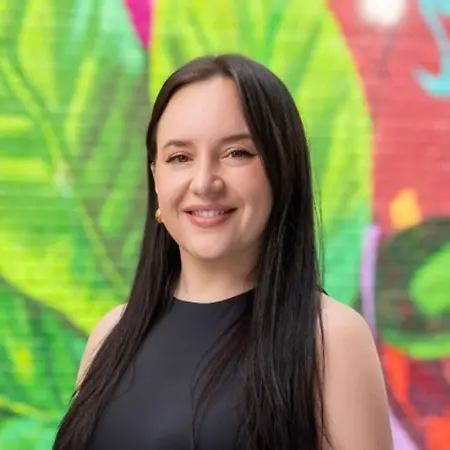
Influential Woman · Urban and Community Strategy
Camila Rodriguez Rey
AICP
Consultant – Urban Design, Policy, and Community Strategy, IMPULSE Studio
New York, NY
2Articles published
Her Story
About Camila
As a consultant, I work with cities, public agencies, nonprofits, and private partners to translate community needs and policy goals into actionable urban strategies and built outcomes. My role sits at the intersection of design, planning, and engagement—helping organizations move from vision to implementation.
Specifically, I:
- Advise municipalities and institutions on urban design strategies that improve public space, mobility, and neighborhood livability
- Support the development of policy-aligned frameworks that connect planning goals with real, on-the-ground interventions
- Lead and facilitate community engagement processes, ensuring local voices meaningfully shape projects and decisions
- Develop master plans, public realm concepts, and activation strategies that reflect social, cultural, and environmental contexts
- Coordinate across disciplines—planners, designers, engineers, artists, and policymakers—to deliver integrated, people-centered solutions
- Guide projects from early visioning and strategy through design development and implementation
At its core, my work focuses on helping cities and communities navigate change thoughtfully, using design and policy as tools to create more inclusive, resilient, and human-centered urban environments.
Her Interview
Ten minutes with Camila
01What do you attribute your success to?
I attribute my success to starting my career by working directly with communities in vulnerable neighborhoods. That experience shaped how I see cities—not as abstract systems, but as lived places shaped by people’s daily realities. It taught me to listen first, to work with humility, and to design with, not for, communities.
Over time, I learned how to pair that people-centered mindset with strong technical skills in urban planning, design, and policy. I’m able to move between community conversations and institutional frameworks, translating local needs into strategies that cities and organizations can actually implement. My success comes from that balance—empathy and rigor, vision and execution—and from consistently showing up with curiosity, accountability, and a deep commitment to creating positive change in the built environment.
02What’s the best career advice you’ve ever received?
The best career advice I ever received was to stay close to the work and the people it affects, especially as my career progressed. Early on, I was told that titles, visibility, and recognition matter far less than credibility—earned by listening well, doing the work thoughtfully, and following through.
That advice helped me resist chasing roles that looked impressive on paper but pulled me away from impact. Instead, I’ve focused on building trust with communities, collaborators, and institutions, knowing that long-term influence comes from consistency, integrity, and a willingness to learn at every stage.
03What advice would you give to young women entering your industry?
I would tell young women not to be afraid to pursue what they truly love. Trust yourself, even when the path isn’t obvious or linear. Stay connected to your own desires and values, and be honest—with yourself and with others—about what matters to you.
This field needs more voices that lead with authenticity, empathy, and conviction. When you allow yourself to show up fully and honestly, your work becomes stronger, more meaningful, and more impactful.
04What are the biggest challenges or opportunities in your field right now?
One of the biggest challenges in urban planning today is translating ambitious goals around equity, climate resilience, and inclusion into real, on-the-ground change. Too often there’s a gap between policy and lived experience. At the same time, this presents a major opportunity: to design more participatory, climate-responsive, and people-centered cities by aligning community voices, policy frameworks, and implementation from the start.
05What values are most important to you in your work and personal life?
The values most important to me are integrity, empathy, and honesty. In my work, that means listening deeply, being accountable to the communities I work with, and making decisions that align with both my professional responsibilities and my personal values. In my personal life, it means staying connected to what truly matters to me, acting with care and intention, and building relationships based on trust and respect.
Ultimately, I believe meaningful work and a meaningful life are built on the same foundation: being honest with yourself, treating others with dignity, and showing up consistently with purpose and compassion.
Her Content Hub
Articles by Camila
Hostile Architecture and the Failure of Urban Compassion
How Design Choices Shape Belonging, Vulnerability, and the Right to the City
Cities are never neutral. Every design decision—every bench, ledge, railing, and public square—signals who is welcome to stay and who is expected to move along. In recent years, many cities, including New York, have increasingly embraced hostile architecture: design strategies intended to prevent certain behaviors by making public space uncomfortable or unusable.
Benches divided by metal bars. Spikes on flat surfaces. Sloped ledges that repel sitting. These are not incidental details. They are deliberate interventions meant to control presence.
Such measures are often justified in the language of safety, cleanliness, or efficiency. In practice, however, they displace vulnerability rather than address it. Hostile architecture does not solve homelessness—it renders it invisible, quietly reshaping cities into places that are less humane for everyone.
Nowhere is this contradiction more evident than in New York City.
By 2025, New York has reached one of the most severe housing insecurity crises in its history. On any given night, thousands of people live unsheltered, while more than 100,000 sleep in shelters across the city. What is often overlooked is who these individuals are. Roughly two-thirds of New York’s sheltered homeless population are families, not single adults. Homelessness in New York is not marginal—it is widespread, increasingly affecting parents, children, and working households.
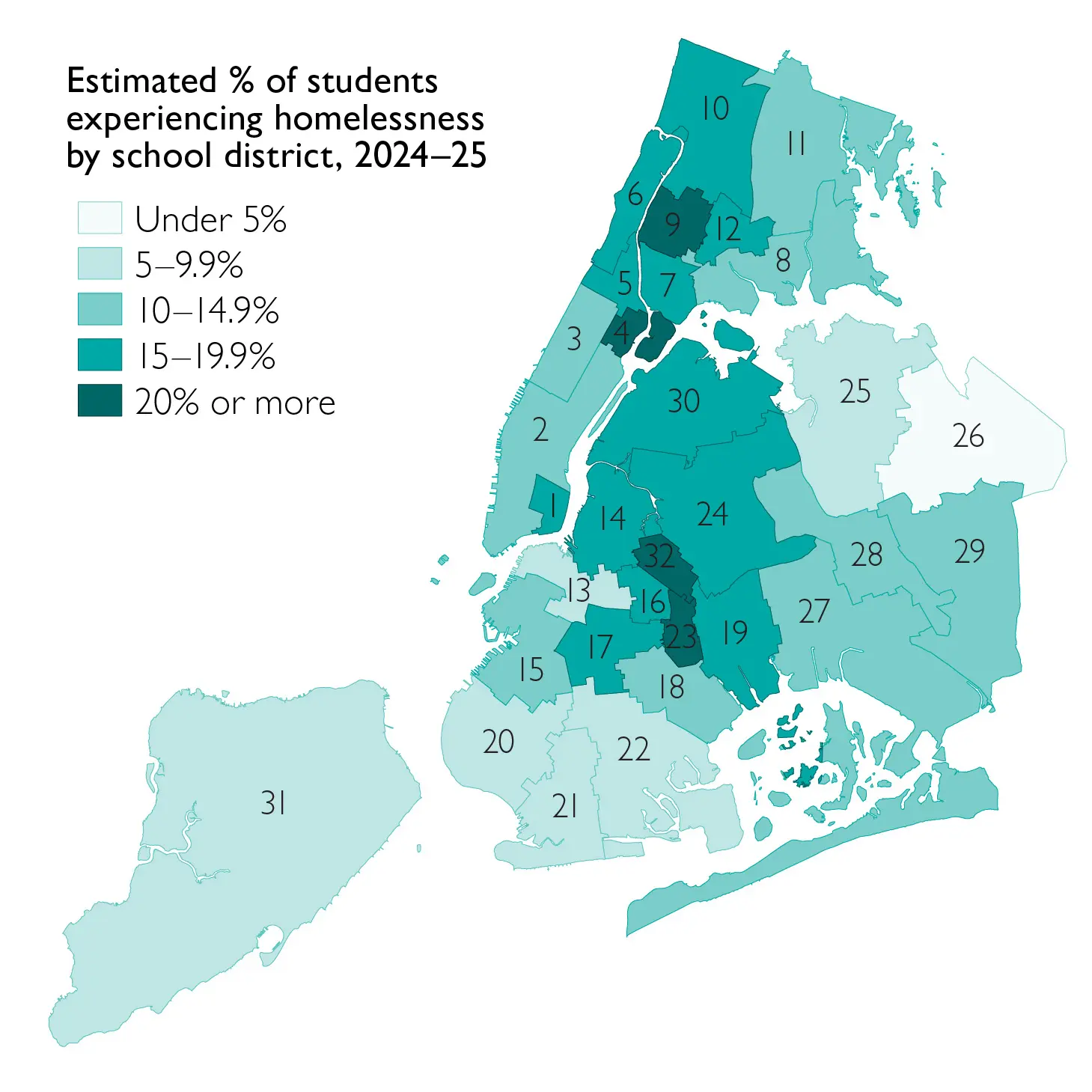
The scale of child homelessness is particularly striking. During the 2024–2025 school year, nearly 150,000 public school students—approximately one in seven—experienced homelessness. These are children attending class while living in shelters, temporary housing, or unstable arrangements. Any narrative that frames homelessness as an exception collapses under these numbers.
Mental health and substance use are also part of this reality, though they are frequently misrepresented. Among people living unsheltered in New York City, an estimated 24 percent experience serious mental illness, including conditions such as schizophrenia, bipolar disorder, or severe depression. Many also struggle with substance use disorders. These figures matter not to stigmatize, but to highlight systemic failure. Mental illness and addiction are health conditions—not design problems—and they do not justify environments that punish people for existing in public space.
Hostile architecture treats vulnerability as a nuisance to be managed rather than a condition to be addressed. When cities install benches that prevent lying down—or remove flat surfaces entirely—they are not simply discouraging sleeping. They are denying rest. And rest is not a behavior. It is a human need.
This reveals the deepest flaw of hostile design: it is never selective. When cities prevent certain actions, they prevent them for everyone. A bench designed to stop someone from sleeping also prevents an elderly person from lying down, a pregnant woman from resting, a parent from sitting comfortably with a child, or a person with a disability from pausing without pain. Design that excludes the most vulnerable ultimately excludes the ordinary.
Public space thrives on flexibility. It is meant to absorb difference, slowness, unpredictability, and care. When those qualities are stripped away in the name of control, cities become tense rather than safe—empty rather than alive.
Inclusive urbanism offers a fundamentally different approach. It begins with a simple truth: homelessness is not an identity. It is a condition—and in today’s economic and social landscape, it is one almost anyone can experience. Job loss, illness, family separation, rising rents, migration, or climate-related displacement can push even stable households into crisis. The distance between being housed and unhoused is far smaller than many policies are willing to admit.
Inclusive design does not claim to solve homelessness on its own. But it refuses to make it worse. It recognizes that architecture carries responsibility—that public space should never be weaponized to compensate for failures in housing policy, healthcare, or social services.
Hostile architecture, by contrast, is fundamentally anti-urban. It replaces care with control and shifts responsibility away from institutions onto objects: a bench instead of housing policy, a spike instead of a support system. It prioritizes appearances over outcomes, comfort for some over dignity for all.
Cities that invest in exclusion ultimately design against themselves. Cities that design with compassion—recognizing vulnerability as a shared human condition—create public spaces that are safer, more resilient, and more alive.
Because a city that works for its most vulnerable residents is not weaker.
It is stronger.
Building genuine relationships with communities through trust, transparency, and active listening transforms projects into lasting collaborative partnerships where local voices shape outcomes and drive sustainable change.
The Power of Connection
Why Trust Is the Foundation of Community-Based Work
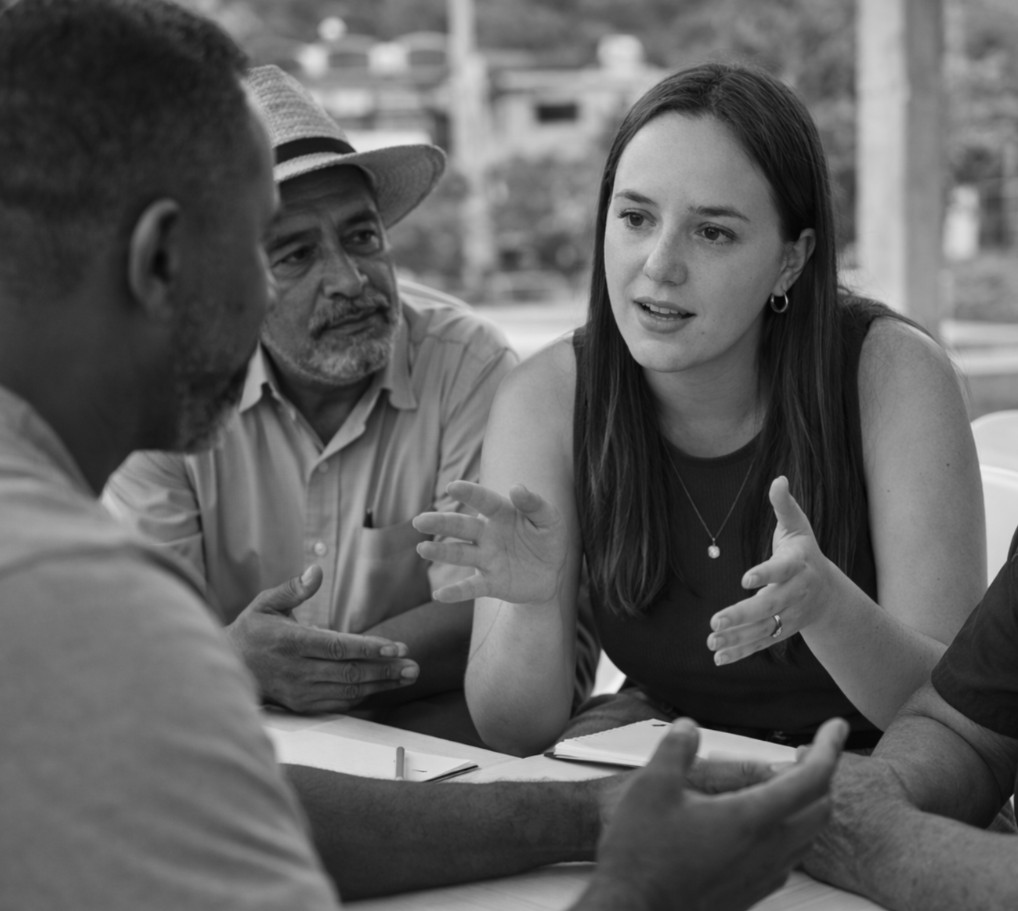
Working with communities is not just about delivering projects or implementing plans—it is about building relationships. Real, lasting impact happens when professionals take the time to listen, understand local realities, and engage with people as partners rather than beneficiaries. Without trust, even the most well-intentioned initiatives risk falling short.
Connecting with communities means showing up with humility and consistency. It requires creating spaces where people feel heard, respected, and valued—especially those whose voices have historically been overlooked. Trust is built gradually through transparency, follow-through, and a genuine commitment to shared goals. When communities see that their knowledge and lived experience shape outcomes, collaboration becomes stronger and more meaningful.
This trust becomes the bridge that connects people to one another and to the process of change. It enables collective ownership, aligns diverse stakeholders, and turns ideas into action. Ultimately, success is not measured only by what is built, but by the relationships strengthened along the way—and by communities that feel empowered to carry the work forward long after a project is complete.
How to Build Trust in Simple Steps
Listen Actively: Prioritize understanding over giving advice. Ask questions and reflect back what you hear.
Be Transparent: Clearly communicate your goals, limitations, and timelines. Honesty builds credibility.
Follow Through: Keep promises, no matter how small. Consistency shows reliability.
Include Local Voices: Involve community members in decision-making and value their expertise.
Show Humility: Acknowledge what you don’t know and remain open to learning from the community.
Celebrate Progress Together: Recognize achievements—both big and small—and share credit.
Maintain Long-Term Engagement: Trust grows when relationships continue beyond a single project.
By following these steps, professionals can transform community work from transactional to relational—building initiatives that last because the people they serve are fully engaged and invested.
Join Influential Women and start making an impact. Register now.