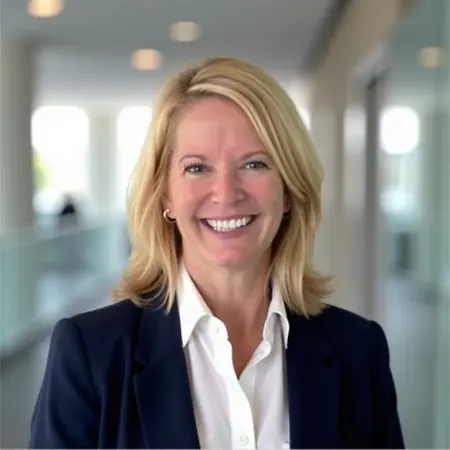
Her Story
About Candice
My career has always been about serving people, and it all started with my work as a special education teacher working with children and families. That experience led me to pursue my master's degree in school counseling because I wanted to go deeper and have a more lasting impact with the families I was serving. Even after students moved on to the next year, they would come back and we would continue our relationship, and I realized there were still so many ways I could help. That desire to truly support people through their challenges led me to get my licensure in mental health therapy. I've been in the field for 30 years across these different capacities, but it all connects because each role built on the last. My main expertise is helping people navigate transitions, particularly families with neurodivergent members. As the parent of a son with Down syndrome and a former special education teacher, I bring both professional knowledge and lived experience to this work. I help families understand the IEP system, navigate social challenges, build community, and most importantly, not carry their journey alone. But transitions can mean so many things - divorce, retirement, a new baby, relocating, aging parents - and I've evolved my practice to meet families wherever they are. My approach has always been shaped by my constant thirst for learning. I'm always attending conferences, taking courses, staying current with research, and connecting with professional organizations. I don't believe in working in isolation - community and collaboration keep me sharp and current in the field. Right now, I'm building my own business in this space, which at nearly 60 feels like both a personal and professional achievement. While many of my friends are retiring, I'm stepping into something new, and that's important to me because I need to walk the walk. I tell my clients to get comfortable being uncomfortable, and I have to live that too. I want to show people that taking risks and embracing new roles is okay at any age.
Her Interview
Ten minutes with Candice
01What do you attribute your success to?
By the grace of God go I. That's really how I would sum it up. Being born in this country and having the opportunities that I have had was a blessing to begin with. Now, I've tried to embrace those opportunities and make the best of my circumstances, to be positive and authentic and embrace those educational opportunities. But to have those opportunities to begin with was a blessing. I make choices, certainly, but it's all about God. I just try to elevate his kingdom and use the gifts and opportunities he's given me to help others.
02What’s the best career advice you’ve ever received?
The best career advice came from Dr. Lon Kreiner, the Dean of the Counseling Program at Xavier University, during my interview to enter the program. He had a conversation with me about seeing potential in people, and it completely changed the lens through which I view people. The essence of what he said was that some people are born on third base, some people are born on first base, and some people aren't even up to bat yet - they're not even on home plate. But all of them have potential. It's up to us to see that potential. He said we need to stop looking at people through any sort of lens that compares or judges, and instead focus on how can I help this person, whether they're not up to bat yet or they're on third base - how can I help them meet their goal, whatever that is. Basically, it comes down to all people have value. What impacted me more than anything was that he walked the walk. It wasn't about lecturing - it was a quiet conversation, but it was evident in the way he practiced. That has stayed with me and influenced every interaction I have, because I try to see the God-given human life and value in every person I work with, no matter where they're starting from.
03What advice would you give to young women entering your industry?
Get a mentor. Don't be afraid to ask someone in the field to let you be in their presence and follow them, or to shadow them. Get some sort of professional experience before it's required - understand the field and don't isolate yourself. Isolation is the work of the devil, and that's when voices of doubt and all those negative things creep in. This is especially important in our field because even if we're in a group practice, we're practicing alone. So connect with others and get involved. Go to seminars, conferences, and professional organizations. I think students are often hesitant, wondering what's my role here, I'm just a grad student. But you're not just anything - you are a grad student and you belong. Or maybe you're not even there yet, maybe you're just considering it. Well, go to the conferences anyway. Learn and connect. Community and professional organizations are really helpful to feel like you're part of something bigger and to understand that you don't need to carry some of this alone. It's critical that we build our own community, whether it's through Zoom or one-on-one or whatever it is. Get involved - it's never too early. Your college or grad program might require an internship towards the end, but that doesn't mean you can't get involved before that.
04What are the biggest challenges or opportunities in your field right now?
The biggest challenge in my field right now is barriers to care. There are so many barriers preventing people from getting the help they need. Financial barriers are huge - I've had clients with insurance who tell me they have to wait a couple months to meet with me again because they haven't met their deductible yet. They'll say, I'll have a dentist appointment and this appointment, so I'll meet my deductible and then I'll be back. But that interrupts the continuity of care and progress gets interrupted, which can't be good. There are also workplace barriers. For example, in some professional organizations like the military, if people who are serving get help, they can be passed up for opportunities for advancement. That's not a criticism, it's just a reality, and it can sway people not to get help. So whether the barriers are socioeconomic or workplace-related, there are just so many barriers to care. The opportunity I see is in minimizing these barriers to care and finding ways to address them. That's actually part of what I'm building with my business - addressing these barriers and making care more accessible.
05What values are most important to you in your work and personal life?
At the core of who I am, I'm a Christian, and I see people through the lens of Jesus Christ. Whether they are Christian or not is irrelevant to me, but that is at the core of who I am. However I can help people, whatever that looks like, is affirming to me, and all glory to God. He equips me to help more than I could ever help on my own. What that means to me in practice is authenticity. I truly try to live my life in a way that glorifies him, and everything that means - transparency, having no agenda. It's his agenda of elevating others and really trying to help people meet their goals. So it's not about me. I really value genuineness and authenticity above all - just being real. I meet people wherever they're at, and I see them through that lens of their God-given human life and value. All people have value, and that drives everything I do.
Join Influential Women and start making an impact. Register now.