Candida Goza
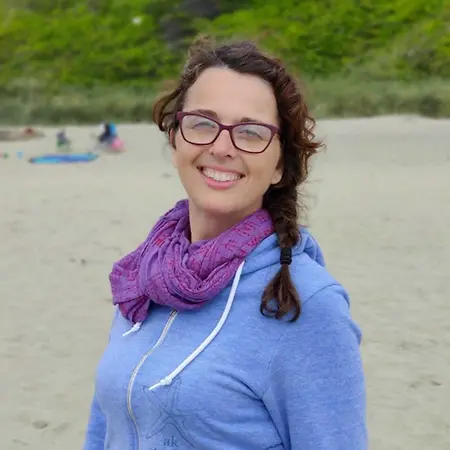
Candida Goza is a Community Engagement Specialist and Senior Program Coordinator based in Seattle, Washington, with more than 15 years of experience in community nutrition, food systems education, and youth-centered experiential learning. She currently works within the Renton School District and related community nutrition programs, where she focuses on building accessible, hands-on learning opportunities that connect students and families to food systems, environmental stewardship, and health equity. Her academic background includes a Master’s Certificate in Ecological Planning and Design from Antioch University Seattle and a Bachelor’s degree in Psychology from Western Washington University.
For the past nine years, Candida has served as a key leader in developing and sustaining a 400-square-foot edible school garden at a Title I elementary school. In this role, she has designed and implemented garden-based education programs that integrate mini-orchards, year-round food production, composting systems, and water conservation features such as cisterns. These spaces function as outdoor classrooms where small groups of elementary students engage directly with food cultivation, biodiversity, and environmental systems, while also strengthening their sense of connection, curiosity, and ownership within their school community.
Her professional approach is grounded in food justice, community resilience, and experiential education, shaped in part by her own lived experiences with food insecurity. She is especially focused on expanding equitable access to nutrition education and building sustainable, community-led programs that can continue beyond individual tenure. Currently, she is documenting curriculum, practices, and program structures into a comprehensive manual to support long-term sustainability and replication. Outside of her work, she values restorative activities such as time in nature, dance, swimming, and movement as essential to maintaining balance in mission-driven work.
• Adult and Pediatric First Aid/CPR/AED
• Advanced Nutrition Foundations for Professional Practice
• Systems Approaches for Healthy Communities
• Western Washington University - BA
What do you attribute your success to?
I attribute my success to my intentional ability to truly see students where they are and meet them with presence and acceptance. In my work in the garden, I intentionally lead small groups of about eight students at a time so I can be fully present with each of them while also ensuring meaningful access for all through rotation. This setting allows students to experience both the healing connection of the natural world and the value of being genuinely seen, which I consider the most meaningful achievement in my work.
What’s the best career advice you’ve ever received?
The best career advice I’ve internalized comes from Clarissa Pinkola Estés, who writes about how perfectionism often prevents people—especially women—from starting or completing meaningful work. I’ve come to understand perfectionism as a form of self-protection from the discomfort of potential mistakes, failure, or feelings like insecurity and shame. When I began to recognize this pattern in myself, I realized how much creative energy can be lost by waiting for something to be “perfect” or abandoning it altogether if it isn’t. Through my own growth, I’ve learned to move past that mindset and value progress over perfection, which has allowed me to do more authentic and impactful work.
What advice would you give to young women entering your industry?
I would advise young women entering this field to follow their heart, especially if they are passionate about social causes. While education, training, and practical experience are important, I believe that passion, deep personal knowing, creativity, and imagination are equally—if not more—essential. I would encourage them to clearly identify their purpose, name it, and commit to living it, even if the path is not immediately clear. Growth in this work often takes time, and progress may not always be visible at first, so patience and self-compassion are key. If they continue to nurture their purpose with care and persistence, I believe it will take root and evolve in meaningful ways.
What are the biggest challenges or opportunities in your field right now?
A major challenge in the nonprofit field right now is reduced and uncertain funding, which can strain the ability to sustain essential community work. At the same time, this is creating an opportunity to become more creative, adaptive, and systems-focused, drawing on both practical and intuitive ways of thinking to innovate and respond to community needs. Another challenge is the pace of the work and the risk of burnout, which also invites a stronger focus on balance, sustainability, and well-being so we can continue serving communities effectively over the long term.