
Leaving wasn't abandoning stability. It was honoring my worth when a place stopped reflecting it.
How She Left a Job That No Longer Fit
Explore moreAchievement should not require self-abandonment. The most powerful growth happens when you stay connected to your values, your voice, and your purpose.
Candra Nicole Tarver · In Her Own Words
Leaving wasn't abandoning stability. It was honoring my worth when a place stopped reflecting it.
How She Left a Job That No Longer Fit
Explore moreI don't match disrespect with disrespect. I match it with boundaries. My professionalism is my power.
How Women Dealt With a Belligerent Colleague and Found Strength in Professionalism
Explore moreHer Story
Candra Tarver is an accomplished healthcare professional, author, and entrepreneur with a career spanning over a decade. She began her professional journey in customer service and clerical work in 1998, and in 2012, she transitioned into healthcare by earning her A.S. in Occupational Therapy from Keiser University. As a licensed COTA/L, Candra has over 12 years of experience working in skilled nursing facilities, home health, and assisted and independent living settings. In 2019, she expanded her career into travel therapy and is currently licensed in California, providing patient-centered care across diverse healthcare environments.
In addition to her clinical work, Candra is the co-founder of e Cael Duō Terra LLC, where she serves as a creative director and continues to cultivate her entrepreneurial spirit. She is also the author of Origami Tales, leveraging her storytelling skills to inspire and engage a wider audience. Her experience blends creativity, leadership, and healthcare expertise, allowing her to navigate both patient care and business development successfully.
Candra’s career reflects a commitment to growth, adaptability, and lifelong learning. She balances her clinical expertise with her entrepreneurial ventures, demonstrating resilience and innovation in every role she undertakes. Her work is guided by a dedication to helping others, whether through healthcare, creative projects, or mentoring emerging professionals in her field.
Her Interview
01What do you attribute your success to?
I attribute my success to a combination of grace, resilience, and the unwavering support of the people who believe in me. My mother’s strength, sacrifices, and unconditional love shaped the foundation of who I am. Her example taught me to show up with determination, compassion, and purpose — even on the days when I don’t feel my strongest.
Professionally, my success comes from my dedication to learning, growing, and refusing to stay in spaces that no longer value me. Every step of my journey — from working in skilled nursing facilities, to becoming a travel therapist, to becoming an author and entrepreneur — has required courage, adaptability, and faith in my own potential.
I also credit my success to my ability to give myself grace. I learned to stop chasing perfection and start embracing progress. I learned to trust my timing, honor my worth, and stay aligned with my purpose instead of comparing myself to others.
Most of all, I attribute my success to never dimming my light. I show up as my authentic self, do the work with intention, and trust that what is meant for me will always meet me where I am.
02What’s the best career advice you’ve ever received?
The best career advice I ever received was this: never stay anywhere that doesn’t recognize your worth — and never be afraid to grow beyond the places you’ve outgrown. That guidance taught me that loyalty shouldn’t require self-abandonment, silence, or sacrificing my value. It reminded me that it’s okay to choose myself, even when that choice feels unfamiliar or uncomfortable.
I was also told to advocate for myself, because no one can speak for my skills, my heart, or my dedication the way I can. That advice helped me find my voice — not just to ask for what I’ve earned, but to stand firmly in the truth that my work, my compassion, and my expertise matter.
And finally, the advice that has stayed with me the longest is this: your purpose will always make room for you if you’re brave enough to follow it. That wisdom taught me to trust my timing, my growth, and the calling that kept pushing me toward something bigger.
When I blend all of these together, they form the foundation of how I move through my career:
with confidence in my value, resilience in my journey, empathy for others, and faith that every step I take — even the scary ones — is guiding me toward the woman I’m meant to become.
03What advice would you give to young women entering your industry?
My advice to young women entering the occupational therapy field is simple, but powerful: stand proudly in your worth, stay rooted in your compassion, and never stop learning. This profession will challenge you, stretch you, and shape you — but it will also reward you with moments that remind you why you chose this path.
Trust your skills and trust your voice. In the beginning, it’s normal to feel unsure, but confidence grows with experience. Advocate for fair pay, advocate for safe workloads, and advocate fiercely for your patients. Your voice matters — use it with strength, professionalism, and intention.
Seek out mentors, but also become your own. Learn from others, but stay curious. Explore new settings, new techniques, and diverse cultural approaches. Travel if you can — stepping outside your comfort zone will teach you things no textbook ever could.
Let compassion guide you, but let boundaries protect you. Caring deeply is a gift, but carrying everything is a burden. Protect your peace so you can continue to show up with purpose.
And most importantly, know that it is never too late to redefine yourself. Whether you’re early in your career or years into it, there is no expiration date on growth, evolution, or becoming the woman you’re meant to be. Setting boundaries isn’t selfish — it’s necessary. Reinventing yourself isn’t failure — it’s courage.
Believe in yourself, trust your journey, and don’t allow anyone or anything to stop you from stepping into your full potential.
This field needs women like you — skilled, empathetic, innovative, and fearless. If you stay aligned with who you are and what you believe in, there will always be space for you to thrive.
04What are the biggest challenges or opportunities in your field right now?
One of the biggest challenges in the occupational therapy field today is the way healthcare systems are rapidly changing. Productivity pressures, shrinking reimbursement rates, and constantly shifting expectations are creating environments where burnout is becoming more common than anyone wants to admit. Therapists are often asked to “do more with less,” and that can directly impact the quality of care we’re able to provide.
Another major hurdle is the bureaucracy and red tape that limit our time with our patients. Low funding, strict productivity standards, and corporate-driven policies can turn healthcare into more of a numbers game than a human-centered service. Occupational therapy interventions are client-centered by nature — meaning every patient needs something different based on their diagnosis, their history, their goals, their physical and cognitive abilities, and their overall situation.
But the system often pressures practitioners to treat everyone the same, in the same timeframe, with the same expectations. And that is not how healing works. There is no cookie-cutter approach in OT — and there never should be. Some patients need more time, more support, and more individualized care. Bureaucracy can make it difficult to give every patient what they fully need, and that is one of the biggest frustrations in the field right now.
There is also a challenge in the misunderstanding and undervaluing of what COTAs can truly do. Many of us have advanced skills — from neurological rehab to modalities to cognitive retraining — yet our roles are often misinterpreted, minimized, or overlooked. That lack of recognition can limit growth, compensation, and visibility.
But with these challenges also comes opportunity.
The field is wide open for innovation, creativity, and reinvention. Practitioners today have more freedom to think outside the box — to integrate meaningful, culturally relevant, and evidence-based activities into care. There is room to create tools, write resources, design programs, launch therapeutic products, and build bridges between traditional practice and community-based support.
There is also a growing opportunity to redefine what patient-centered care looks like, especially through interdisciplinary collaboration, trauma-informed approaches, holistic wellness, and culturally sensitive interventions.
My own journey — merging clinical experience with storytelling and therapeutic creativity through Origami Tales — reflects this shift. Therapists are no longer confined to one lane. We can write, teach, create, advocate, and build resources that reach far beyond the walls of a facility.
And despite the challenges, I believe the heart of OT will always remain the same:
we show up for people.
We advocate for them.
We help them regain independence, dignity, purpose, and joy.
So the greatest challenge is working within a system that doesn’t always honor the work.
But the greatest opportunity is standing firm in your purpose — doing what’s right for your patients, protecting your integrity, and leaving every day knowing that you made a positive difference in someone’s life.
That, in itself, is the most rewarding part of this field.
05What values are most important to you in your work and personal life?
The values that guide me — both in my career and in my personal life — are integrity, compassion, authenticity, purpose, creativity, curiosity, and balance. These values shape how I move through the world, how I serve others, and how I continue to grow into the woman I’m meant to be.
Integrity is the foundation of everything I do. Whether I’m working with patients, writing, or building something new, I want to show up with honesty, consistency, and a clear heart.
Compassion helps me stay grounded and present. It allows me to meet people where they are — with understanding, patience, and care — without losing myself in the process.
Authenticity is a value I protect fiercely. I refuse to dim my light or shrink in spaces that call for truth, confidence, or softness. Being my full, genuine self is nonnegotiable.
Purpose fuels every chapter of my journey. I don’t want my work or my life to be random — I want everything I do to carry intention, meaning, and impact.
But alongside these core professional values, I also honor the things that keep me human, creative, and joyful.
I deeply value creativity and curiosity — they remind me that there is always something new to learn, explore, or imagine. My love of storytelling shows up not only in my work as a therapist and creator, but also in my book Origami Tales and the three stories I wrote: The Tale of the Magical Swan, The Tale of the Lost Crown, and The Tale of the Fluttery Butterfly. These stories reflect my belief that creativity can heal, educate, and connect us in ways words alone cannot.
Maintaining balance is just as important. I enjoy activities that keep me active, engaged, and grounded, like planting, puzzles, roller skating, and boxing. Music is a constant source of inspiration, and I cherish the quiet joys of home — especially spending time with my three cats, Cocoa Chanel, Calllie Suzanne, and Kensi Marie, who each bring their own personality, comfort, and chaos into my life.
And yes — I embrace wisdom from unexpected places, like the gentle simplicity of Winnie the Pooh and the quiet resilience of Batman. Both remind me that strength comes in many forms: softness, courage, kindness, and determination.
At the heart of it all, I value being a person who leads with integrity, lives with intention, creates with joy, and stays rooted in authenticity — in my work, in my art, and in my everyday life.
Her Content Hub
A Certified Occupational Therapy Assistant's journey from clinical practice to authorship, merging therapeutic expertise with creative storytelling through evidence-based origami activities for cognitive and motor development.
From Clinical Practice to Creative Healing: How One Occupational Therapist is Transforming Lives Through Origami.
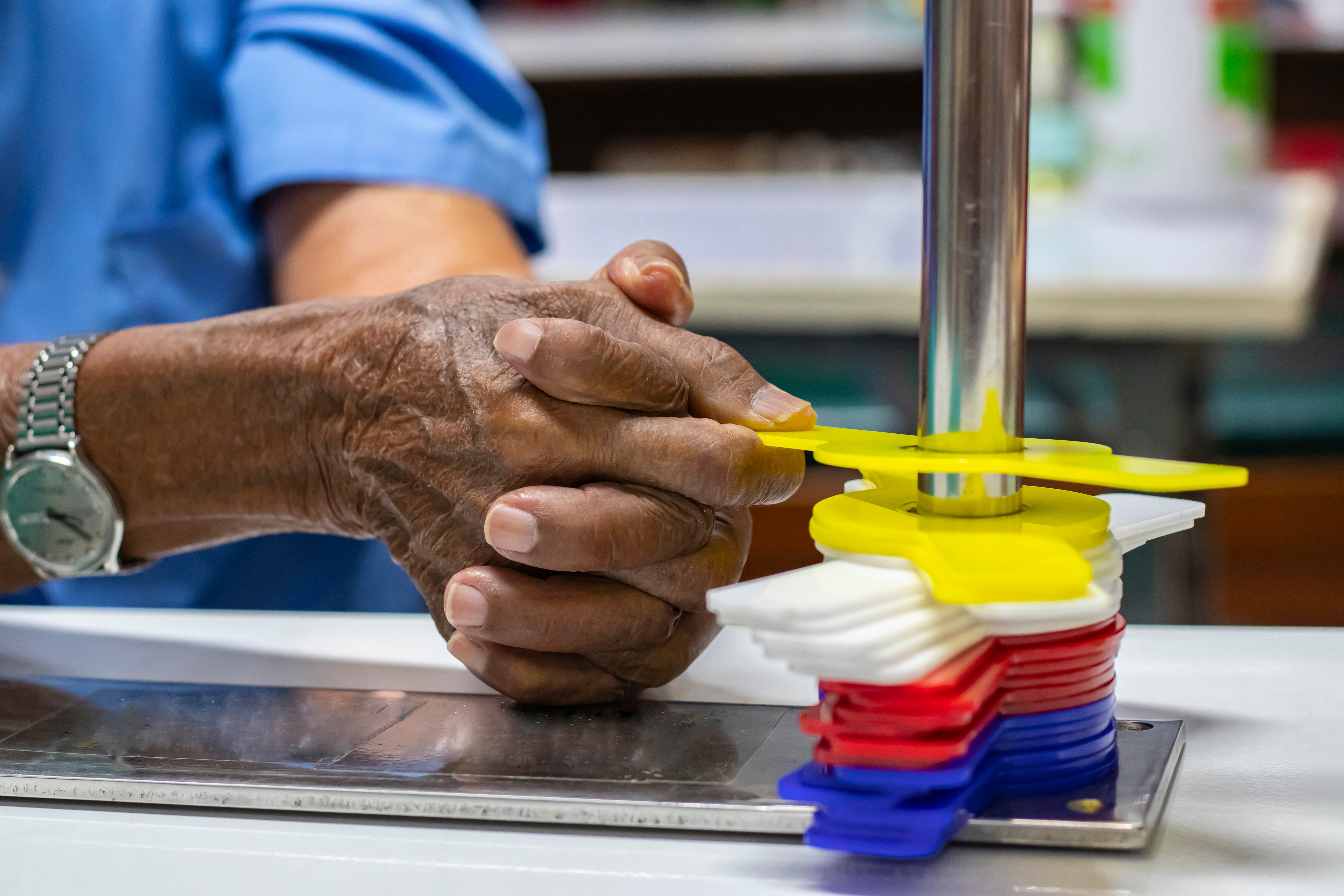
For more than 12 years, I have served as a Certified Occupational Therapy Assistant across multiple settings — from skilled nursing facilities to home health to outpatient programs housed within SNFs. Throughout my career, I’ve worked with diverse populations and complex diagnoses, including stroke survivors, individuals with traumatic brain injuries, and patients navigating musculoskeletal conditions.
This journey has been deeply rewarding, shaping not only my clinical expertise but also the creative path my life has taken today.
One of the most transformative aspects of my career has been working in environments that challenged me to think critically and adapt quickly. In skilled nursing, I learned how to support patients during some of the most vulnerable chapters of their lives. Home health offered a deeper understanding of functional independence and the environmental adaptations needed to help people thrive in their own spaces. Outpatient rehab strengthened my clinical reasoning and refined my hands-on skills.
Over the years, I became especially passionate about neurological rehabilitation. Stroke recovery, cognitive retraining, post-TBI interventions, and addressing motor deficits became areas where I naturally excelled. Helping someone regain function — whether it’s brushing their hair again or writing their name — never stopped being meaningful.
In 2017, I expanded my skill set by becoming certified in kinesiotaping, which allowed me to better support patients with biomechanical and neuromuscular challenges. This additional training enhanced my understanding of the mind–body connection and deepened my ability to treat the whole person, not just the symptoms.
After several years in my hometown of Jacksonville, Florida, I felt called to grow beyond my comfort zone. I wanted to learn from practitioners across the country, gain new perspectives, and challenge myself in unfamiliar environments.
That decision took me all the way to California as a travel Certified Occupational Therapy Assistant — a leap of faith that was equal parts intimidating and exhilarating.
Travel therapy exposed me to new treatment approaches, diverse cultural influences, and a broader understanding of patient-centered care. Each assignment sharpened my clinical lens and helped me grow not only as a therapist, but as a person.
Even when my journey was interrupted by an on-the-job injury — just before reaching the full 13-year mark — my commitment to the field never faded. I continued seeking ways to use my experience, knowledge, and passion to help others.
About a year ago, I opened a new chapter in my life — literally. I wrote and published my first book, Origami Tales, a whimsical storytelling experience centered around origami characters, life lessons, and imagination.
At first, it was simply a fun, creative project inspired by an activity I’ve loved since childhood. But as I reflected more deeply, I realized something meaningful:
Origami could become a therapeutic tool.
This realization inspired me to merge my two worlds — occupational therapy and creative storytelling.
I am now developing an evidence-based supportive article and a full activity workbook to accompany Origami Tales. The workbook will include:
These tools are designed not only for children working on foundational cognitive and fine motor skills, but also for older adults — especially individuals recovering from neurological events such as stroke or TBI.
Origami naturally incorporates:
It is the perfect bridge between “play” and function — a therapeutic activity that can be adapted across ages, goals, and diagnoses.
This project is more than a book or a workbook. It represents the merging of who I was as a child, who I became as a therapist, and who I’m still becoming as an author and creator.
I have spent over a decade helping people regain independence, rediscover confidence, and reconnect with their abilities. Now, I’m excited to bring that same heart and purpose to tools that blend creativity, evidence-based practice, and therapeutic intention.
My goal is simple:
To share joy, support cognitive and motor development, and help people — from children to older adults — experience growth through creativity.
This next chapter of my career may look different from how it began, but the mission remains the same:
helping people heal, learn, and thrive in ways that feel meaningful and empowering.
Join Influential Women and start making an impact. Register now.