Her Story
About Cara
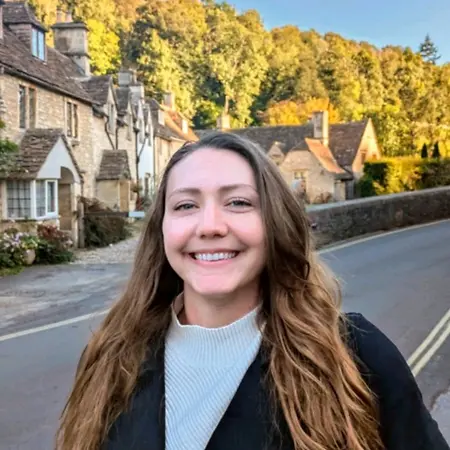
Cara Spencer is a Computer Science PhD student and NASA Research Associate based at the University of Colorado Boulder. She works at the intersection of computer science, cognitive neuroscience, and human performance, with a strong focus on understanding how people think, decide, and adapt in complex and high-stakes environments. Her academic and professional identity is rooted in interdisciplinary research that connects technology development with human behavior, particularly in contexts relevant to space exploration and advanced training systems.
Her research centers on multi-modal human performance analysis, integrating physiological, cognitive, and behavioral data to model how humans function under varying levels of workload and uncertainty. She specializes in using wearable sensor systems such as fNIRS, EEG, eye tracking, and physiological monitoring to study cognition in real time, often within virtual reality environments designed for adaptive training. A significant portion of her work is conducted in collaboration with NASA’s Behavioral Health and Performance Lab, where she contributes to studies on cognitive load, team dynamics, and resilience in extreme, isolated, and confined environments, including Mars analog simulations such as field research at desert-based mission habitats.
Beyond her technical research, she is actively involved in advancing applied human factors science through publications, collaborative projects, and experimental campaigns that bridge academia and space operations. Her work has contributed to understanding how cognitive load and misinformation affect decision-making in astronaut-like settings, with implications for future long-duration space missions. Alongside her research career, she is committed to science communication and mentoring, engaging with students and research communities to promote interest in space science, human cognition, and AI-driven adaptive systems. She is widely oriented toward future-facing goals in human spaceflight, with a strong interest in developing technologies that support resilience and performance in extreme environments.
Her Interview
Ten minutes with Cara
01What do you attribute your success to?
I think my success is multifaceted. First, I have a very strong personal drive related to the values of curiosity, connection, and honesty that guide me. Second, I would attribute some of my success to my support system. I have chosen specific people in my life because they are good for my health - they support me, they push me, and they provide a grounding source whenever I am too sky-eyed. Third, I prioritize my own health, both physical and mental, because they're all intertwined. I think if you treat your body like a machine, that gets you pretty far, and I think a lot of people do, but I think you sacrifice sort of the other element and purpose of being a human, which is not just productivity.
02What’s the best career advice you’ve ever received?
The best career advice I've received, and the one that is speaking to me most right now, is that being ready is a decision, not a feeling. If you're always waiting to feel ready, it's never going to happen. You have to decide that you're ready.
03What advice would you give to young women entering your industry?
I would say three things. First, don't be scared that you might be the only woman in the room. Second, try to determine what it is you don't know and figure out how to learn it. I think one of the scary things about entering a new field, even if you're very interested in it, is coming up against the fact that there have been people working on this for so long and you're brand new. But those people also had to start somewhere. One of the ways to figure out what you like and where there's progress to be made is to take a metacognitive approach of examining what you know and what there is to learn. And the last thing I would say is don't be afraid to ask for help. Find the people who are safe, psychologically safe, who aren't going to judge you for needing help, and actually ask for it. Ask for it early, and ask for it often.
04What are the biggest challenges or opportunities in your field right now?
I think the biggest challenges are related to the speed of technological advancement. There's a lot of talk about the ways that our jobs are going to be automated or taken away from us. While I do think those present a real possibility, I am not confident at this time that our field is something that could be replaced, or that the experts in it could be replaced. But it does pose a challenge of asking what are the actual capabilities of these new technologies and can they actually help us. Another challenge right now is the information environment we work in. People have all of these hidden ideas, and the sources that we look to have these agendas that obscure the full picture and the truth. Being able to determine what's credible and what is reasonable - that's still something that humans are needed for. That still poses real challenges for our field.
05What values are most important to you in your work and personal life?
The values most important to me are being curious, finding connection, and being honest. I also value integrity, which I think goes hand in hand with honesty.
Join Influential Women and start making an impact. Register now.