Influential Woman · Advertising and Marketing Research
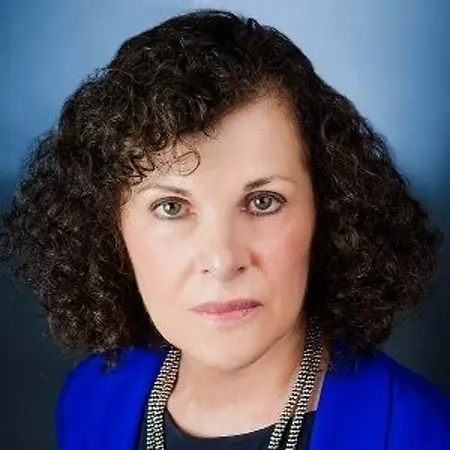
Carla Roberts
Founder - Advertising & Marketing Research Strategist, Team 360 Consulting
Austin, TX 78737
Her Story
About Carla
Carla Roberts is an accomplished Advertising and Marketing Research Strategist with over 30 years of experience bridging the gap between creative development and marketplace results. She is the owner of Team 360 Consulting, a firm she has successfully led for more than two decades, specializing in qualitative research and strategic planning, including focus groups and in-depth interviews conducted both online and in-person. Carla began her career at BBDO in New York as a moderator, Creative Research Supervisor and copywritter, later serving as Research Director in their San Francisco office. Her extensive background in creative research and copywriting allows her to deliver actionable insights that not only analyze the market but also inform and optimize marketing strategies. Throughout her career, Carla has focused on product positioning, concept testing, and diagnostic market and image investigations across a wide range of industries, including beauty, health, alternative health, nutritionals, and direct response advertising. She has worked with Fortune 500 companies, established brands, and startups alike, helping them translate consumer insights into strategies that increase engagement, response rates, and revenue.
Carla has also founded several businesses in alternative health, bringing hands-on entrepreneurial experience to her consulting work and providing clients with practical, market-ready solutions. Carla’s approach to marketing research emphasizes actionable results and strategic planning, ensuring that insights are directly applicable to business goals. She is passionate about helping brands refine their messaging and offerings while guiding entrepreneurs in evaluating and launching new products. Beyond her professional work, Carla is committed to philanthropic efforts, including nonprofit initiatives supporting girls’ education in India. Her expertise, combined with her creative acumen and global perspective on consumer behavior, makes her a trusted advisor for businesses looking to connect meaningfully with their audiences.
Her Interview
Ten minutes with Carla
01What do you attribute your success to?
I think my sucess comes from my ability to bridge the gap between creative development and marketplace results. My background isn’t just in research — it also includes creative strategy, creative research, and copywriting. That combination gives me a fuller understanding of what makes a campaign succeed and how to translate insights into actionable direction. I can see projects from multiple angles, which makes my approach both unique and highly practical.
Early in my career, I learned from a remarkably talented team at BBDO and worked in a 75-person research department where every Fortune 500 client went through a wide variety of research processes. I learned all of those methods and have incorporated them into my work ever since — and they continue to deliver strong results.
Over the years, my business has grown primarily through referrals, which I believe reflects the long-term relationships and outcomes I deliver. I don’t just hand off research findings; I provide a roadmap — what to do next, why, and how it connects to the bigger picture — and I stay involved to ensure the strategy stays aligned with the original vision. That combination of perspective, process, and follow-through has been key to my success.
02What’s the best career advice you’ve ever received?
Get trained from an expert - that's number one.
Early in my career, someone very perceptive recognized my potential and hired me as a moderator. The position felt almost second nature, and that opportunity set the stage for everything that followed. From there, I absorbed as much as I could from a remarkably talented group of individuals who were unique in the agency business, each bringing something new to the table. Over the years, I rotated through multiple roles, learning every facet of the work, and that breadth of experience became invaluable.
What I gained from that period was a deep foundation: a wide variety of client categories, an understanding of how all the pieces fit together, and the ability to see the bigger picture. Over time, I’ve built on that foundation, refining and adapting it for each client and project. That early mentorship and exposure gave me the skills, confidence, and perspective to go wherever I wanted in my career.
03What advice would you give to young women entering your industry?
Get trained by a true expert — that’s number one.
This is not a craft you learn from a book or a quick certification. It’s developed through guided experience, feedback, and immersion. I’ve trained several people over the years, and I still believe this is a unique and important discipline for those who are genuinely drawn to it. But it requires depth, rigor, and mentorship.
At the same time, today’s landscape demands breadth. You need strong foundational skills, but you also have to stay current — AI, emerging technologies, new methodologies, evolving consumer behavior. The field is expanding, and anyone entering it must be fluent in both the human side and the technological side. When training someone today, I bring in additional experts to ensure they’re grounded not only in deep qualitative thinking, but also in AI and any new technology.
Choosing the right mentor, organization, or training environment is essential. One of the greatest advantages in my own career was being hired by a perceptive department head who saw my ability, before I saw it myself. That kind of leadership — someone who recognizes potential and cultivates it — can shape your entire trajectory.
So my advice is simple: find the right teacher. Find someone who pushes you, sharpens your instincts, expands your perspective, and holds you to a high standard. In this field, who trains you matters.
04What are the biggest challenges or opportunities in your field right now?
One of the biggest shifts in qualitative research came with COVID. Before that, the kind of deep, exploratory group work I specialize in was almost entirely conducted in person. When everything moved online, the industry adapted quickly — and remote research became not just necessary, but normalized. While I conduct both, in-person work still allows for a level of connection and nuance that’s difficult to replicate online. When you’re physically in the room, you can read energy, notice subtle dynamics, and follow emotional cues in ways that simply don’t translate the same way through a screen. I think most experienced qualitative researchers would agree — you can’t fully “read the room” when there is no room.
Attention has become one of the scarcest commodities, with consumers bombarded by thousands of messages daily. The average website visitor decides whether to stay within 4 to 8 seconds, and platforms like Social Media—especially TikTok and Instagram—have intensified this challenge by training users to swipe past content instantly. Earning even brief, meaningful engagement now requires immediacy, clarity, and value
The opportunity lies in recognizing this reality and adapting accordingly. People are still willing — even eager — to share their thoughts and experiences. But researchers and clients must approach them differently. Methodologies need to evolve. Plans must reflect how today’s consumer engages with information. It requires continuous tweaking, learning, and refinement to produce insights that are not just interesting, but truly actionable.
05What values are most important to you in your work and personal life?
For me, quality, authenticity, and truthfulness are everything. Over the years, I’ve turned down work that didn’t align with my values. When you do the kind of deep exploratory work I do, you’re not just gathering opinions — you’re entering people’s inner worlds. You’re understanding how they think, what they fear, what motivates them, what resonates. That level of access carries real responsibility.
Ultimately, the insights I provide become a roadmap for influencing decisions. That’s powerful. And with that power comes an ethical obligation. It’s easy to think of this work simply as helping organizations connect more effectively — and at its best, that’s exactly what it is. But it can also cross a line if it’s used to push something harmful, manipulative, or misaligned with people’s well-being.
I’m very aware that when you truly understand how people think, you can shape messages that deeply influence behavior. Some might frame that negatively — as manipulation or “getting into people’s heads.” I don’t see it that way. I see it as a responsibility to use insight thoughtfully and carefully. That means being selective about who I work with and what I support.
Because when you’re providing a roadmap for influence, intention matters. And for me, that intention has to align with integrity.
Join Influential Women and start making an impact. Register now.