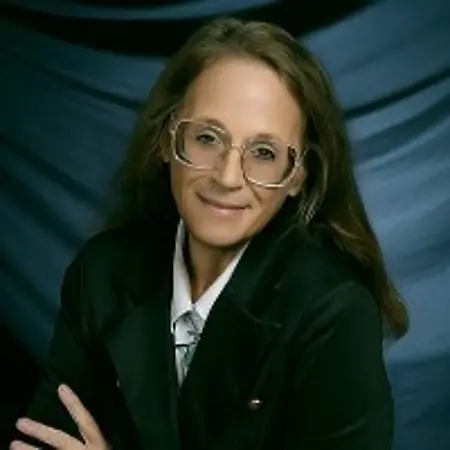
I've found stability through remarkable women around me and my purpose-driven advocacy work, now completing my MBA at 65 and launching health initiatives.
How She Found Stability in a Season of Change
Explore morePurpose doesn't shout above the noise of productivity; it softly whispers in silence where the soul remembers why it began the journey.
Carlette Renee Anderson · In Her Own Words
I've found stability through remarkable women around me and my purpose-driven advocacy work, now completing my MBA at 65 and launching health initiatives.
How She Found Stability in a Season of Change
Explore moreHer Story
Carly Anderson is a dedicated advocate for older adults and a highly experienced office management professional with over 25 years in the field. Based in Kerrick, Minnesota, Carly has built a career focused on community involvement, program development, and team building, using her strong problem-solving skills to identify challenges, implement cost-effective solutions, and develop strategies that meet both organizational and stakeholder needs. She is committed to creating outcomes that are efficient, effective, and sustainable, ensuring organizations run smoothly while supporting the people they serve.
Carly’s passion for senior advocacy began in the late 1990s, inspired by a friendship with a couple who owned a nursing home in rural Minnesota. She witnessed firsthand the struggles of older adults who were isolated, overlooked, and facing complex challenges with limited support. This experience ignited a lifelong commitment to elevating the voices of seniors and empowering families navigating healthcare, legal, and caregiving responsibilities. Her dedication deepened in the mid-2000s while working with a nonprofit focused on early childhood development, where she observed grandparents stepping into caregiving roles for grandchildren, often under extraordinary circumstances.
To expand her impact, Carly is launching Twin Ports Health Talks, a podcast dedicated to meaningful conversations about aging, including elder law, assisted living, mental health, nutrition, and caregiver resources. She is also hosting an Aging Symposium on Elder Law & Healthcare, bringing together experts and advocates to address critical issues affecting seniors and to promote collaborative solutions. Carly’s mission is simple: to provide families with reliable information, elevate the voices of seniors, and foster a more compassionate, informed approach to aging in our communities.
Her Interview
01What do you attribute your success to?
I attribute my success to a lifelong dedication to advocating for seniors and improving the lives of older adults through compassionate service and community-focused initiatives.
02What’s the best career advice you’ve ever received?
Never stop learning and always speak out for those who cannot.
03What advice would you give to young women entering your industry?
In summary:
Let empathy, resilience, and a commitment to lifelong learning guide your journey. Seek inspiration, advocate for others, and value collaboration. Above all, believe in the power of compassion and perseverance to transform lives—including your own.
04What are the biggest challenges or opportunities in your field right now?
Healthcare Needs: As the number of older adults grows, the demand for healthcare professionals—especially those trained in geriatric care—continues to rise. This creates a significant shortage of skilled providers and underscores the need for innovative approaches to manage increasing healthcare costs while improving the quality of care.
Workforce Shortages: The healthcare sector is facing a critical workforce gap, with global projections indicating a need for more than 15 million additional healthcare workers by 2030. This shortage limits the system’s ability to deliver high-quality care and intensifies financial pressures on programs like Medicare.
Economic Factors: The medical and long-term care needs of an aging population place substantial strain on healthcare budgets. Rising costs require strategic resource allocation and more efficient care delivery models to ensure sustainability.
Innovative Solutions: Demand is growing for new and creative approaches to elder care, including telemedicine, home-based services, and technology-enabled care models. These innovations have the potential to enhance care quality and improve the overall experience for older adults.
Policy Adaptation: Aging policy leaders and advocates must respond to shifting demographics by developing policies that reflect the needs, preferences, and dignity of older adults. Effective policy must support health, independence, and equitable access to care.
05What values are most important to you in your work and personal life?
The values most important to me are family, spending quality time with loved ones, and my passion for horseback riding, which brings balance and joy to my life.
Her Content Hub
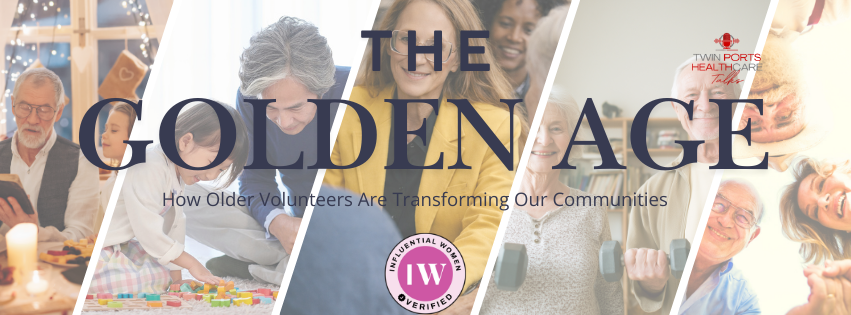
As the aging population expands, volunteering stands out as a life‑affirming way for older adults to stay active, connected, and purposeful. Encouraging senior engagement strengthens communities and enriches lives on both sides of the giving.
How Older Volunteers Are Transforming Our Communities
As the world rapidly ages, one truth is becoming impossible to ignore: supporting and engaging older adults is not just important — it’s urgent. One of the most powerful, research-backed ways to make a meaningful impact is through volunteering.
Volunteering doesn’t just strengthen communities; it profoundly boosts the health, well-being, and social connectedness of older adults themselves. In fact, older adults who volunteer 100 hours or more per year experience a significant reduction in mortality risk, along with higher levels of physical activity, greater optimism, a stronger sense of purpose, and reduced loneliness. Peer-reviewed research makes it clear: volunteering enriches older adults’ lives while strengthening the social fabric we all depend on.
A powerful and growing body of long-term research reminds us of something deeply hopeful: when older adults volunteer, their lives can transform in remarkable ways. A major study published in the American Journal of Preventive Medicine revealed that adults over 50 who give just a little of their time — 100 hours a year — experience meaningful improvements in their health and well-being. They live with fewer physical limitations, enjoy greater vitality, and even face a lower risk of mortality. Just as importantly, they report feeling more optimistic, more purposeful, and far less lonely or depressed.
One shining example is Maria, a 72-year-old retired teacher who felt adrift after the loss of her husband and the isolation that followed. At first, she joined a local volunteer reading program “just to get out of the house.” But over time, something beautiful happened. The elementary students she read with each week began greeting her with huge smiles and handmade notes. She found herself waking up with renewed purpose — planning books, thinking about the children’s progress, and feeling excited for Wednesday mornings again.
Within months, Maria’s daughter noticed she was laughing more, walking more, and reconnecting with friends. Maria herself said, “I thought I was helping them, but they’re the ones who brought me back to life.”
Volunteering doesn’t just strengthen communities; it lifts the human spirit. It empowers older adults like Maria to continue contributing their wisdom, kindness, and heart — proving that purpose has no age limit and that paying it forward is one of the most life-affirming gifts we can give ourselves.
Peer-reviewed evidence makes one message unmistakably clear: volunteering plays a powerful role in supporting the well-being, dignity, and social connectedness of older adults. It strengthens both physical and mental health, nurtures a deeper sense of identity and purpose, expands social circles, and enriches entire communities.
As our aging population continues to grow, expanding accessible and diverse volunteer programs isn’t just a good idea — it’s essential to building healthier, more compassionate, and more connected societies.
Encouraging older adults to volunteer is more than a call for civic engagement; it’s an invitation to embrace healthy aging, strengthen community resilience, and create vibrant intergenerational connections.
Whether you’re an older adult yourself, a family member, or a community leader, you can help make a meaningful difference.
If you’re ready to explore volunteer opportunities, start by reaching out to organizations in your community, such as:
A simple phone call or email can open the door to renewed purpose, connection, and joy — for you or an older adult in your life. The next step may be small, but the impact can be life-changing.
Explore how ageism undermines healthcare quality and workplace dignity, costing the economy billions while harming older adults' health outcomes, financial security, and mental wellbeing.
A Silent Epidemic

Ageism is often called the “last acceptable prejudice,” and in healthcare, it shows up more often than we’d like to admit. It’s usually subtle—but it’s never harmless. When a doctor shrugs off exhaustion as “just getting older,” or a nurse slips into that sing-song, patronizing elderspeak, it’s more than awkward or annoying. Those moments reflect a bigger problem: a system that too often talks past older adults instead of truly listening. And that lack of respect can lead to missed diagnoses, limited choices, and care that simply isn’t good enough.
That’s why advocating for the best possible care matters so much. Understanding ageism isn’t just about fairness—it’s about health, dignity, and outcomes. It affects our parents right now, it affects us as caregivers, and one day, it will affect us personally. Awareness and open communication are powerful tools, and they’re the first steps toward real change. On upcoming episodes of Twin Ports Health Talks, we’ll dig deeper into these barriers, share real stories, and talk about how we can all help push for care that respects people at every stage of life.
Ageism manifests in healthcare in both subtle and overt ways.
Studies consistently show that older patients are less likely to receive aggressive or gold-standard treatments for conditions like cancer, heart disease, or chronic pain—even when clinical evidence supports them.
Assumption of Frailty: A clinician might assume a 75-year-old is too frail for a necessary surgery or chemotherapy regimen, failing to assess their individual physical and cognitive reserves.
Symptom Attribution: Symptoms that would trigger a thorough investigation in a younger person (e.g., shortness of breath, memory issues) are frequently misattributed to the aging process itself, delaying diagnosis of treatable illnesses.
Rationing of Resources: In times of crisis, such as the COVID-19 pandemic, age-based criteria for critical care rationing brought the lethal reality of systemic ageism into sharp focus.
The way healthcare providers talk to older adults can profoundly affect care quality.
Elderspeak: This is the simplified, often infantilizing speech pattern—high pitch, slower rate, exaggerated intonation—used with older adults. Research links elderspeak to reduced self-esteem, noncooperation, and even functional decline in patients.
Exclusion from Decision-Making: Providers may speak primarily to a younger family member or caregiver, overlooking the patient and denying them the opportunity to participate fully in their own care decisions.
The problem extends beyond individual biases. The system itself is often unprepared to handle the complexities of geriatric care.
Inadequate Geriatric Training: Many medical, nursing, and pharmacy schools dedicate insufficient time to geriatric medicine. Healthcare professionals often graduate without the mandatory competencies needed to treat patients with multiple chronic conditions.
The Myth of Homogeneity: The healthcare system often treats “older adults” as a single, uniform group, ignoring the vast diversity in health, mobility, and cognitive function among people over 65. This leads to one-size-fits-all care that fits virtually no one.
The consequences of ageism are severe.
Health Outcomes: Delayed diagnoses lead to more advanced disease states, poorer prognoses, and increased mortality.
Patient Autonomy: When providers fail to listen, patients feel powerless, leading to lower adherence to treatment plans and compromised informed consent.
Financial Burden: Mismanagement of complex geriatric conditions often results in preventable hospital readmissions and costly long-term care stays.
Mental Health: Older adults who perceive ageism report higher rates of depression, anxiety, and a diminished will to live.
Combating ageism requires a multilevel approach, shifting from age-neutral care to age-friendly care.
Mandatory geriatric education must be integrated into all health professional curricula. This includes training on communication skills, recognition of implicit bias, and the use of comprehensive geriatric assessment tools.
The Age-Friendly Health Systems movement, promoted by organizations such as the Institute for Healthcare Improvement (IHI), provides a framework based on four essential elements:
As patients, family members, and advocates, we have a responsibility to challenge ageism when we see it.
For many older adults, ageism doesn’t start in the doctor’s office—it starts at work.
It can look like a longtime employee who suddenly stops being considered for new projects, even though nothing about their performance has changed. Or a worker in their late 50s who’s told they’re “overqualified” for a role they’re more than capable of doing. Sometimes it’s subtler: training opportunities offered only to younger staff, or jokes about “slowing down” that everyone laughs off—but never forgets.
Caregivers often witness this shift up close. A parent who once took pride in their work begins to doubt themselves. They’re encouraged to retire “early,” not because they’re ready, but because the workplace has quietly decided they no longer fit. What’s framed as flexibility or generosity can feel, in reality, like being pushed aside.
The consequences don’t stop with a lost paycheck. When work disappears, so does stability. Health insurance becomes harder to navigate. Medications are more expensive. Doctor visits get postponed. Chronic conditions—like diabetes, heart disease, or arthritis—become harder to manage when money is tight and stress is high.
From a caregiver’s perspective, this is often when the balancing act begins. You’re helping cover gaps, sorting through insurance options, or listening as your loved one struggles with the loss of independence and purpose. You might notice they hesitate to speak up in medical appointments, downplay symptoms, or avoid care altogether—not because they don’t need help, but because they’re worried about cost or being seen as a burden.
What’s important to understand is that this isn’t a series of individual failures—it’s a system at work. When older adults are undervalued or pushed out of the workforce, the impact follows them into every part of life, including their health. And caregivers are left navigating the fallout, often without realizing that age discrimination was the first domino to fall.
Recognizing this connection matters. Because when we talk about health, we must also talk about work, income, dignity, and the right to be seen as capable—at every age.
When we talk about the cost of ageism in the workplace, we’re not talking about abstract numbers. We’re talking about everyday moments that quietly add up to real harm for families—and real losses for the country.
Consider a 55-year-old administrative assistant who’s been with the same company for over two decades. When a new software system rolls out, she’s never offered training—her younger coworkers are. When layoffs come, she’s told the company is “going in a new direction.” She spends months applying for jobs, only to hear she’s “overqualified” or “not the right cultural fit.” Eventually, she takes a lower-paying job with fewer hours and no benefits.
That story plays out across the country—and when it does, the economic impact is enormous. According to AARP, age discrimination against workers over 50 cost the U.S. economy $850 billion in lost GDP in 2018 alone. If current trends continue, that loss is projected to reach nearly $3.9 trillion by 2050.
Another example: a 60-year-old warehouse supervisor is encouraged to retire “early” after decades of physically demanding work. He wasn’t ready to stop working, but the message was clear—his age made him expendable. Losing that job meant losing employer-sponsored health insurance. Doctor visits became harder to afford. Prescriptions were stretched longer than they should have been. A manageable chronic condition slowly worsened.
From a caregiver’s perspective, this is often the moment everything shifts. Adult children step in to help cover costs. Appointments are debated instead of scheduled. Medical decisions are shaped by finances instead of need.
And these stories aren’t rare. AARP found that 57% of the $850 billion in economic losses tied to age discrimination come specifically from involuntary early retirement—people pushed out before they were ready, willing, or financially secure.
Then there’s the older worker who is still employed—but sidelined. A 62-year-old engineer stops being invited to planning meetings. His ideas are brushed off. He’s passed over for promotions in favor of younger, less experienced staff. Eventually, disengagement sets in. Innovation suffers. Productivity drops. Institutional knowledge walks out the door.
Multiply these stories by millions, and the national impact becomes clear.
Adults over 50 make up just 35% of the U.S. population, yet they contribute 40% of the nation’s GDP—about $8.3 trillion in economic activity. When ageism limits their participation, the country loses consumer spending, tax revenue, and workforce stability.
The costs also show up in healthcare. Research published in The Gerontologist found that ageism adds $63 billion every year to U.S. healthcare spending, driven by delayed care, increased stress, and worsening chronic conditions among adults 60 and older. What looks like a medical issue is often rooted in workplace discrimination that occurred years earlier.
Ageism at work isn’t just unfair—it’s expensive. It drains families, burdens caregivers, and weakens the economy as a whole. And as the workforce continues to age, the cost of ignoring it only grows.
Exploring how rural communities can address transportation barriers, digital divides, and social isolation to support healthy aging in place through evidence-based policies and coordinated community solutions.
Why Unified Conversations Matter
In rural communities, people often notice the small things—an unlit porch light, an unplowed driveway, or a familiar face missing from the café or church. These quiet signs often reflect deeper realities: families striving to keep aging parents safe while navigating long distances, limited local services, and systems that have historically failed to account for rural conditions.
Transportation remains one of the most significant determinants of whether older adults can maintain stability. In 2022, 5.7% of U.S. adults reported lacking reliable transportation, a barrier linked to missed medical appointments and preventable emergencies. Beyond personal inconvenience, transportation limitations are directly tied to social isolation among older adults. Research highlights that mobility programs, community transportation networks, and coordinated transportation planning can significantly reduce isolation and improve health outcomes.
When telehealth is proposed as a solution, the digital divide often stands in the way. As recently as 2019, rural broadband deficits left many older adults unable to participate in virtual visits or remote monitoring. Yet peer-reviewed evidence shows that telehealth can substantially improve health promotion outcomes for rural older adults when supported with training, simplified technology, and ongoing technical assistance. A systematic review found that telehealth is generally useful and often cost-effective for older adults in rural settings—especially when ease-of-use barriers are addressed through tailored support and educational interventions.
These challenges are not personal shortcomings; they are structural gaps that require policy- and community-level solutions. Research indicates that strengthening rural health care begins with investment in workforce recruitment and retention, expanded diagnostic and specialty capacity, and innovations such as community paramedicine and mobile clinics. Workforce shortages are consistently identified as a driving force behind delayed care and poorer health outcomes in rural populations. Experts emphasize strategies such as incentive programs, telehealth-augmented care teams, and cross-sector partnerships to address these shortages. Evidence-based recommendations call for coordinated action among policymakers, healthcare organizations, and community leaders to bridge infrastructure gaps and create sustainable service models.
Aging in rural America presents complex layers of risk. Nearly one in four older adults lives in rural regions, aging in place due to strong community ties and affordability. Yet many face persistent barriers to accessing primary care, specialty services, and mental health care. Long travel distances, hospital closures, and geographic isolation magnify these challenges. Research from multiple rural health assessments shows that community-wide mobility initiatives, integrated transportation–healthcare partnerships, and strengthened aging-in-place supports can improve continuity of care and reduce crisis-driven health decisions.
Social isolation compounds these barriers. As mobility declines and physical distance from neighbors widens, loneliness becomes a critical health threat. Peer-reviewed needs assessments highlight the importance of age-friendly community strategies such as structured social programs, peer-connection networks, tele-social interventions, and community health worker outreach. Identifying contributors to loneliness—transportation barriers, lack of family proximity, and limited social programming—allows local leaders to design interventions that meaningfully reduce isolation and improve well-being among rural older adults. Broader scoping reviews similarly confirm that both technological and non-technological interventions can mitigate loneliness when adapted to rural contexts, particularly during periods of disrupted social contact such as the COVID-19 pandemic.
Because these issues intersect across healthcare access, mobility, infrastructure, and social connectedness, no single sector can solve them alone. Effective progress requires coordinated, evidence-based strategies involving healthcare providers, senior living organizations, mobility planners, policymakers, legal professionals, and—critically—the families caring for aging adults. Peer-reviewed research emphasizes that early, clear, and accessible information empowers families to make informed decisions and reduces crisis-driven choices that can undermine senior autonomy.
Twin Ports Health Talks was created to bring these voices together—to connect caregivers, seniors, and professionals with the tools, research, and insights needed to navigate aging in rural America with confidence. By grounding conversations in peer-reviewed evidence, the podcast aims to elevate proven strategies and community-driven innovations that support healthy, connected aging.
Aging in rural America should not mean aging alone. Through collaboration, mobility solutions, broadband expansion, strengthened workforce support, telehealth accessibility, and community-centered programs, we can ensure every older adult is supported, heard, and valued.
Because aging matters everywhere.
Join Influential Women and start making an impact. Register now.