Her Story
About Carolina
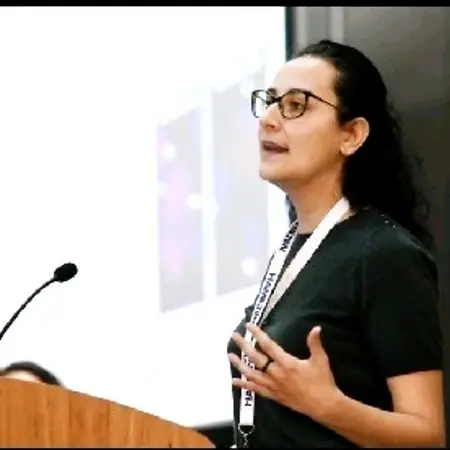
Carolina Manchola is a dedicated scientist specializing in infectious diseases at Calibr - The Scripps Research Institute. With over a decade of experience in infectious disease drug discovery, she focuses on tropical neglected diseases, particularly Chagas disease caused by the parasite Trypanosoma cruzi. Her research aims to develop safer and more effective treatments, addressing the critical public health challenges posed by the high toxicity of current drugs and the potential global spread of these diseases due to migration and climate change. In addition, she investigates antibiotic discovery and drug-resistant microbial threats, reflecting her commitment to combating emerging global health concerns.
Carolina earned her doctoral training in infectious diseases and biomedical sciences at Universidade de São Paulo, where she conducted advanced research in cell signaling, host-pathogen interactions, and protein biochemistry under BSL-2 biosafety conditions. Her academic work included protein cloning, expression and purification, polyclonal antibody production, high-content imaging, and small-molecule screening. She also served as a professor collaborator in biochemistry, mentoring undergraduate students and promoting scientific education and literacy, while contributing to scientific writing and international research collaborations.
Currently based in California, Carolina combines her expertise in molecular biology, pharmacology, parasitology, and data analysis to lead innovative drug discovery projects. Fluent in Portuguese, Spanish, and English, she bridges cultural and linguistic gaps in international scientific research. Beyond the lab, she actively promotes science education and diplomacy, contributing to initiatives that inspire the next generation of scientists. Her career reflects a rare blend of technical excellence, mentorship, and global scientific engagement.
Her Interview
Ten minutes with Carolina
01What do you attribute your success to?
I attribute my success to the guidance and mentorship I’ve received along the way. In Brazil, I was fortunate to have a mentor, Julia Manzo, a retired senior scientist, who made a profound impression on me. As her final postdoctoral student, I had the unique opportunity to learn from her extensive experience and insights. Her mentorship has been instrumental in shaping the way I approach my work and has been invaluable to my professional growth.
02What advice would you give to young women entering your industry?
I would advise young women entering this industry to cultivate strong belief in themselves, resilience, and patience. The work of discovering new drugs and developing therapies is challenging, and it requires dedication and perseverance. We need talented, determined individuals who are willing to face these challenges head-on and never give up.
03What are the biggest challenges or opportunities in your field right now?
The biggest challenges in my field include developing safer, more effective treatments for neglected diseases like Chagas, addressing the spread of tropical diseases due to migration and climate change, and combating antimicrobial resistance. These challenges also present significant opportunities for impactful research and innovation.
04What values are most important to you in your work and personal life?
The values that guide me in both my work and personal life are resilience, patience, and the ability to communicate and collaborate effectively with others.
Join Influential Women and start making an impact. Register now.