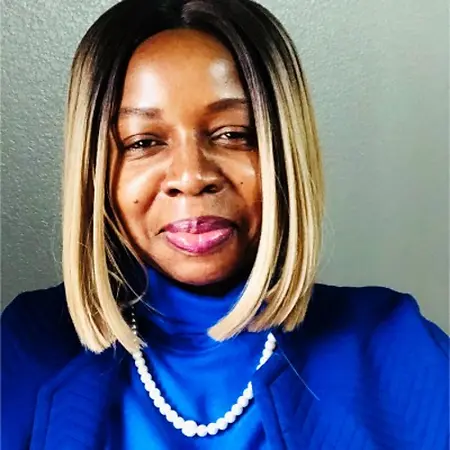
Her Story
About Caroline
My career in transportation has spanned 26 years, and every day is different - there's no same day over and over again. One day I might be catching a 6 o'clock flight from Dallas to my headquarters in Austin, arriving at the office by 7:30 or 8 o'clock with back-to-back meetings till 5, then staying at a hotel. Other days involve conferences, presentations, leading teams, and doing one-on-ones with my 5 directors who report to me. I oversee 5 different groups covering aviation, maritime, public transportation, and planning and programming, so my portfolio is very diverse. I started as a transit planner after earning my master's degree in city and urban planning and interning with the United Nations, though my dream to work for the UN didn't happen. After 9-11, I moved to Georgia where I created a freight and logistics program in Atlanta for the regional agency, which really launched my name around the country as the voice in the U.S. for how we deal with goods movement and freight and logistics. I moved to Texas about 13-14 years ago, worked with the state, and over time moved into executive leadership. I took some time off to be a mother and then went back to my career. Today, I do a lot of speaking engagements and people tell me I'm inspirational and that they see through me the ability to be very influential in the industry. I'm known as a role model in the transportation industry, both in Texas and nationally and internationally.
Her Interview
Ten minutes with Caroline
01What do you attribute your success to?
I think it's several things. One is really relationships. When I look back, I have had relationships with folks, former bosses, friends that are mentors and champions, and that's what has propelled me. For example, the man that I met that brought me into the agency where I work now is now the executive director, the CEO of the company. I met him just from nowhere, so that has been really key for me. People have helped me along the way, and the relationships I've built have lasted over time - I've known a lot of people for 26 years or more. So that has been very important and has helped me along the way. Also, working hard, working smart, and mastering the subjects. I've diversified my portfolio on what I do - I oversee 5 different groups from aviation to maritime to public transportation to planning and programming. My portfolio is very diverse, and that has really helped me to be able to step into different roles and grow in those roles, which I would not have been able to do if I did not have those diversified roles.
02What’s the best career advice you’ve ever received?
The best career advice that I ever received was kind of twofold. One is building relationships, and ensuring that you have relationships both vertical and lateral - people above you, people around you, and people below you. Relationships really, really matter. And then, also, just communication skills, being able to communicate. Those are probably the two biggest pieces of advice I ever got that has really helped me - building relationships and being a great communicator, whether presenting or just talking to people, being able to go and meet somebody you've never met before and say hello and start a conversation. That can lead to so many things.
03What advice would you give to young women entering your industry?
The biggest advice I would give to women in my industry is to really master the art of what they believe they're good at, and not try to measure with other people. What I normally coach women is, I tell them, walk in your own shoes. Because your shoes, you fit it, it fits you. You cannot try to walk in anybody else's shoes because it may be a different size, a different style. That's really what I tell the women in the industry - walk in your own shoes, find a niche, master it, be the best at it. Don't try to be somebody else. Don't look at Caroline and think I want to be like Caroline. You can never be like Caroline, but you can be yourself and perfect your own style, perfect your own niche.
04What are the biggest challenges or opportunities in your field right now?
I don't look at them as challenges, I look at them more as opportunities and challenges. One is that the industry has evolved and continues to evolve, so it's really keeping up with some of those emerging issues. I'm in transportation and I oversee aviation, so the big thing right now is all of these emerging aviation technologies, from drones to air taxis. Being able to be at the leading edge of that is critical. On the highway side, we have robo-taxis and autonomous trucks - 5 or 10 years ago that wasn't even considered in my industry. So that's kind of a challenge but also an opportunity to be able to adapt and work with different stakeholders that I would not traditionally work with. Now I'm working with people that are manufacturing drones, manufacturing air taxis, people that are running them, and I'm really asked in the industry to ensure that what we do can help those companies be successful but also get support from the public. A lot of the public are like, oh no, I'm not gonna get into that robo-taxi, I'm not gonna get into an air taxi. So we're in the middle of that. That's what I see as one of the biggest challenges - that ability to adapt and not just say no, but seek information and keep up with what's going on and the different trends. On the workforce side, the biggest challenge is just workforce, being able to hire the right talent and people that are motivated. The young generation coming into the workforce want to work from home, and I'm overseeing folks from all the generations - young, older, middle. The biggest challenge is to ensure that all of them are fully engaged. COVID created that mindset of why do you want me to come sit in the office when I could work from wherever. But there needs to be a reset and a mindset that you need to be not necessarily in the office, but somewhere where you can collaborate and talk to each other and grow. And then the other big challenge right now is AI - how we integrate AI, the fear that AI is going to take my job, and the fear that I can't learn AI because it's this huge technology. As a leader, I have to learn AI, I have to be able to use it myself, that way I can communicate that broadly through my groups and my staff and those around me so they can embrace and understand that it is a tool that can help us be much more effective and not just be caught up with the fear.
05What values are most important to you in your work and personal life?
It really is people, valuing people. Treating people better than I would like to be treated. And then really just ensuring that I'm modeling the behavior I want around me, whether it's at work or at home. I have kids, so trying to model those behaviors both at work and at home is really, really important to me. And integrity. Integrity is also very, very important, because when you do and work with integrity, you kind of shine and other people see that. So there are several values that really guide what I do and provide me a lot of clarity in my work. But also, because I'm working with people, you really have to ensure that you're grounded in a lot of really important things.
Join Influential Women and start making an impact. Register now.