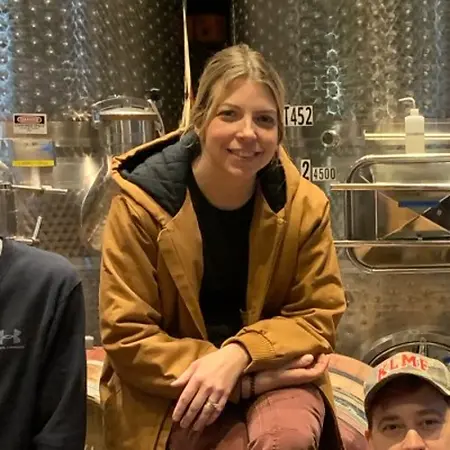
Her Story
About Caroline
I've been in wine production for about 15 years and have been working with City Winery for almost 12 years now. I focus on the production of wine from grapes primarily from California and Oregon, as well as some different grapes from the Midwest. I make wine for our Chicago locations - we currently have two in the city, including our Riverwalk location - and we share the wine at our restaurants and concert venue. I'm responsible for producing wine from some really great fruit that we get out on the West Coast, particularly from Russian River Valley, Napa Valley, Mendocino, and Lake County in northern California. I definitely love focusing on Pinot Noir - that's probably the wine I have the most experience with and enjoy the most, and it's kind of what I'm sort of recognized for. My biggest achievement has been bringing the wine industry to Chicago and being able to bring wine country to an urban environment and share it with a really broad audience. I'm most proud of being able to showcase the American wine industry where you might least expect it - in Chicago, in the middle of the country - and really making wine for everybody, not just people that can go out to California or that are in certain parts of the region.
Her Interview
Ten minutes with Caroline
01What do you attribute your success to?
I think there's certainly been a lot of mentors that I've had along the way, a couple in particular. But I think a lot of my success in the wine industry has really kind of been, honestly, talk less, listen more, and learning from others, learning from my mistakes, trial and error. You know, really kind of, at times taking a bit of a leap of faith. I've had a lot of people who have helped me get to this point in my career, but it also has been bumpy along the way, and I've learned a lot through things we've done great and things we have not done not so great. So, you know, really, that's kind of how I've gotten to this position and this stage in my career.
02What’s the best career advice you’ve ever received?
When I was not in the wine industry, I had just graduated from grad school in architecture, and my manager at the time told me this statement that's really stuck with me: as you go through your career, remember that it's a marathon, not a sprint. He told that to me probably the first week I was on the job, and I didn't really quite know what it meant at that time, but now, 20-some odd years later, I do know. It's really about taking things as they come, pacing yourself, not getting ahead of yourself. That's what has stuck with me the longest through two careers - through my architecture career and my winemaking.
03What advice would you give to young women entering your industry?
I think probably my biggest piece of advice is to not really focus on being different in terms of female versus male. I really do think that you shouldn't create these mental barriers that may not even be present, and so really focus on your skills and what you really bring to the table as a person, and not focus so much on being potentially different from other people. Really focus on what you bring to the table, your passion for the craft of winemaking, develop work ethic, and be happy with what you're doing. If all those are in place, everything should fall in line, and if it doesn't, well then, you know, that is not necessarily your problem. That's something that's really important to me and has traveled with me all throughout my career - not really focusing on being potentially different from other co-workers or candidates, and just really focusing on what I bring to the table as an individual and my skills.
04What are the biggest challenges or opportunities in your field right now?
I think the biggest challenges are that the wine industry has not really evolved with how our society has evolved. I do think there's a lot of opportunity to make wine more approachable to different generations and make it more of a communal beverage, and really remove the stigma around it. I want to embrace that this can be something that anybody can drink or be a part of. You don't have to be wealthy to buy wine, or very knowledgeable about wine to enjoy it. I think there's room to embrace that idea and see where the industry can fill gaps and holes with what people might be looking for in terms of connection. The industry does have a ways to go, but I do think it could potentially benefit both the consumer and the industry. There is potential to remove the stigma behind the product and make everybody welcome - this is a product for everybody, not just one economic class.
05What values are most important to you in your work and personal life?
I think it's pretty simple - to be honest with yourself and what you do, and really just being happy with what you do. That's how I measure success, is just being really happy to do what I do every day and happy with the outcome. For me, that has really been the driving force. I've always focused on wine and people - making great wine, but then also cultivating a really great team, because it's not just me that's producing the wine, it's my team, and there's a lot of other people involved. For me, it's prioritizing wine, people, and really being true to yourself and happy with what you're doing. That's really what I take away every day.
Join Influential Women and start making an impact. Register now.