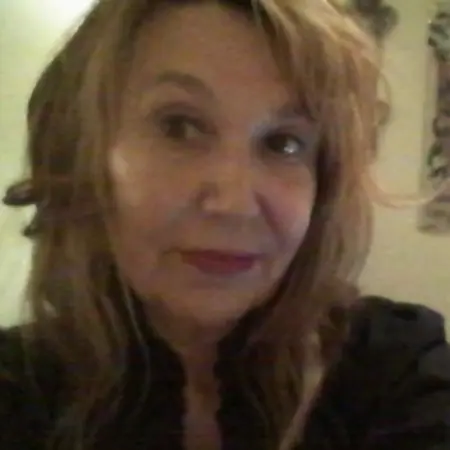
Her Story
About Carolyn
I have always, since I was a young girl, had a voice that came to life through actors and through dialogue. This has always been my genre - telling a story through dramatic conflict, through drama. I've also had such a natural inclination towards history, which is why my undergraduate degree was in history. The more I studied, the more I discovered so many voices of women that kind of fell to the wayside. When you think of the 19th century for African American women, you usually think of Harriet Tubman and Sojourner Truth, but here in New Orleans, I've had a spiritual connection to Marie Laveau. I've written about five plays total, but two major plays focus on different aspects of Marie Laveau, because she didn't read or write, she never allowed anyone to take her photograph, and everything we had on her from the 19th century was written by white male journalists that called her a voodoo witch and made up terrible stories about her. It's about who has the right to tell the story. I've also written about Tahirih, who was the forerunner throughout the world of women's rights in modern-day Iran. They killed her by strangling her with her own veil in 1853 in Tehran, and her last words were 'you can kill me whenever you like, but you cannot stop the emancipation of women.' My job as a playwright is to find those stories, to find those voices, and to put them on the water. It is not my job to see if somebody's gonna bite - it's my job to stay open to the creative force. I think what's important for students is that they know when they're with the real thing, with somebody who actually has achieved that level as a working playwright. What students want in playwriting courses is feedback on their work - what's working, what's not working, what is the process. They want to be with somebody that's the real thing, and the feedback is the most important thing for those students as they're developing their own voices and why their voices should be heard.
Her Interview
Ten minutes with Carolyn
01What do you attribute your success to?
I attribute my success to steadfast commitment to the process. Steadfast commitment, even when - because as many awards as I've won, I probably got many more rejections, you know what I mean? So it's just the need to continue to tell these stories. I would also say that my success has to do with support - support from academia, from my community, and then from Dillard University, you know, to even want to put on my original works. So I would say support, but it starts with the steadfast commitment that it is not about fame and fortune. It is about the need to create and to tell these stories.
02What’s the best career advice you’ve ever received?
A famous playwright and educator, unfortunately who passed this year, once told me that in the classroom, the most important thing is not to have the students love you and be their friend. The most important thing in the classroom is that you don't have to like me, but you need to respect me and respect the material. And that has stayed with me. This is what's the most important thing - that the students, whatever class you're teaching, have a respect for you, that you're modeling what it means to be a professor, and that they begin to respect that material, regardless of what their major is. That is what's important.
03What advice would you give to young women entering your industry?
I would say to allow your voice to remain open to the stories you want to tell. And to remember that the process is the most important thing as you take risks to tell a story. I think risk-taking is extremely important. You need to stay open to the creative force, because a lot of times that creative force starts to - we start to lose it as we age, and we've gotta worry about bills and retirement funds and house mortgages and all these things. So many people write in their 20s, but then it's like the world stops them. Trying to keep that creative center open is certainly of value.
04What are the biggest challenges or opportunities in your field right now?
As an educator, the biggest challenge today is to remain fresh and open up the minds and have students take ownership in the classroom. Because I'm in the humanities, I want to have students come in there and understand it's not just for a grade - it's to open them up to the beauty of writing, the beauty of a story, and to do it for the sake of the art, not to do it to get an A. To get excited about developing their own voice. That's really important, even in the composition classes, to have students take pride in their work. This is a challenge, and it's especially a challenge in the world of AI. The biggest challenge as a playwright who's also a working professor is to be able to carve out that time to do original work.
05What values are most important to you in your work and personal life?
I try to be honest in the stories I tell, and to be able to take risk always, and not to worry. I think that's really important. My job as a playwright is to find those stories, to find those voices, and to put them on the water. It is not my job as a playwright to see if somebody's gonna bite if I throw it on the water, if the fish is gonna bite. My job is to stay open to the creative force, because a lot of times that creative force starts to - we start to lose it as we age, and we've gotta worry about bills and retirement funds and house mortgages and all these things. So many people write in their 20s, but then the world stops them. Trying to keep that creative center open is certainly of value. And also having a spiritual foundation is extremely important to me.
Join Influential Women and start making an impact. Register now.