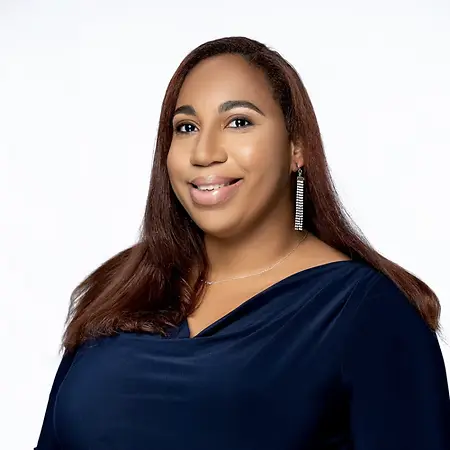
Influential Woman · Non-Profit
Cassandra Grimes, MA, BA, CDP ®
Senior Development Strategist & Editor | Founder, Accelerate Change
Millbrook, AL 36054
Her Story
About Cassandra
Cassandra Grimes is a fundraising strategist and nonprofit development leader with more than 12 years of experience helping mission-driven organizations strengthen institutional funding and long-term sustainability. As Senior Development Strategist and Editor at English Hudson Consulting, she partners with nonprofit executives to design fundraising strategies, oversee multimillion-dollar portfolios, and secure major foundation and government support. Cassandra has helped generate more than $10 million in philanthropic revenue for nonprofit clients nationwide.
She is also the founder of Accelerate Change, a fundraising and organizational strategy firm that supports emerging and community-based nonprofits across the United States. Through this work, Cassandra advises nonprofit leaders on grant strategy, institutional funding pipelines, strengthening board engagement in fundraising, and developing strategic roadmaps that position organizations for long-term growth.
Cassandra works at the intersection of strategy, storytelling, and institutional philanthropy. Her approach combines data-informed fundraising strategy with compelling narrative development, ensuring that organizations not only secure funding but clearly communicate the impact of their work to donors and institutional funders.
Her professional background includes leadership roles in arts and cultural institutions, digital archival initiatives, and public history programming. Drawing on her academic training in museum studies and public history, Cassandra believes that strong fundraising begins with authentic storytelling and clear mission alignment. She is particularly passionate about supporting organizations working at the intersection of equity, culture, and community impact.
Cassandra holds a Master’s degree in Museum Studies from Syracuse University and is widely recognized for her equity-centered leadership in philanthropy and community advocacy.
Her Interview
Ten minutes with Cassandra
01What do you attribute your success to?
I attribute my success to perseverance and the ability to think strategically about problems others may approach more traditionally. My background is not a conventional path into fundraising—I studied historical and museum studies—but those disciplines trained me to analyze patterns, understand human behavior, and craft compelling narratives. Those skills translate directly into effective philanthropy.
Fundraising, at its core, is about helping people see why an organization’s work matters and how their investment can make a meaningful difference. I’ve built my career around bridging that gap—translating mission, impact, and data into stories that resonate with funders and inspire support.
I also entered fundraising out of necessity. Like many in the nonprofit sector, I stepped into development work because organizations often need people who can wear multiple hats. Over time I realized there was a significant gap between the work nonprofits are doing and how they communicate that work to funders. Being able to see that gap—and help organizations close it—has shaped the trajectory of my career.
02What’s the best career advice you’ve ever received?
The best career advice I ever received came from my grandfather. He told me that if I wanted to reach a particular goal, I should start by thinking about the end and then work my way backward. That perspective has shaped how I approach both my career and my work in fundraising. Instead of focusing only on the next step, I try to envision the long-term impact I want to create and then build the strategy that will get me there. In many ways, that mindset mirrors how effective fundraising works—starting with the mission and the desired outcomes, and then designing the path that makes those outcomes possible.
03What advice would you give to young women entering your industry?
The first thing I would say is to stand in your power and trust that you belong in the room. Many women underestimate their own abilities, and that self-doubt can quietly shape how they show up in interviews, negotiations, and leadership opportunities. When you truly recognize the value of your skills, knowledge, and perspective, others will see it too.
I would also encourage young women to embrace both confidence and curiosity. Fundraising—and the nonprofit sector more broadly—requires strategic thinking, empathy, and resilience. If you stay open to learning, build strong relationships, and remain grounded in the mission of the work, you can create meaningful change while building a powerful career.
04What are the biggest challenges or opportunities in your field right now?
One of the ongoing challenges in fundraising is the lack of diversity within the field, particularly the underrepresentation of African Americans—and especially African American women—in development leadership roles. That reality can create additional pressure to constantly demonstrate expertise and strategic credibility in spaces where those perspectives have historically been overlooked.
There is also a broader challenge around equity in philanthropy. Many Black-led and community-rooted organizations remain significantly under-resourced despite doing critical work. Bridging that gap requires both stronger advocacy within the sector and a willingness from funders to invest more intentionally in leaders and organizations serving historically marginalized communities.
At the same time, there is tremendous opportunity in this moment for organizations to clearly articulate their unique value and impact. In a crowded nonprofit landscape, success often comes down to the ability to communicate not just what you do, but why it matters and why it deserves investment. The organizations that can clearly define their role, demonstrate measurable impact, and tell compelling stories are the ones most likely to stand out and secure meaningful philanthropic support.
05What values are most important to you in your work and personal life?
The values that guide me most in both my work and personal life are authenticity, integrity, and justice. I believe it’s important to show up as your true self while remaining accountable to the communities and missions you serve. In philanthropy, trust is everything, so acting with integrity and transparency is essential to building meaningful partnerships and lasting impact.
Justice is also central to how I approach my work. I’m deeply committed to ensuring that resources and opportunities reach organizations and communities that have historically been overlooked or under-resourced. Whether in my professional work or my personal life, I try to make decisions that reflect fairness, compassion, and a genuine commitment to helping others succeed.
Join Influential Women and start making an impact. Register now.